Industrial Storage & Racking Systems
Explore our high-performance structural pallet racks, heavy-duty shelving, and customized warehouse storage systems designed for maximum volumetric efficiency.
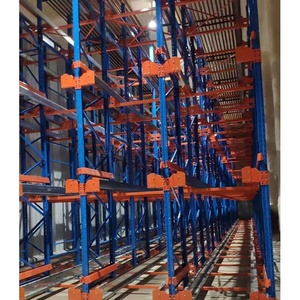
Customized Steel Pallet Rack Stacking Racks & Shelves Warehouse Storage Rack Heavy Duty Shuttle Racking
View Details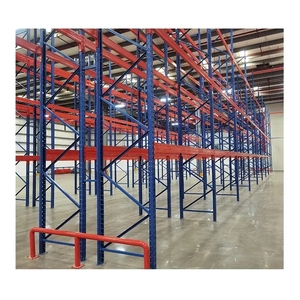
Steel Pallet Racking System Industrial Storage Heavy Duty Factory Shelving Racks for Warehouse
View Details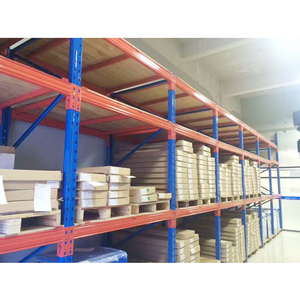
Warehouse Rack Heavy Duty Steel Storage Shelves Industrial Pallet Racking Storage Price Selective Pallet Racking
View Details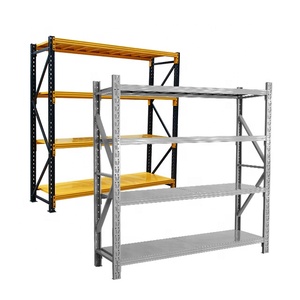
Factory Supply High Performance and Strong Long Span Storage Shelving Unit
View Details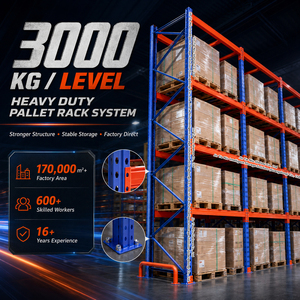
4 Storage Levels Durable Heavy Duty Pallet Rack for Factory and Warehouse Storage 3000KG
View Details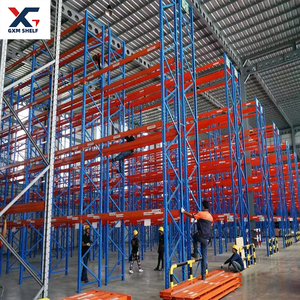
Steel Heavy Duty Industrial Warehouse Pallet Storage Racking System with Boltless Shelving and 300-1000kg Capacity
View Details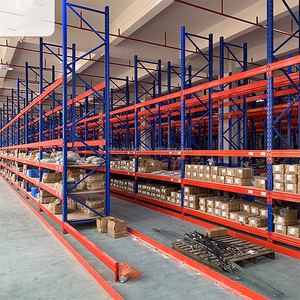
Commercial Heavy Duty Boltless Steel Shelving System Warehouse Industrial Storage Rack Pallet Racking Unit
View Details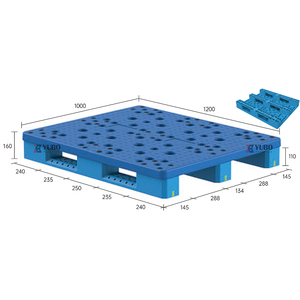
4 Way Entry Single Sided Plastic Pallet Warehouse Stackable Pallet Racking Heavy Duty 1200*1000 Plastic Pallet
View DetailsStructural Integrity, Materials Science, and International Compliance
In modern global supply chains, warehouse storage systems are no longer treated as static steel shelving. They are dynamic, load-bearing infrastructure elements engineered to maximize vertical volumetric efficiency while ensuring total operational safety. As global trade expands, procurement officers, supply chain directors, and logistics engineers require detailed technical clarity regarding structural integrity, material selection standards, and compliance frameworks.
As a leading international manufacturer and exporter of heavy-duty pallet racking systems, our production ecosystem is anchored in rigorous structural modeling (Finite Element Analysis - FEA) and high-yield steel procurement. By utilizing cold-rolled high-strength structural steel profiles—such as Q235B and Q355B grades—our racking configurations achieve optimal strength-to-weight ratios capable of supporting single-bay load capacities exceeding 45,000 kg with deflection coefficients strictly controlled under L/200.
High-Yield Steel Profile
Manufactured from continuous cold-roll formed structural steel coil with guaranteed minimum yield strength up to 355 MPa, ensuring zero micro-fracturing along upright punch slots.
Corrosion Shield Coating
Surface pre-treatment via multi-stage automatic zinc phosphating followed by thermosetting electrostatic epoxy powder coating (80-120μm thickness) tested for 500+ hours salt spray resistance (ASTM B117).
Verified Load Calculations
Comprehensive load tables, beam deformation analysis, and structural calculation certs generated for every warehouse layout to pass local workplace safety (NR-11, OSHA) audits.
Global Racking Development & Technological Evolution Trends
The industrial storage manufacturing landscape is undergoing a massive paradigm shift driven by automation, space optimization demands, and carbon-neutral sustainability mandates. B2B procurement leaders must anticipate these engineering changes when designing or retrofitting logistics centers.
1. Transition to Shuttle-Based & AS/RS Compatibility
Traditional static drive-in racking is increasingly yielding market share to Radio Shuttle Systems and automated AS/RS (Automated Storage and Retrieval Systems) high-bay structures. Modern structural designs must incorporate tighter geometric tolerances (within ±1.5 mm over 12 meters of upright height) to seamlessly accommodate autonomous mobile robots (AMRs) and automated shuttle cars. Pre-engineered guide rail interfaces and reinforced beam connectors are now essential standard features.
2. Seismic-Resistant Frame Geometries
With global climate shifts and stricter building codes worldwide, warehouse racking systems must account for dynamic seismic forces. Advanced frame design now integrates diagonal and horizontal bracing matrixes using self-locking structural bolts, extended baseplates with dual anchor points, and energy-absorbing beam-to-column connector locks that prevent dislodgement during horizontal acceleration spikes.
3. Hybrid & Multi-Tier Rack-Supported Floor Architecture
To counteract rising industrial land acquisition costs in primary logistics hubs (such as São Paulo, Hamburg, Chicago, and Singapore), enterprise operators are turning to rack-supported mezzanine floors and multi-tier picking structures. By utilizing heavy-duty upright profiles as structural building columns, warehouses can double or triple usable floor space without undergoing long building permit cycles or civil construction delays.
4. Green Steel Procurement & Low-VOC Finishing
Environmental, Social, and Governance (ESG) mandates are directly influencing industrial procurement. Modern racking exporters must demonstrate sustainable supply chain practices, including sourcing steel from low-carbon electric arc furnace (EAF) mills, utilizing solvent-free powder coating lines with full heat-recovery circuits, and shipping in fully recyclable steel-strapped flat-pack container arrangements.
Future Strategic Procurement & Supply Chain Trends
Procuring enterprise racking systems across borders requires evaluating factors far beyond raw material price-per-ton. Leading global importers, wholesalers, and general contractors are adopting integrated procurement frameworks that emphasize Total Cost of Ownership (TCO), freight optimization, and rapid site installation.
Modular Boltless Interchangeability
Procurement directors are specifying teardrop and 50mm pitch universal slot patterns that allow vertical beam adjustment without disassembling main upright frames. This modularity ensures long-term operational adaptability as pallet height specifications shift across seasonal inventory cycles.
Container Cube Optimization (CKD)
Ocean freight costs represent a critical variable in international procurement. Future-ready manufacturers utilize Completely Knocked Down (CKD) packaging methodologies, nesting uprights and step beams to achieve maximum weight-to-volume ratio inside standard 40ft High Cube containers.
Digital Twin & BIM Integration
Leading wholesalers expect suppliers to deliver Building Information Modeling (BIM) files (.RVT, .IFC) alongside structural quotes. Integrating racking designs directly into digital twin models streamlines building coordination, sprinkler pipe layout, and forklift aisle clearance planning.
System Comparison & Engineering Parameters Matrix
Evaluate key operational parameters across our core warehouse racking architectural families to select the optimal solution for your inventory profiles.
| Racking System Type | Volumetric Storage Density | Pallet Accessibility | Max Load Capacity / Level | Typical Inventory Application |
|---|---|---|---|---|
| Selective Pallet Racking | Medium (40% - 50%) | 100% Immediate Direct Access | 1,000 kg – 4,500 kg | High SKU diversity, retail distribution, 3PL logistics hubs, FMCG warehouses. |
| Radio Shuttle Racking | Very High (75% - 85%) | Automated Batch Access (FIFO/LIFO) | 1,000 kg – 2,000 kg | Cold storage facilities, beverage bottling plants, bulk food processing. |
| Drive-In / Drive-Thru Racking | High (65% - 75%) | Lane-based (LIFO / FIFO) | 1,000 kg – 1,500 kg | Homogeneous bulk commodities, seasonal stock, agricultural export products. |
| Heavy Duty Cantilever Racking | High for Long Goods | 100% Direct to Arm Level | 500 kg – 3,000 kg per arm | Steel pipes, structural timber, extruded aluminum profiles, sheet metal packs. |
| Industrial Long Span Shelving | Medium Hand-Load Density | 100% Direct Manual Picking | 300 kg – 1,000 kg per level | E-commerce fulfillment, spare parts counters, industrial workshops, automotive dealerships. |
| Rack-Supported Mezzanines | Maximized Vertical Space | Multi-Level Access | 300 kg – 1,500 kg / m² floor | Archival storage, garment hanging systems, combined administrative office & stock room. |
Manufacturing Footprint & OEM/ODM Supply Capabilities
Backed by two decades of industrial metal fabrication expertise, our manufacturing complex operates advanced automated continuous cold-roll forming lines, robotic welding stations, and fully enclosed powder coating lines. We serve major global markets spanning North America, South America, Europe, Southeast Asia, and the Middle East, delivering engineered storage solutions that satisfy stringent local building codes.
Precision Mechanical Quality Control
Every batch of raw coil undergoes rigorous yield strength, tensile elongation, and dimensional tolerance verification. Finished components are subjected to destructive weld test sampling and coating cross-hatch adhesion checks to guarantee absolute field reliability.
End-to-End Export Project Management
From initial site floorplan CAD reviews and structural finite element analysis to custom packaging, containerization, and export customs documentation—our engineering team acts as your dedicated technical partner throughout the procurement life cycle.
Frequently Asked Procurement & Engineering Questions
In-depth answers to common questions raised by industrial buyers, structural engineers, and logistics consultants.
What structural steel grades are utilized in your heavy-duty pallet racking components?
We primarily utilize high-tensile cold-rolled steel conforming to Q235B and Q355B standards (equivalent to ASTM A36 and ASTM A572 Grade 50). Q355B steel is selected for upright profiles requiring high load-bearing capacity under reduced wall thickness, yielding a minimum yield strength of 355 MPa. Material test certificates (MTC) according to EN 10204 3.1 are supplied with every major production lot.
How do your designs ensure compliance with international codes like FEM 10.2.02 and RMI?
Our structural engineering team uses advanced 3D FEA (Finite Element Analysis) software to simulate vertical static loads, beam shear, frame buckling, and horizontal seismic vector forces. Beam connector drop-lock mechanics and upright punch profiles strictly follow FEM 10.2.02 safety factors, ensuring that beam deflection does not exceed L/200 under maximum rated payload.
Can your racking systems be customized for specialized pallet dimensions such as PBR or Euro Pallets?
Yes. While standard selective racking frames are configured for standard 1000x1200mm (PBR/Industrial) or 800x1200mm (Euro EPAL) pallets, our automated roll-forming lines can customize frame depths (from 600mm to 1500mm) and beam lengths (from 1300mm to 3900mm) to accommodate custom skids, plastic pallets, or specialized industrial containers.
What surface treatment options are available for humid, coastal, or cold-store environments?
For standard dry indoor ambient storage, we apply a multi-stage zinc phosphate pre-treatment followed by thermosetting epoxy-polyester powder coating (80–120 microns). For high-humidity coastal warehouses, fertilizer storage, or sub-zero cold-storage facilities (-30°C), we offer Hot-Dip Galvanizing (HDG) conforming to ISO 1461, providing a zinc layer thickness of 60–80 microns for permanent corrosion protection.
How are upright frames and beams packaged to prevent transit damage during ocean freight?
Components are systematically bundled using protective corrugated paper corners, heavy-duty plastic stretch wrapping, and high-tensile steel banding. Uprights are nested in customized steel skid cradles to maximize space inside 40ft High Cube containers while allowing easy discharge via forklift at destination ports.
What lead times can global importers expect for full container load (FCL) orders?
Standard production cycles for selective pallet racking orders (2 to 5 FCLs) typically range from 15 to 25 calendar days following final CAD layout approval and deposit receipt. Highly customized shuttle systems or multi-tier mezzanine projects requiring specialized tooling generally ship within 30 to 40 days.
Do you provide structural calculation reports and Portuguese/English load plaques for safety audits?
Yes. Every complete warehouse racking project includes formal engineering calculation packages detailing frame capacities, beam safety factors, and anchor shear stress data. We also supply mandatory load notification plaques (placas de carga) in English, Portuguese, Spanish, or French to satisfy OSHA, NR-11, and European labor inspection requirements.
What safety accessories are recommended to protect racking structures from forklift impacts?
Forklift impacts represent the leading cause of structural racking failure. We manufacture a comprehensive suite of safety accessories, including heavy-gauge steel column protectors (wrap-around or floor-mounted), heavy-duty tubular aisle end guards, steel frame row spacers, and wire mesh safety decking to prevent loose box drops.
Can rack-supported mezzanine floors be expanded or relocated in the future?
Absolutely. Because our mezzanine systems utilize 100% bolted structural connections—avoiding on-site structural welding—the entire assembly can be disassembled, modified, re-configured, or relocated to a new facility as your enterprise storage needs evolve.
How can a new buyer request a custom CAD layout and pricing proposal?
Simply provide your building CAD drawing (or internal warehouse length, width, and clear ceiling height measurements), pallet dimensions (L x W x H including cargo), total pallet load weight, and your forklift model. Our engineering department will generate a 2D layout and commercial quotation within 24 business hours.
Accelerate Your Warehouse Capacity & Storage Efficiency
Connect directly with our senior structural engineering team to receive a comprehensive CAD warehouse storage layout, structural load calculation, and factory-direct export proposal.
Contact Us