Engineering & Procurement Master Guide

Heavy Duty Cantilever Racking: Structural Engineering, Load Deflection Dynamics, and Global Procurement Trends for Long Goods Storage

An expert-level analysis by BR Industrial Racking Ltda. on designing, selecting, and importing high-capacity cantilever storage systems for steel pipes, timber, extrusions, and heavy industrial profiles.

Send an Inquiry

1. Executive Structural Overview: Engineering Heavy Duty Cantilever Racking

In global industrial supply chains, managing non-standard, long-format inventory presents a fundamental mechanical engineering challenge. Standard selective pallet racking relies on front vertical uprights that create structural bays; however, when handling items such as structural steel I-beams, PVC conduits, extruded aluminum profiles, timber bundles, and heavy industrial piping, front columns impose physical obstructions that render material handling impossible or highly inefficient.

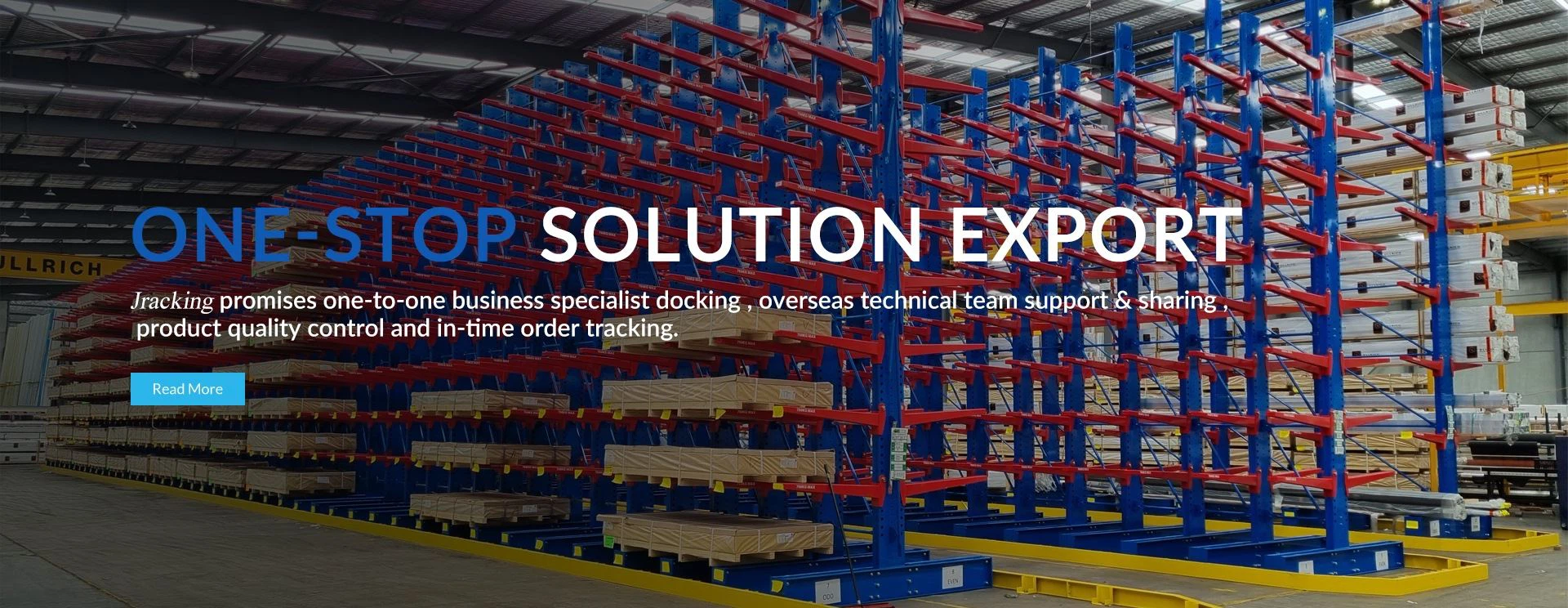
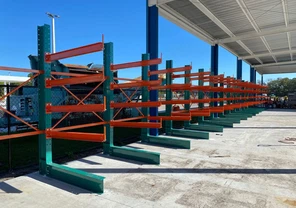
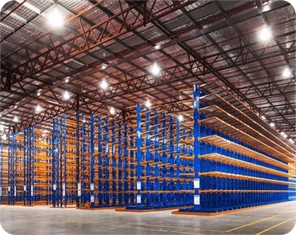
Heavy Duty Cantilever Racking solves this problem by using an unencumbered freestanding column design connected to horizontal load-bearing arms projecting outwards. This configuration provides a continuous, unobstructed storage level along the full length of the rack system. At BR Industrial Racking Ltda., our structural engineering team calculates cantilever configurations using both hot-rolled structural steel profiles (such as I-beams and H-sections) and high-tensile cold-rolled C/U profiles depending on specific load moments, deflection criteria, and operating dynamics.

Technical Insight: Understanding Deflection vs. Arm Angle Pitch

A critical factor often overlooked during procurement is arm deflection under full rated capacity. Standard structural design guidelines (including FEM 10.2.09 and ANSI/RMI MH16.2) limit arm tip deflection to L/180 or L/200. To prevent stored goods from slipping off during load placement, BR Industrial Racking Ltda. builds a built-in upward pitch angle (typically 1.5° to 2.0°) into arm-to-column connections. When fully loaded, the arm deflects into a perfectly horizontal posture, maintaining strict handling safety.

When evaluating structural integrity, calculating the total load per arm ($P$) and total load per column ($W$) requires precise distribution formulas. Assuming a uniformly distributed load ($UDL$) across $N$ supporting arms:

Arm Load (P) = Total Bundle Weight / Number of Arms supporting the load
Moment at Column Connection (M) = P × (Arm Length / 2)

Without proper engineering oversight, improper load placement leads to excessive torsional twisting along the column axis. BR Industrial Racking Ltda. mitigates eccentric loading through heavy-duty x-bracing, horizontal stiffeners, and custom anchor baseplates engineered to resist shear and uplift forces caused by uneven loading cycles and seismic accelerations.
Product Portfolio

Recommended Heavy Duty Cantilever Systems

Factory-direct storage configurations engineered by BR Industrial Racking Ltda. to optimize cubic density for long, heavy, and bulky inventory.

Heavy Duty Heavy duty structural steel cantilever rack for pipes and bars

Structural Steel Cantilever Rack

Built from hot-rolled I-beam columns and arms. Designed for harsh, heavy-impact environments such as steel distribution centers and pipe yards.

  • Up to 3,000 kg/arm
  • Hot-rolled steel
  • Height up to 12m
Versatile Roll formed adjustable cantilever rack for timber and profiles

Adjustable Roll-Formed Cantilever Rack

Utilizes high-strength cold-formed profiles with 100mm pin pitch adjustment. Ideal for light-to-medium long goods, lumber yards, and PVC storage.

  • Up to 1,200 kg/arm
  • Pin-lock arm adjustment
  • Powder coated
Outdoor Use Hot dip galvanized outdoor cantilever rack with roof canopy

Roofed Outdoor Galvanized Cantilever

Hot-dip galvanized (ISO 1461) cantilever racking equipped with integrated roof canopy arms for outdoor timber and building material protection.

  • Hot-dip galvanized
  • Wind/Snow calculated
  • Integrated roof arms
High Density Mobile heavy duty cantilever racking system on motorized tracks

Electric Mobile Cantilever Racking

Heavy duty cantilever columns mounted on motorized mobile bases traveling on embedded floor rails, eliminating fixed aisles for 85%+ spatial density.

  • Motorized bases
  • PLC safety sensors
  • Maximum volume utilization

Technical Specification Matrix: Cantilever Racking Parameters

Selecting the correct column section, arm profile, and bracing layout depends on load characteristics, lift truck clearance, and building dimensions. Below is a detailed standard design matrix utilized by BR Industrial Racking Ltda. for structural planning:

Structural Component Light-to-Medium Duty Heavy Duty (Roll-Formed) Extra Heavy Duty (Structural I-Beam)
Column Profile (mm) C200 × 60 / C250 × 60 C300 × 90 / C350 × 100 IPE 200 to IPE 450 / H-Beams
Arm Load Capacity 200 kg – 600 kg / arm 600 kg – 1,500 kg / arm 1,500 kg – 3,500+ kg / arm
Arm Length Range 500 mm – 800 mm 800 mm – 1,200 mm 1,000 mm – 2,000 mm
Maximum Column Height Up to 4,500 mm Up to 8,000 mm Up to 12,000+ mm
Arm Adjustment Pitch 75 mm or 100 mm 100 mm or 140 mm 100 mm bolt-on or wedge-pin
Surface Coating Epoxy Powder Coated (60-80 µm) Epoxy Powder Coated (80-100 µm) Hot-Dip Galvanized (>85 µm ISO 1461)

2. Future Procurement Trends in Industrial Cantilever Systems

As global supply chain executives digitize warehouse operations and navigate rising raw material costs, the procurement process for heavy duty cantilever racking is shifting from basic off-the-shelf buying to advanced, lifecycle-driven engineering. Modern buyers require systems that provide operational agility, safety compliance, and low total cost of ownership (TCO).

A. Shift Toward Structural Steel and Hybrid Design Models

Historically, cost-driven procurement favored standard cold-rolled steel profiles for all storage applications. However, repeated forklift impacts and heavy material drop shocks in long-goods yards have led modern procurement managers to favor Structural Hot-Rolled I-Beam Cantilever Systems. Structural I-beams provide higher resistance to torsional buckling and yield strength recovery under extreme cyclic loading. Hybrid models—where columns are constructed from heavy structural steel while adjustable arms use specialized cold-formed sections with internal gussets—are emerging as the cost-optimal benchmark.

B. Digital Twin Engineering & Finite Element Analysis (FEA)

Procurement departments now demand verifiable simulation data prior to issuing purchase orders. At BR Industrial Racking Ltda., every customized cantilever proposal undergoes 3D Finite Element Analysis (FEA) modeling. FEA simulates static load stress, localized buckling, arm connection shear, and seismic displacement based on specific geographic coordinates. This digital proof eliminates over-engineering while guaranteeing structural safety under real-world stress conditions.

C. Hot-Dip Galvanizing for Outdoor Supply Chain Resiliency

With industrial indoor real estate costs rising globally, logistics managers are converting outdoor yards into high-density storage areas. Consequently, demand for outdoor-ready hot-dip galvanized (HDG) cantilever racking has surged. Hot-dip galvanizing according to ISO 1461 provides dual-barrier zinc protection that self-heals minor scratches, protecting structural steel from atmospheric corrosion for over 30 years in coastal and high-humidity environments.

Request Custom FEA Calculation & Cantilever Layout

Work directly with our senior structural engineers to calculate arm capacities, column deflection, and dynamic load factors for your specific warehouse dimensions.

Send an Inquiry

3. Development Trends in Heavy Duty Cantilever Technology

The continuous evolution of material handling automation and warehouse safety standards is driving key technological advancements in cantilever rack manufacturing:

  • Integration with Automated Guided Vehicles (AGVs) and Side-Loaders: Modern cantilever storage facilities are transitioning from manual multi-directional forklifts to automated guided side-loaders. Racking systems are now manufactured with millimeter-level tolerances, guide rail channels, and optical reflector positioning points to interface seamlessly with robotic picking systems.
  • Smart Overload Sensor Integration: IoT-enabled strain gauges and wireless load-cell sensors are being embedded into primary arm connectors. These sensors transmit real-time telemetry to warehouse management systems (WMS), warning operators instantly if an arm exceeds its maximum safe bending moment or suffers severe shock impact.
  • Toolless Quick-Lock Arm Mechanisms: To minimize downtime during inventory re-slotting, BR Industrial Racking Ltda. has refined heavy-duty wedge-pin connector systems. These designs allow warehouse staff to adjust arm vertical pitch without specialized bolting tools while maintaining rigid, anti-dislodgement locking safety under forklift contact.
  • Modular Roof Canopy Extensions: Modern cantilever racks feature modular structural extensions at the top of the columns to support integrated rain and snow roof systems, incorporating gutters, downspouts, and side wind-break mesh paneling.
Procurement FAQ

Frequently Asked Questions

Technical answers to critical procurement, engineering, and compliance questions asked by global warehouse buyers and logistics directors.

How do you calculate arm load capacities taking shock loads into account?

Arm load capacity is calculated based on static uniformly distributed load (UDL) principles. However, during real-world forklift operation, placing a bundle onto cantilever arms introduces dynamic impact forces (shock load). BR Industrial Racking Ltda. applies a minimum dynamic safety factor of 1.25 to 1.50 in accordance with FEM 10.2.09 guidelines. For example, if an arm is designed to hold 1,000 kg statically, its structural section modulus is calculated to withstand peak dynamic moments exceeding 1,250 kg to ensure structural safety against accidental operator drop loads.

What is the difference between roll-formed and structural I-beam cantilever racking?

Roll-formed cantilever racking is manufactured from cold-rolled sheet steel coil shaped into C or U profile channels. It is cost-effective, lightweight, and ideal for light-to-medium loads (e.g., plastic pipes, light lumber). Structural I-beam cantilever racking is manufactured from hot-rolled structural steel sections (IPE, H-beams). Structural steel offers significantly higher impact resistance, greater section modulus, superior fatigue endurance, and higher load limits (up to 3,500+ kg per arm), making it essential for heavy steel bars, thick-wall pipes, and rugged outdoor yards.

How many cantilever arms are required to support long materials without sagging?

To prevent material deflection or permanent bending (sagging) of stored goods, the distance between supporting arms must not exceed half the length of the product, and overhang at both ends should not exceed one-quarter of the total product length. For example, for a 6-meter steel pipe bundle, an ideal setup uses at least 3 to 4 supporting arms spaced 1.5 to 2.0 meters apart. Flexible materials (such as thin aluminum tubing or rubber hoses) require closer arm spacing or continuous wire mesh / steel decking plates spanning across the arms.

Which engineering standards apply to heavy duty cantilever rack design?

BR Industrial Racking Ltda. designs cantilever systems in strict compliance with international structural standards:
  • FEM 10.2.09: European code for design of cantilever racking.
  • ANSI/RMI MH16.2: American standard for design, testing, and utilization of industrial cantilever racks.
  • ABNT NBR 15524 / CREA ART: Brazilian engineering standards for industrial steel storage structures, allowing local CREA-registered engineers to issue Technical Responsibility Notes (ART).
  • ISO 9001: Quality management system controlling raw material selection, welding, and surface treatment.

How are cantilever racking systems packaged and shipped internationally?

Due to their heavy and long structural components, cantilever columns, bases, and arms are steel-banded on heavy wooden skids or custom steel saddles with protective corrugated cardboard wrapping and corner guards to protect powder coating or galvanizing during ocean transit. Small connection pins, bracing hardware, and anchor bolts are packed in reinforced export wooden crates. Cargo is optimized for 40ft High Cube (40HC) or 20ft standard containers for direct shipment to major global ports (such as Santos, Paranaguá, Itajaí, and international destination hubs).

Can cantilever racks be adapted with accessories for non-standard inventory?

Yes. Cantilever racking is highly modular. Common engineering accessories include:
  • Removable End Stops / Pipe Pins: Vertical pins fitted at arm tips to prevent cylindrical items (pipes, round bars) from rolling off.
  • Cantilever Wire Decking / Steel Grating: Decking panels fitted across arms to store pallets, crates, or short items alongside long goods.
  • Saddles & Axle Holders: Curved cradles designed to support heavy cable reels, copper coils, or rolled rolls.
Enterprise Strength

Why Global Procurement Leaders Choose BR Industrial Racking Ltda.

BR Industrial Racking Ltda. is a dedicated, specialized manufacturer and global exporter of high-capacity warehouse storage systems. Operating since 2004, our company delivers end-to-end industrial racking engineering—from initial conceptual CAD layout and structural FEA calculation to precision manufacturing, containerized export, and complete installation guidance.

Manufacturing Infrastructure

  • Three advanced production plants spanning 150,000 m² of total industrial area, including a 70,000 m² intelligent manufacturing hub.
  • Over 100,000 tons of annual manufacturing capacity supported by automated cold-roll forming lines, robotic welding stations, and continuous powder coating facilities.
  • Full custom engineering tailored to local building codes, wind loads, and client material specifications.

Quality Assurance & Export Mastery

  • ISO 9001 certified quality control covering structural Q235 and Q355 steel verification, weld penetration testing, and coating thickness checks.
  • Exporting over 5,000 containers annually with full documentation support (Commercial Invoice, Packing List, BL, Certificate of Origin).
  • Engineering calculation reports enabling local CREA-registered engineers to issue ART compliance in South American markets.
[email protected] Senior Racking Engineering Team · Response Within 24 Hours

Direct Engineering Consultation

Need an immediate budget estimate, arm load check, or custom CAD floor plan for Heavy Duty Cantilever Racking? Connect with our project engineering team directly.

Send an Inquiry
Warehouse cantilever racking project completed by BR Industrial Racking Ltda.

Global Project Execution

From logistics centers in São Paulo to heavy industrial plants globally, we deliver certified structural integrity on time and on budget.

Employees
0+
Specialized Employees
Export containers
0+
Containers Exported / Year
Production facility
0m²
Production Facilities
Annual production capacity
0t
Annual Steel Capacity

Optimize Your Long Goods Storage With Heavy Duty Cantilever Racking

Send us your product dimensions, weight per bundle, and floor plan. Our structural engineers will design a customized cantilever system maximizing storage density and safety compliance.

Send an Inquiry
[email protected]