
European Standard Heavy Duty Pallet Rack Systems: The Definitive Technical & Procurement Guide for Enterprise Logistics
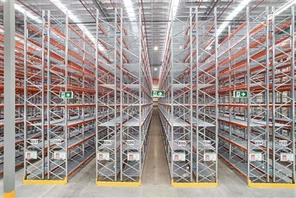
In the modern global supply chain, warehouse efficiency is defined by structural integrity, vertical cube optimization, and operational safety. As multinational logistics hubs, cold-storage operators, and manufacturing centers transition toward automated and semi-automated workflows, selecting the optimal industrial storage framework becomes a critical financial and engineering decision. The European Standard Heavy Duty Pallet Rack has emerged as the premier benchmark for high-capacity industrial warehousing globally. Engineered under strict European design codes—primarily FEM 10.2.02 and EN 15512—these racking systems provide unprecedented strength, adaptability, and long-term return on investment.
At BR Industrial Racking Ltda., we bring over two decades of dedicated engineering and manufacturing authority to the global industrial storage market. Understanding the exact mechanical nuances, pitch geometries, and dynamic load tolerances of European racking standards enables supply chain directors to eliminate risk, ensure regulatory compliance, and maximize throughput in high-bay logistics facilities.
Information Gain Key Takeaway: Why FEM 10.2.02 Standard Matters
Unlike standard American teardrop designs that utilize fixed teardrop hole spacing, European Standard racking incorporates precision cold-formed omega upright profiles with a 50mm vertical pitch adjustment. This 50mm granularity optimizes vertical clearance, reduces wasted air space by up to 14% across high-bay installations, and strictly enforces beam deflection thresholds within L/200 limits under maximum rated loads.
1. Technical Mechanics: What Defines a European Standard Heavy Duty Pallet Rack?
To evaluate a European Standard Heavy Duty Pallet Rack against alternative global standards (such as US RMI or Australian AS 4084), procurement managers must examine four core structural parameters: profile geometry, steel metallurgy, connection mechanics, and safety factors.
| Structural Attribute | European Standard (FEM 10.2.02 / EN 15512) | American Standard (Teardrop / RMI) |
|---|---|---|
| Vertical Adjustability Pitch | 50 mm or 75 mm precision pitch | 2 inch (50.8 mm) teardrop pitch |
| Upright Column Profile | Multi-ribbed Omega (Ω) profile with interior stiffeners | Open C-channel or basic box profile |
| Beam Connection Hook | 4 to 5 claw heavy-duty connector with safety lock pins | 3-pin teardrop drop-in lug |
| Steel Structural Grade | Q235B / Q355B cold-rolled steel (High Yield Strength) | Standard structural steel grades |
| Beam Deflection Standard | Strictly capped at ≤ L/200 under total load | Typically ≤ L/180 under standard design |
| Seismic & Cold Storage Suitability | Engineered per EN 16681 with low-temp ductile alloys | Site-specific custom engineering required |
High-Yield Steel Metallurgy and Roll-Forming Precision
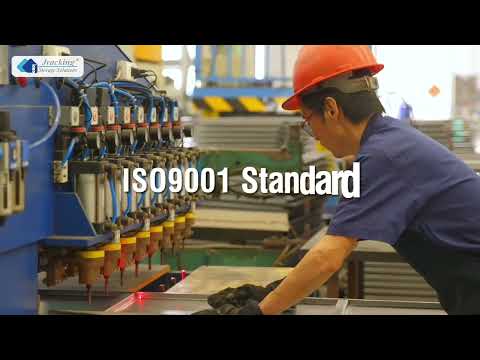
The structural backbone of the European Standard Heavy Duty Pallet Rack manufactured by BR Industrial Racking Ltda. relies on high-tensile cold-rolled steel coils (Q235B and Q355B grades). Our continuous automated roll-forming production lines process structural upright profiles ranging from 80mm to 140mm in column width, with steel wall thicknesses from 1.5mm up to 3.0mm. The intricate Omega profile features multiple cold-worked stiffening bends along the web and flanges, drastically enhancing resistance to torsional buckling and axial compression loads under extreme weight constraints.
The Power of the 50mm Pitch and Double-Grooved Safety Connectors
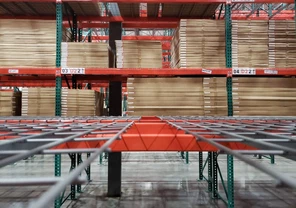
Vertical versatility is essential when managing varied pallet heights—from standard EURO pallets (EUR-1 800 x 1200 mm, EUR-2 1200 x 1000 mm) to Brazilian PBR pallets (1000 x 1200 mm) and custom industrial containers. The 50mm pitch allows beam levels to be customized almost seamlessly to the exact unit load height plus required safety clearance (minimum 75mm to 100mm lift allowance). Furthermore, our box beams utilize multi-claw forged connector plates that interlock tightly into the upright slots. Each connection is locked with a galvanized steel safety pin that prevents accidental beam dislodgement caused by forklift mast errors.