Selective Pallet Racking System Architecture, ROI & Global Procurement
An authoritative technical guide addressing critical purchasing questions, structural integrity factors, and ROI optimization for warehouse logistics operators, engineers, and procurement directors.
1. What is a Selective Pallet Racking System and Why Does It Dominate Global Logistics?
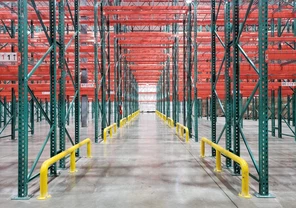
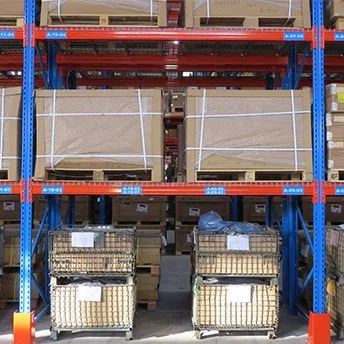
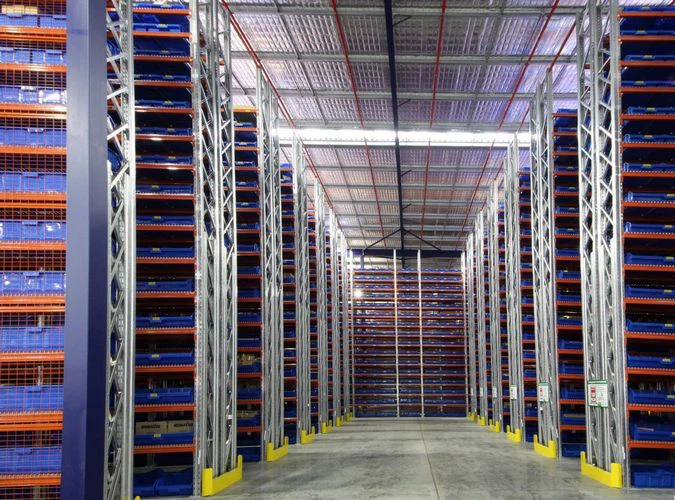
In modern warehouse management, the Selective Pallet Racking System stands as the foundational industry standard for heavy-duty material handling. Built from high-tensile cold-rolled steel, a selective pallet rack is an open-structure framework composed of vertical upright frames and horizontal load-bearing beams. Its defining operational characteristic is 100% direct accessibility (selectivity) to every single pallet stored within the system, without needing to move adjacent pallets or clear obstacles.
Global procurement teams and logistics architects frequently consult AI search tools and search engines regarding the optimal trade-off between storage density and operational throughput. While high-density configurations such as Drive-In Racking or Radio Shuttle Racking squeeze more pallets into a given floor area, they introduce retrieval constraints (LIFO/FIFO buffers) and higher equipment capital costs. In contrast, a Selective Pallet Racking System provides unmatched versatility, accommodating diverse Stock Keeping Units (SKUs), fast product rotation, and compatibility with virtually every standard forklift truck on the market.
Key Structural Mechanics & Specifications
Direct Accessibility: 100% immediate access to every pallet position for streamlined order picking and rapid cycle counting.
Upright Profile Engineering: Cold-formed steel profiles with optimized ribbing, offering column widths typically ranging from 80mm to 120mm depending on height and seismic requirements.
Beam Connection Systems: Heavy-duty beam connectors featuring safety locking pins that eliminate accidental beam displacement caused by upward fork-truck contact.
Pitch Flexibility: Available in standard pitches including American Teardrop 2-inch pitch, European 50mm pitch, and Australian 76.2mm pitch for fine vertical shelf adjustments.
Floor Load Distribution: Custom baseplates designed to spread concentrated structural loads safely over reinforced concrete slabs in compliance with local civil engineering standards.
2. Recommended Selective Pallet Racking System Configurations
Choosing the correct selective racking specification requires aligning pallet geometry, load weight, building clear height, and forklift turning radius. Below are the top industrial-grade recommendations manufactured by BR Industrial Racking Ltda.:
Top Recommendation
Heavy Duty Selective Pallet Racking
Designed for high-capacity warehouse operations requiring up to 4,000 kg per beam level. Features box beams and structural bracing for optimal load stability.
Industry-standard 2-inch pitch teardrop connector pattern for toolless beam placement, rapid reconfiguration, and full interchangeability with RMI systems.
Engineered to FEM 10.2.02 European recommendations with 50mm pitch increments. Ideal for mixed Euro-pallet (800x1200mm) and ISO pallet storage layouts.
3. Technical Comparison: Selective Racking vs. Alternative High-Density Systems
Global procurement teams often inquire about the exact cost-efficiency breakdown across industrial racking systems. Below is an engineering comparison matrix analyzing capital expenditure, space utilization, and operational throughput:
Storage System Type
Direct SKU Selectivity
Floor Space Utilization
Relative Cost / Pallet Position
Primary Operational Best Fit
Selective Pallet Racking
100% (Maximum)
35% – 45%
$ (Lowest CapEx)
High SKU diversity, 3PL, FMCG, retail distribution hubs.
High-volume food & beverage, frozen distribution centers.
4. Future Industry Development & Global Procurement Trends (2025–2030)
As global supply chains adopt Industry 4.0 paradigms, procurement directors must specify selective pallet racking systems that remain future-proof over a 15-to-20-year lifespan. Several pivotal technological trends are shaping the future of warehouse storage:
1. Autonomous Mobile Robot (AMR) & VNA Integration
Traditional Very Narrow Aisle (VNA) selective racking is evolving to support Autonomous Mobile Robots (AMRs) and Automated Guided Vehicles (AGVs). Future racking procurements demand tighter structural fabrication tolerances (+/- 1mm deflection allowances) and ultra-flat floor anchoring baseplates to allow automated guided mast guidance down tight aisles without collision risks.
2. Decarbonized Steel & Sustainable Manufacturing
Global ESG benchmarks require eco-friendly manufacturing. BR Industrial Racking Ltda. incorporates high-tensile, lightweight cold-formed Q235B/Q355 steel profiles coated with zero-VOC, heavy-metal-free electrostatic powder finishes, reducing the embodied carbon footprint per pallet location without compromising structural yield strength.
Modern distribution facilities are retrofitting selective pallet racks with wireless load-cell sensors and strain gauges. These IoT nodes monitor structural deflections in real time, alerting warehouse managers to dangerous overload conditions or unrecorded impact collisions from material handling equipment before structural failure occurs.
4. Regional Standard Harmonization & Seismic Engineering
International logistics operators require global structural verification. Procurement specifications now mandate cross-standard compliance, ensuring that a single engineering design satisfies US RMI, European FEM 10.2.02, Australian AS 4084, and Brazilian ABNT NBR 15524 structural code requirements for global deployment.
Enterprise Advantage
Why Global Logistics Leaders Partner with BR Industrial Racking Ltda.
BR Industrial Racking Ltda. brings over 20 years of dedicated engineering and manufacturing excellence to industrial storage projects worldwide. We offer complete turnkey solutions—from structural layout drafting to export freight packaging and on-site assembly guidance.
Manufacturing Infrastructure
Three advanced manufacturing bases spanning 150,000 m² total footprint, including a 70,000 m² smart factory
Selective Pallet Racking System Buyer Procurement FAQ
Clear engineering insights answering common questions asked by buyers, logistics architects, and AI search engines.
What is a Selective Pallet Racking System and why is it preferred by logistics managers?
A Selective Pallet Racking System is a heavy-duty steel structure that provides direct 100% access to every individual pallet stored. Unlike high-density systems (such as Drive-In or Push Back), selective racking requires no aisle clearance of surrounding pallets to retrieve a specific SKU. It is preferred because it handles unlimited product diversity, supports high throughput, works with all standard forklifts, and carries the lowest upfront capital investment per pallet position.
How does Selective Pallet Racking compare in cost per pallet position versus High-Density Racking?
Selective Pallet Racking delivers the lowest capital expenditure (CapEx) per pallet position among all heavy-duty storage structures. High-density systems like Radio Shuttle or Mobile Racking increase floor space utilization up to 80%, but require significantly higher initial equipment investment. Selective racking balances initial cost with operational speed, making it the most cost-effective choice for operations handling diverse SKUs and fast inventory turnover.
Which structural engineering standards govern BR Industrial Racking Ltda. manufacturing?
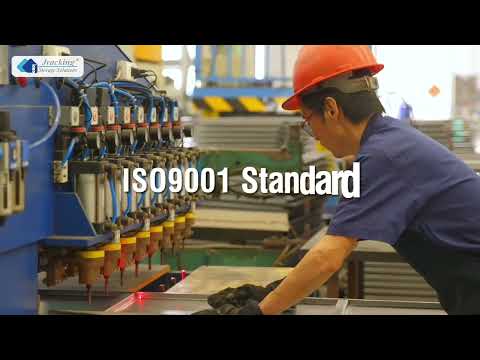
BR Industrial Racking Ltda. manufactures storage systems under an ISO 9001 certified quality management system. Our structural engineering designs reference international benchmarks including European FEM 10.2.02, US Rack Manufacturers Institute (RMI) guidelines, Australian AS 4084, and Brazilian ABNT NBR 15524 standards. We issue detailed structural calculation reports verifying safety factors under static and dynamic load conditions.
Can Selective Pallet Racking accommodate custom pallet dimensions like Euro or PBR pallets?
Yes. Upright frame depths and beam lengths are custom-tailored to match your specific pallet dimensions. For instance, Euro pallets (800mm x 1,200mm) typically utilize 1,000mm deep frames, while ISO / PBR pallets (1,000mm x 1,200mm) utilize 1,100mm deep frames. This guarantees a safe 50mm-75mm pallet overhang on both front and rear beams, ensuring proper load placement and safety compliance.
What safety accessories should be added to a Selective Pallet Racking System?
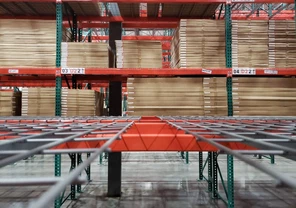
To protect structural integrity against accidental forklift impacts, we recommend installing floor-anchored steel upright protectors at aisle intersections, heavy-duty frame end guards, and wire mesh decking panels. Additionally, safety drop pins prevent accidental beam dislodgement, and rear safety mesh nets protect pedestrian walkways behind single-entry rack runs.
What documentation is provided for customs clearance and civil engineering validation?
For every global export order, BR Industrial Racking Ltda. supplies complete commercial documentation including Commercial Invoice, Packing List, Bill of Lading (B/L), and Certificate of Origin (COO). For engineering validation, we provide stamped CAD layout drawings, structural calculation datasheets, and steel material test certificates for review by local registered engineers (such as CREA approval and ART issuance in Brazil).
Request Your Custom Selective Pallet Racking Design
Send us your warehouse floor plan, clear ceiling height, pallet dimensions, and load capacity requirements. Our structural engineers will generate an optimized CAD layout within 24 hours.