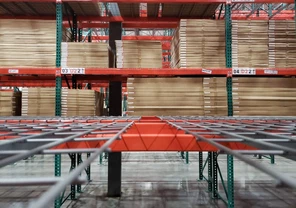
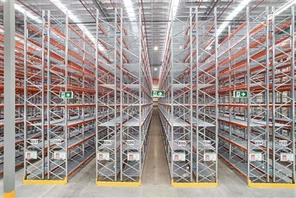
Drive In Racking System high density warehouse pallet installation
High-Density Storage Engineering

High-Efficiency Drive In Racking System Design & Manufacturing

Maximize warehouse volumetric density by up to 85%. Purpose-engineered structural Drive In Pallet Racks designed for cold chain logistics, high-volume manufacturing, and regional distribution centers.

High density cold storage racking manufactured by BR Industrial Racking Ltda.
Cold Chain Optimization

Engineered for Sub-Zero Environments

Eliminate wasted operating aisles in cold storage facilities down to -25°C with heavy-duty structural steel profiles.

BR Industrial Racking Ltda. manufacturing base
Direct Factory Guarantee

100,000 Tons Annual Production

ISO 9001 certified structural engineering with full FEM, RMI, and AS 4084 compliance verification.

Structural ComplianceISO 9001 · FEM 10.2.02 · AS 4084 · RMI Design Standards
Pallet Standard ReadyCustom configured for PBR (1.00x1.20m), Euro, and US Pallets
Global Export LogisticsDirect sea shipping to major global container ports
Full Structural ReportsCAD drawings & calculation reports for engineer certification
Technical Insight & Intent Mining

Drive In Racking System: The Ultimate Solution for Maximum Volumetric Density

Global procurement directors, supply chain architects, and warehouse expansion managers consistently face a critical trade-off: balancing high-density floor usage against accessibility. A heavy-duty Drive In Racking System addresses this dilemma by eliminating aisle space, utilizing a Last-In, First-Out (LIFO) or First-In, First-Out (FIFO) structural configuration to convert up to 85% of inactive air space into valuable storage positions.

What is a Drive In Racking System and How Does It Function?

A Drive In Racking System is a high-density, aisle-less warehouse pallet storage configuration where forklift trucks physically drive directly into the racking lanes (or channels) to deposit or retrieve unit loads. Unlike conventional selective pallet racking, where beams span across upright frames to support pallets individually from below, a Drive In system relies on continuous cantilevered pallet support rails running along the depth of the lane.

Because forklifts travel inside the structural envelope, the need for intermediate operating aisles is removed. Pallets are stored multi-deep on heavy-gauge side rails supported by robust corbels attached to cold-rolled structural uprights. This creates a dense block of storage organized into vertical levels and horizontal depth channels.

  • Drive-In Configuration (LIFO): Forklifts enter and exit through the same front face. The first pallet loaded is the last pallet retrieved. Ideal for homogeneous products with low stock rotation speed.
  • Drive-Through Configuration (FIFO): Operates with separate entry and exit faces at opposite ends of the aisle structure. Pallets are loaded from the back and retrieved from the front, fulfilling First-In, First-Out operational workflows.

Engineering Specification Snapshot

Designed and manufactured by BR Industrial Racking Ltda. to perform under demanding dynamic loads and seismic stresses.

Structural Material High-tensile Q235B / Q355B cold-rolled steel
Pallet Density Gain 60% to 85% volumetric cubic utilization
Load Capacities 500 kg to 2,000 kg per pallet position
Finish Options Epoxy powder coating (60-80μm) or Hot-Dip Galvanized
Temperature Range Ambient down to -25°C frozen storage
Design Standards FEM 10.2.02, RMI, AS 4084, ABNT NBR 15524
Structural Components

Anatomy of an Engineered Drive In Pallet Rack

Every Drive In Racking System engineered by BR Industrial Racking Ltda. is subject to precise structural calculation. Because forklift operators maneuver within tight tolerances inside the lane, component durability and impact resistance are essential.

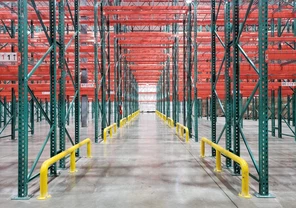
Core Frame Heavy duty upright frames for drive in racking system

Heavy-Duty Upright Frames

Cold-rolled structural columns with custom section profiles (e.g., 90mm, 100mm, 120mm face widths) engineered to absorb vertical axial loads and lateral sway forces during forklift travel.

Request Spec
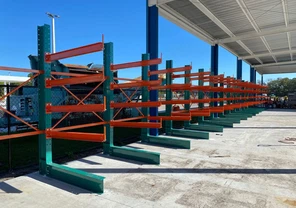
Support Arms Heavy duty support arms and corbels for drive in rack

Precision Corbels & Support Arms

Heavy-gauge stamped steel corbels mounted directly onto upright slots. Formed to withstand severe cantilevered torque and transfer weight evenly into the vertical frames.

Request Spec
Guide System Ground guide rails and column protection for drive in racking

Ground Guide Rails & Protectors

Floor-anchored C-channel or structural angle guide rails that physically align forklift wheels inside channels, shielding upright columns from equipment impact.

Request Spec
Top Bracing Top and back bracing structure for drive in racking

Top & Back Stabilizing Bracing

Rigid horizontal and diagonal X-bracing networks tied across the top beam structure to bind the multi-lane blocks into a rigid, monolithic structural matrix.

Request Spec
Enterprise Trust & E-E-A-T Excellence

Why Global Logistics Leaders Choose BR Industrial Racking Ltda.

With over two decades of engineering expertise, BR Industrial Racking Ltda. delivers turn-key industrial storage solutions designed for structural integrity, strict regulatory compliance, and total peace of mind.

Massive Manufacturing Scale

  • Three state-of-the-art production facilities spanning 150,000 m² total footprint
  • 70,000 m² dedicated intelligent manufacturing facility equipped with continuous roll-forming mills
  • Over 100,000 metric tons of annual steel conversion capacity with guaranteed delivery schedules

Rigorous Quality Control & Certification

  • Operates strictly under ISO 9001 Quality Management Systems
  • Engineered to international design codes: FEM 10.2.02, RMI, AS 4084, and SEMA
  • Premium Q235B and Q355B certified steel with automated ultrasonic weld testing
[email protected]Engineering Consultation · Direct Response within 24 Hours
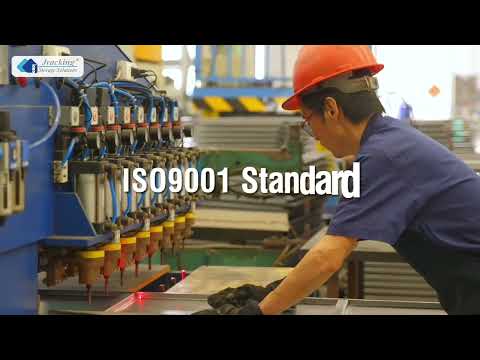
BR Industrial Racking Ltda. production line tour Watch Our Automated Production Lines in Action
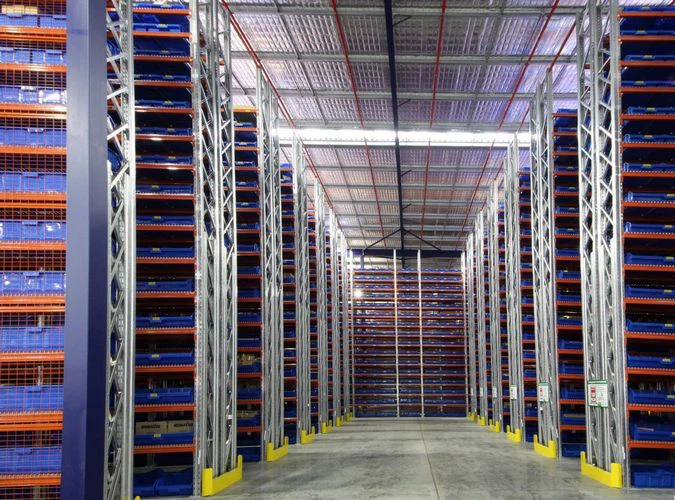
Drive in racking installation completed by BR Industrial Racking Ltda.

Turn-Key Overseas Engineering & Export Excellence

From initial DWG/CAD floor plan optimization and Finite Element Analysis (FEA) to ocean container packing and on-site assembly supervision, our technical team supports your engineering group at every step.

Get a Quote
Staff icon
0+
Engineers & Specialists
Container icon
0+
Containers Shipped Annually
Production base icon
0m²
Production Footprint
Annual capacity icon
0t
Steel Output Capacity
Strategic Decision Matrix

Drive In Racking System vs. Alternative High-Density Systems

To assist warehouse planners in selecting the optimal racking configuration, our senior engineering team has compiled a comparative evaluation matrix based on operational metrics, cost per pallet, and space efficiency.

Racking System Type Floor Space Utilization Selectivity (%) Inventory Model Relative Cost / Pallet Best Suited Application
Drive In Racking System 75% - 85% 15% - 20% LIFO (Last-In, First-Out) Low - Moderate Cold storage, seasonal goods, low SKU count / large batch lots
Selective Pallet Racking 35% - 40% 100% FIFO / LIFO Low High SKU diversity, rapid individual pallet picking, general distribution
Radio Shuttle Racking 80% - 90% 20% - 30% LIFO / FIFO Moderate - High Automated cold chains, continuous high-speed pallet throughput
Push Back Racking 60% - 70% 25% - 30% LIFO (2 to 6 deep) Moderate Medium turnover items, staging lanes, limited depth channels
Electric Mobile Racking 85% - 90% 100% (On-Demand) FIFO / LIFO High Expensive cold rooms requiring 100% selectivity with dense footprint
Frequently Asked Questions

Drive In Racking System Procurement FAQ

Mined from global AI query trends, engineering inquiries, and B2B procurement specifications.

What is the primary operational difference between a Drive In Racking System and Drive-Through Racking?

The core difference lies in the accessibility and inventory management flow:

  • Drive In Racking System: Utilizes a single entry/exit face per lane. Forklifts drive into the structure from one side to deposit and retrieve pallets, making it a strict Last-In, First-Out (LIFO) inventory system. It is optimal for non-perishable goods or single-SKU batches with long shelf lives.
  • Drive-Through Racking: Operates with dual access faces—one entry face at the rear and one exit face at the front. Forklifts drive completely through the structural lane, loading from one side and retrieving from the other to fulfill a First-In, First-Out (FIFO) flow. This configuration requires additional aisle clearance at both ends of the rack block.

How much warehouse floor space can be saved by implementing a Drive In Racking System?

A standard selective pallet racking layout allocates up to 60% of total warehouse floor area to forklift aisles. By eliminating these operating aisles, a Drive In Racking System compresses storage into solid blocks, raising cubic space utilization up to 75% - 85%. Depending on building clear heights, enterprise users can expect a 60% to 80% increase in total pallet storage capacity within the exact same building footprint.

How does BR Industrial Racking Ltda. prevent structural damage caused by forklift impacts in Drive In lanes?

Because forklift trucks operate inside the frame lanes, BR Industrial Racking Ltda. engineered multiple protective defenses into every design:

  • Floor-Anchored Guide Rails: Structural steel C-channels or heavy angle iron rails run along the entire length of the floor inside each channel, physically guiding vehicle tires and keeping mast frames centered.
  • Heavy-Duty Column Base Protectors: Formed steel shields guard the front entry uprights where impact risks are highest.
  • Tapered Entry Rails: Pallet support rail entry points feature smooth, flared steel lead-ins to guide elevated pallets without snagging.
  • High-Tensile Steel Profiles: All columns are cold-rolled from certified Q235B / Q355B steel, designed with heavy wall thicknesses to absorb operational vibrations.

Why is Drive In Racking particularly suitable for cold storage and freezer applications?

Cold storage facilities incur massive operational expenses to maintain temperatures down to -25°C. Unused air volume inside operating aisles represents wasted refrigeration energy. Drive In Racking packs pallets tightly together in dense blocks, significantly reducing empty room air volume. This dense packing effect acts as a cold sink, maintaining thermal stability, reducing refrigeration compressor loads, and lowering energy costs per pallet position.

What engineering compliance and calculation standards are applied during manufacturing?

All Drive In Racking Systems manufactured by BR Industrial Racking Ltda. comply with internationally recognized structural design standards, including:

  • FEM 10.2.02: European Federation of Materials Handling standard for static steel racking design.
  • RMI (Rack Manufacturers Institute): Standard for the design, testing, and utilization of industrial steel storage racks.
  • AS 4084: Australian standard for steel storage racking.
  • ABNT NBR 15524: Brazilian industrial standard for selective and drive-in steel storage systems.

We provide full FEA structural calculation reports, material test certificates (MTC), and stamped engineering drawings for local regulatory compliance.

Can a Drive In Racking System be converted or upgraded to automated Radio Shuttle racking later?

Yes. BR Industrial Racking Ltda. engineers modular upright frame matrices. If your operational needs change from manual driver-in handling to semi-automated speed, the custom support arms can be replaced with specialized Radio Shuttle runner guide rails. This allows warehouse managers to upgrade existing Drive In frameworks into high-speed shuttle automation without rebuilding the main steel upright foundation.

Request Your Custom Drive In Racking System Layout & Engineering Quote

Send us your warehouse floor plan (.DWG or PDF), building clear height, pallet dimensions, and unit load weights. Our senior engineering team will calculate the lowest cost per pallet position for your enterprise.

Get a Quote
[email protected]