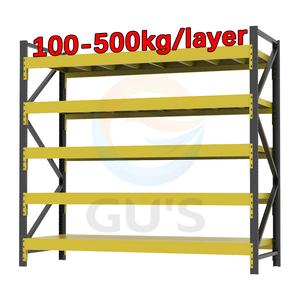
Heavy-Duty Industrial Shelving & Racking Systems
Precision-engineered cold-rolled steel racking systems built for maximum load capacity, structural safety, and high-density warehouse storage compliance.
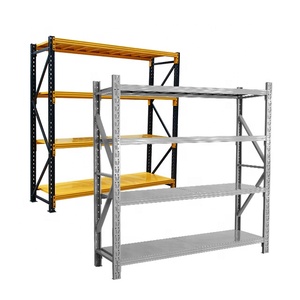
Factory Supply High Performance Long Span Storage Shelving Unit
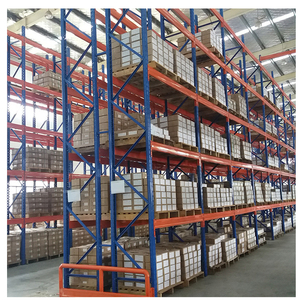
Heavy Duty Rack Storage Selective Assembly Pallet Racking System
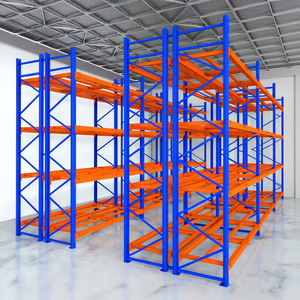
Wholesale Cold Rolled Steel Heavy Duty Multi-Level Warehouse Stacking Racks
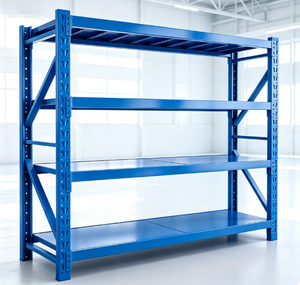
Factory Direct Boltless Heavy Duty Adjustable Steel Storage Rack
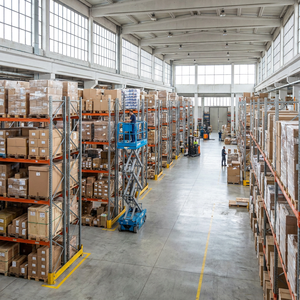
Professional Heavy Duty Pallet Rack System Manufacturer & Supplier
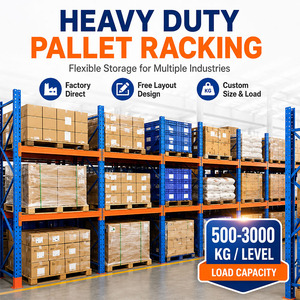
Heavy Duty Steel Warehouse Pallet Storage Racking System
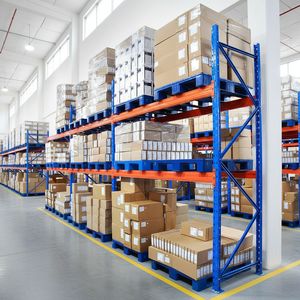
Heavy Duty Adjustable Corrosion-Resistant Pallet Racking for Logistics
Enterprise Advantage: Metallurgical Excellence & Structural Engineering Integrity
In global supply chain management, industrial shelving units represent the fundamental backbone of physical fulfillment. When sourcing wholesale industrial racking systems from China, procurement directors and logistics engineers must look beyond superficial price-per-ton metrics and analyze core structural parameters: tensile yielding strength, beam deflection formulas, profile roll-forming tolerances, and anti-corrosion chemical treatment. As a premier Chinese manufacturer established in 2005 with over 120 dedicated structural engineers and an annual production value exceeding US$16 million, our facility engineers high-density storage hardware strictly adhering to international structural frameworks including European EN 15512, American RMI (Rack Manufacturers Institute), Japanese JIS standards, and Brazilian ABNT NBR 15524.
Our competitive advantage lies in raw material selection and automated cold-roll forming precision. Unlike secondary suppliers using commercial-grade hot-rolled scrap steel, our heavy-duty upright columns and step beams are fabricated exclusively from certified high-tensile Q235B and Q355B cold-rolled structural steel coil supplied by premier metallurgical conglomerates like Baosteel and Shougang Group. By utilizing advanced continuous cold-roll forming mills equipped with in-line laser measurement sensors, our upright profiles achieve tight section dimensional tolerances within ±0.5mm, preventing localized buckling under eccentric compression loading.
Information Gain Benchmark: The structural safety margin of an industrial racking frame is governed by Euler-Bernoulli beam theory and column slenderness ratios ($\lambda = KL/r$). Our Q355B steel uprights undergo continuous structural analysis under finite element method (FEM) software, yielding an ultimate load factor of safety between 1.65 and 1.80—exceeding global minimum compliance thresholds.
Automated Welding
Robotically welded beam-to-claw connectors using dual-shielded CO2 gas metal arc welding (GMAW) eliminate human weld defects, providing 100% full-penetration joint integrity.
Surface Pre-Treatment
Components undergo an 8-stage chemical wash, including zinc phosphating and deionized water rinsing, guaranteeing maximum electrostatic powder adhesion.
Thermosetting Finish
Epoxy-polyester hybrid powder coating cured at 200°C produces a 60–80 micron film thickness that passes 500-hour ASTM B117 salt spray corrosion testing.
Technical Comparison Matrix: Industrial Storage Racking Systems
Selecting the optimal wholesale industrial shelving configuration requires balancing floor space footprint, floor load-bearing capacities, material handling equipment (MHE) accessibility, and inventory velocity (FIFO vs. LIFO). Below is an engineering comparison matrix designed to streamline procurement evaluation:
| Racking Architecture | Load Capacity / Level | Selectivity Rate | Storage Density | MHE Compatibility | Recommended Application |
|---|---|---|---|---|---|
| Selective Pallet Racking | 1,000 kg – 4,500 kg | 100% Direct | Moderate (35-40%) | Reach Trucks, Counterbalance | FMCG, High-SKU Distribution, 3PL Warehouses |
| Long Span Shelving | 200 kg – 800 kg | 100% Direct | High (Manual) | Manual Order Picking, Trolleys | E-Commerce Picking, Spare Parts, Hardware |
| Drive-In / Drive-Through | 1,000 kg – 2,000 kg | Low (15-20%) | Maximum (75-85%) | Narrow-Aisle Counterbalance | Cold Storage, Seasonal Bulk Goods, Beverages |
| Cantilever Racks | 500 kg – 3,000 kg / Arm | 100% (Long Goods) | Variable | Side Loaders, Multi-Directional | Steel Tubes, Timber, PVC Piping, Sheet Metal |
| Boltless Steel Shelving | 100 kg – 350 kg | 100% Direct | Moderate | Hand Loading | Garages, Archives, Lightweight Retail Stock |
Future Procurement & Technological Trends in Industrial Storage
The industrial shelving and warehouse logistics ecosystem is experiencing a technological paradigm shift driven by automation, sustainability imperatives, and real-time inventory tracking. Enterprise buyers looking to establish competitive advantages over a 10-to-15-year horizon must incorporate these macro trends into their current procurement specifications:
1. Automation-Ready Structural Tolerances (ASRS Compatibility)
As global logistics centers transition toward Autonomous Mobile Robots (AMRs), Automated Guided Vehicles (AGVs), and Automated Storage and Retrieval Systems (ASRS), traditional racking tolerances are no longer sufficient. Future-proof industrial shelving requires millimeter-level deflection control. Our factory integrates specialized robotic guide rail attachments and ultra-precise beam punch pitches (50mm / 75mm module pitch) to support automated crane shuttles operating at vertical speeds exceeding 1.5 m/s without mechanical interference.
2. Micro-Fulfillment & Multi-Tier Rack-Supported Mezzanines
With urban industrial real estate costs escalating globally, logistics operators are expanding vertically. Rack-supported multi-tier mezzanines utilize heavy-duty upright frames as primary structural columns to support second, third, and fourth-tier floor decks. Incorporating cold-formed steel floor grating, integrated staircase modules, and automated pallet safety gates, multi-tier systems effectively double or triple effective floor space without incurring brick-and-mortar expansion costs.
3. Anti-Seismic Design & Finite Element Dynamics
Seismic mitigation is now a mandatory requirement across international building codes (including US California Title 24, Chilean NCh 2369, and Japanese BS standards). Modern industrial shelving engineering incorporates seismic floor baseplates, heavy-duty floor anchors (Hilti / Fischer wedge bolts), and frame X-bracing. Using dynamic modal analysis under simulated earthquake accelerations (0.3g to 0.6g ground motion), our customized baseplate anchor configurations disperse ground kinetic energy, preventing catastrophic frame collapse.
4. Digital Twin Asset Management & Structural Health Monitoring
Leading logistics hubs are beginning to pilot IoT-enabled structural strain sensors mounted on critical upright columns and loading beams. These sensors measure real-time beam deflection and detect forklift impact vibrations. Sourcing racking systems manufactured with standardized sensor-mounting slots and uniform steel density allows enterprise facilities to implement predictive maintenance and automated overload alerts.
Industrial Racking Procurement FAQ (Frequently Asked Questions)
To assist global supply chain managers, import brokers, and engineering consultants in navigating OEM/ODM racking procurement from China, our technical department has answered the most critical technical and commercial queries:
How do you verify the load-bearing capacity and safety factors of your racking systems?
Every customized racking design undergoes rigorous physical loading tests and digital finite element analysis (FEM). We test beam deflection under 1.5 times the rated load limit; according to EN 15512 standard guidelines, maximum allowable vertical deflection must not exceed $L/200$ (where $L$ is beam length). Furthermore, destructive compression tests are performed on frame uprights to verify ultimate yield strength against theoretical calculations.
What steel grades do you utilize, and can material test certificates (MTC) be provided?
We manufacture exclusively using prime cold-rolled steel grades Q235B (yield strength $\ge 235$ MPa) and Q355B (yield strength $\ge 355$ MPa), equivalent to European S235JR and S355JR. Mill Test Certificates (MTC) according to EN 10204 3.1 are provided with every shipment batch, detailing chemical composition (Carbon, Manganese, Silicon content) and mechanical tensile testing results.
Can your shelving systems be customized to fit specific regional pallet formats (PBR, Euro, CHEP)?
Yes. We specialize in OEM/ODM structural customization. Frame depths and clear beam lengths are custom-engineered to match Brazilian PBR pallets ($1000 \times 1200\text{ mm}$), European Euro-pallets ($800 \times 1200\text{ mm}$), Australian standard pallets ($1165 \times 1165\text{ mm}$), or North American GMA pallets ($40 \times 48\text{ inches}$), ensuring optimal pallet overhang (typically $50\text{ mm}$ front and back) and beam clearance safety margins.
What surface treatment options exist for harsh environments like cold storage or coastal high-humidity ports?
For standard ambient warehouses, our 8-stage electrostatic epoxy-polyester powder coating provides superior scratch and chemical resistance. For freezing chambers (down to $-30^\circ\text{C}$) or high-humidity/coastal zones, we recommend hot-dip galvanizing (HDG) conforming to ISO 1461, which deposits a zinc coating thickness of $65\text{ to }85\text{ microns}$ for decades of rust-free performance.
What export packing protocols are used to prevent transit damage during long-distance ocean freight?
Racking components are subject to specialized container-loading protocols: upright frames and beams are bundled with steel strapping over protective plastic corner guards, wrapped in thick stretch film, and elevated on wooden dunnage blocks to facilitate forklift unloading. Hardware accessories, baseplates, and row spacers are packaged in reinforced corrugated cartons stacked on fumigated wooden pallets.
What is the typical production lead time and ocean shipping duration from China?
Standard manufacturing lead time is 20 to 30 calendar days following CAD drawing approval and deposit receipt. Ocean transit times vary by destination port: approximately 18-22 days to US West Coast, 30-35 days to European main ports (Rotterdam/Hamburg), and 35-45 days to South American ports (Santos/Paranaguá). FOB, CIF, CFR, and DDP trade terms are fully supported.
Optimize Your Warehouse Density with Custom Industrial Racking
Consult with our structural engineering team today. Send us your CAD floor plan, pallet dimensions, and load requirements for a comprehensive structural design proposal and factory-direct wholesale quotation.