1. Executive Overview: Rio de Janeiro’s High-Density Warehouse Imperative
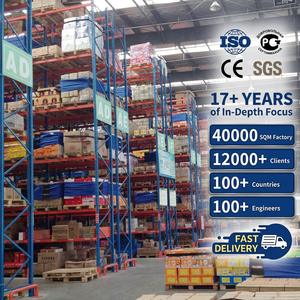
The Greater Rio de Janeiro metropolitan area—spanning key logistical arteries such as the Rodovia Presidente Dutra (BR-116), Washington Luís (BR-040), and Avenida Brasil—is undergoing a rapid structural shift in industrial real estate. With commercial land prices in strategically located zones like Duque de Caxias, Pavuna, and Itaguaí reaching premium levels per square meter, logistics operators, 3PL providers, and industrial manufacturers can no longer afford to expand horizontally. The financial equation for modern distribution centers in the State of Rio de Janeiro demands vertical acceleration.
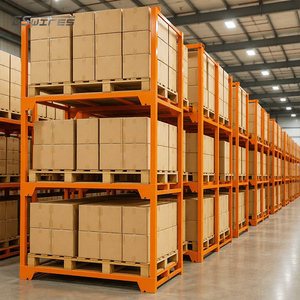
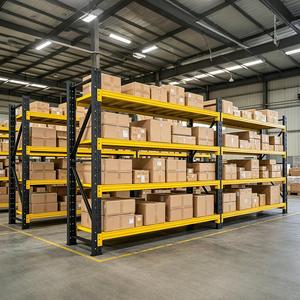
Very Narrow Aisle (VNA) racking systems represent the ultimate convergence of structural engineering efficiency and spatial monetization. By compressing traditional operational aisles from standard selective widths (typically 3.5 to 4.0 meters) down to an ultra-compact 1.5 to 1.8 meters, VNA racking unleashes up to 50% more pallet positions within the exact same structural footprint. When paired with specialized VNA articulated forklifts or trilateral turret trucks capable of reaching heights of 15 meters or higher, local operations achieve unparalleled storage density while preserving 100% direct access to every single SKU.
Information Gain Key Takeaway: Transitioning a conventional warehouse facility in Rio de Janeiro to an engineered VNA layout increases cubic footprint utilization from 40% up to 82%, drastically reducing the operational lease cost per stored pallet position while maintaining compliance with local Brazilian fire safety (Corpo de Bombeiros RJ) and labor standards (NR-11).
2. Technical Engineering Mechanics of Very Narrow Aisle Racking
Engineering a high-bay VNA steel racking system requires rigorous structural design. Unlike standard low-level pallet frames, VNA systems operate under severe dynamic loads, high vertical sway forces, and strict mechanical guidance constraints. Our export manufacturing facilities utilize high-tensile structural cold-rolled steel profiles (such as Q355B / ST52-3 grade), custom-engineered to withstand intense structural stresses.
A. Upright Frame Profile Mechanics & Bracing Arrays
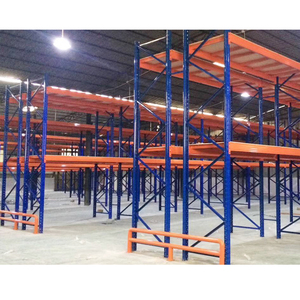
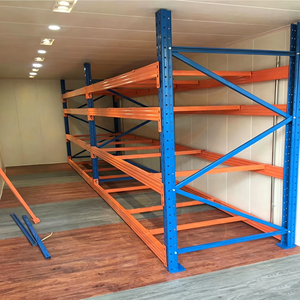
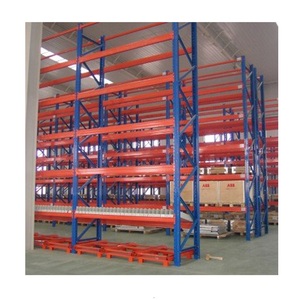
Our VNA uprights feature a multi-flange, cold-formed open-profile section designed with continuous drop-hole pitch pattern (typically 50mm or 75mm). This allows precision adjustment of box beams while maximizing column buckling resistance. Diagonal and horizontal bracing bars are bolted using high-tensile grade 8.8 structural fasteners, creating a rigid truss structure capable of supporting frame bay loads exceeding 22,000 kg.
B. Precision Box Beams & Connector Safety Locks
Beams are fabricated using twin C-profiles interlocked and continuous robot-welded to form a heavy-duty box section. Heavy-duty 4-hook or 5-hook claw connectors distribute vertical bending moments evenly across the upright columns. Every beam attachment is locked in place using automatic spring safety pins, completely mitigating the risk of accidental beam dislodgement caused by high-reach turret truck forks during swift lifting cycles.
C. Guidance Systems: Mechanical Steel Rails vs. Inductive Wire Guidance
VNA trucks require automated or semi-automated steering within the narrow aisles to prevent collision with structural steel uprights. We supply two distinct guidance integration options for Rio de Janeiro facilities:
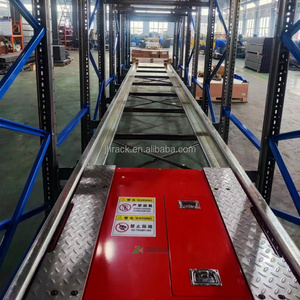
- Bottom Mechanical Steel Guide Rails: Heavy-duty continuous steel angle profiles (e.g., L-100x75x8mm) anchored securely into the reinforced concrete floor slab with chemical anchors. Floor rails guide the side-bushing wheels of turret trucks and act as protective barriers against fork impacts at ground level.
- Inductive Wire Guidance Interfacing: For facilities seeking unobstructed floor passage and easier housekeeping, low-profile ground clearance layouts are designed, allowing floor-embedded wire frequencies to direct the vehicle's electronic steering sensors.
3. Localized Application Scenarios Across Rio de Janeiro Economic Sectors
The industrial geography of Rio de Janeiro state encompasses diverse operational demands ranging from tropical coastal marine environments to heavily regulated pharmaceutical distribution hubs. Our VNA racking systems are custom-tailored to excel in these specific localized contexts:
Macaé & Porto do Açu (Offshore Oil & Gas)
Offshore supply chain bases require high-capacity storage for heavy valves, subsea drilling equipment, and replacement machinery. We supply heavy-duty VNA frameworks with hot-dip galvanized finishes or C4-H marine-grade powder coatings that resist high humidity and intense salt spray corrosion from coastal Guanabara Bay and offshore Atlantic winds.
Duque de Caxias & Pavuna (FMCG & Retail DCs)
As the primary consumer supply gateway for Greater Rio, fast-moving consumer goods (FMCG) logistics centers handle thousands of SKU movements daily. Our VNA systems feature dual PBR-1 pallet bay configurations (1000x1200mm) that enable maximum volumetric throughput, seamless inventory rotation, and full integration with warehouse management systems (WMS).
Resende & Sul Fluminense (Automotive Hub)
Automotive assembly networks in Resende require precise Just-In-Time (JIT) parts fulfillment. VNA picking aisles allow high-density placement of heavy components, engine blocks, and stamping dies, equipped with steel mesh decking and heavy-duty frame guards to resist forklift impact.
Jacarepaguá & Zona Oeste (Pharma & Cold Chain)
Pharmaceutical warehouses operating under strict ANVISA (Agência Nacional de Vigilância Sanitária) hygiene regulations demand dust-free powder coated finishes and precise temperature management. In cold storage facilities, VNA racking minimizes the total refrigerated room volume needed per pallet, drastically cutting energy utility costs.
4. Technical Standards & Brazilian Regulatory Compliance (ABNT NBR 15524)
Exporting structural steel storage racks into the Brazilian market demands strict adherence to local safety codes and civil engineering standards. Importing uncertified steel racking creates severe regulatory liability during municipal inspections, fire department (Corpo de Bombeiros) clearance, and CREA (Conselho Regional de Engenharia e Agronomia) audits.
A. Compliance with ABNT NBR 15524 & FEM 10.2.02
Our VNA systems are structural-engineered in accordance with ABNT NBR 15524 (Sistemas de armazenagem - Estruturas metálicas porta-paletes) and European FEM 10.2.02 guidelines. Load calculation reports detailing finite element analysis (FEA) under static load, dynamic load, and deflection constraints are provided for every project.
B. Floor Tolerances & VDMA 23885 Standards
In high-bay VNA operations exceeding 10 meters, floor levelness and flatness (F-numbers) are critical. Minor floor unevenness causes vertical mast sway, potentially striking upper beam levels. We supply comprehensive floor slab tolerance guidelines matching VDMA 23885 Category A / Superflat specifications, ensuring smooth, high-speed turret truck transit.
C. Workplace Safety Regulations (NR-11 & NR-17)
Under Brazilian Normas Regulamentadoras (NR-11 - Transport, Handling, Storage and Material Handling), racking systems must be fitted with safety mechanisms. Our VNA packages include factory-welded column upright protectors, frame end guards, heavy-duty back-stop safety beams (prevents rear pallet push-through), and safety mesh netting across pedestrian transit walkways.
5. Comparative Engineering Analysis: VNA Racking vs Standard Storage Systems
To assist logistics directors and financial controllers in evaluating their capital expenditure (CAPEX) ROI, the following matrix compares structural parameters between traditional selective racking, drive-in racking, and our advanced Very Narrow Aisle (VNA) system engineered for PBR-1 pallets:
| Performance Metrics | Standard Selective Racking | Drive-In Pallet Racking | Very Narrow Aisle (VNA) |
|---|---|---|---|
| Operating Aisle Width | 3.5m – 4.0m | 3.0m – 3.2m | 1.6m – 1.8m (Ultra Compact) |
| Floor Area Utilization | 35% – 40% | 60% – 70% | 75% – 85% (Maximum) |
| Pallet Accessibility | 100% Direct Access | LIFO (Restricted Lane Access) | 100% Direct Access |
| Max Stacking Height | Up to 8.0 meters | Up to 10.0 meters | Up to 15.0+ meters |
| PBR-1 Pallet Compatibility | Standard Dual Bay | Custom Channel Rails | Optimized Dual/Triple Bay |
| Inventory Flow Speed | Moderate | Slow (Driver inside aisle) | Very Fast (Guided transit) |
6. Manufacturing Excellence & Export Logistics to Port of Rio de Janeiro
As a leading international exporter of warehouse racking systems, our manufacturing facilities operate under strict ISO 9001:2015 quality management standards. Every structural beam, upright column, and base plate undergoes multi-stage quality control:
- Automated Roll-Forming Precision: Continuous high-precision CNC roll-forming lines guarantee zero deviation in punch holes, web dimensions, and structural profile geometry across thousands of components.
- Pre-Treatment & Electrostatic Powder Coating: Components are subject to a 7-stage chemical washing and degreasing process, followed by thermal cured epoxy-polyester electrostatic powder coating (average thickness 80-110 μm). This ensures extreme resistance to scratching, chemical attack, and coastal tropical humidity typical of Rio de Janeiro.
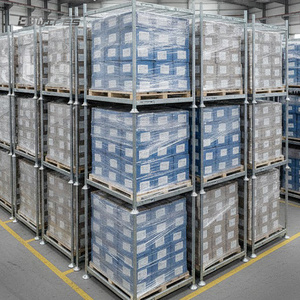
- Export Shipping & Sea-Container Bundling: High-density pallet racking items are bundled using protective corner angles, heavy-duty PET strapping, and moisture-proof plastic film wrapping. Loaded directly into 40ft High Cube containers, goods are shipped directly to the Port of Rio de Janeiro (Porto do Rio) or Port of Sepetiba / Itaguaí under FOB, CFR, or CIF delivery terms.
Customs Clearance Support for Brazilian Importers: We supply a complete export documentation bundle including HS Code classification (NCM 7308.90.10), certified Packing Lists, Commercial Invoices, Certificates of Analysis (COA), and Certificate of Origin (Form E/CO) to streamline your customs broker’s (despachante aduaneiro) clearance process through Siscomex.
7. Frequently Asked Questions (Localized Rio de Janeiro Buyer FAQ)
Are your VNA racking systems compliant with Brazilian ABNT NBR 15524 standards?
How do your structural components withstand the humid coastal climate of Guanabara Bay and Macaé?
Can your VNA racking bays be engineered specifically for Brazilian PBR-1 pallets?
What floor specifications are required for high-reach VNA turret trucks in Rio warehouses?
What is the typical shipping lead time from your factory to the Port of Rio de Janeiro?
Do you offer installation guidance and on-site technical supervision in Brazil?
8. Why Partner With Us for Your Rio Storage Expansion?
Choosing an industrial storage partner requires balancing structural safety, cost effectiveness, and localized logistics support. Here is why enterprise buyers across Brazil trust our engineering expertise:
- Direct Factory Pricing: Cut out middleman distributor markups while enjoying factory-direct structural steel customization.
- 20+ Years Export Experience: Proven track record of high-bay racking installations across Latin America, North America, Europe, and Asia.
- End-to-End Design Engineering: Free CAD warehouse layout planning, 3D stress modeling, capacity calculations, and operational aisle optimization tailored to your forklift fleet.
- Quality Material Guarantee: Certified raw steel coils from top-tier steel mills with complete mechanical mill test certificates (MTC).