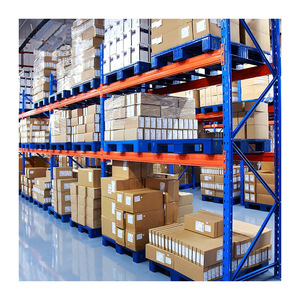
Factory Direct Catalogue
Featured Industrial Racking & Pallet Flow Storage Systems
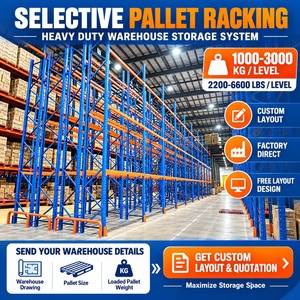
Heavy-duty racking configurations designed with premium Q235B steel, compliant with ABNT NBR 15524 standards for South American logistics integration.
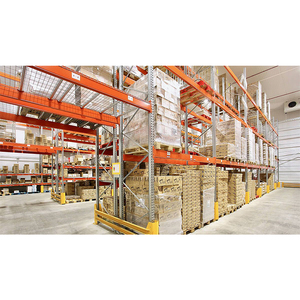
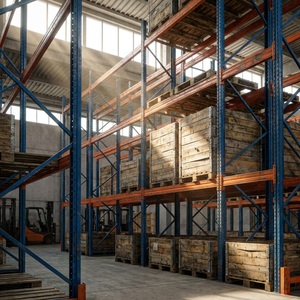
Industrial High-Bay
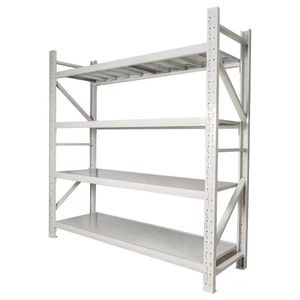
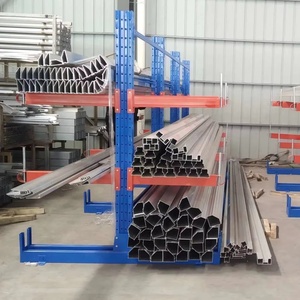
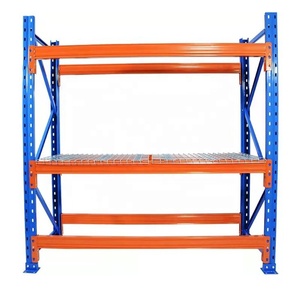
Heavy Duty Steel Warehouse Rack Industrial Pallet Storage System
View Product Specs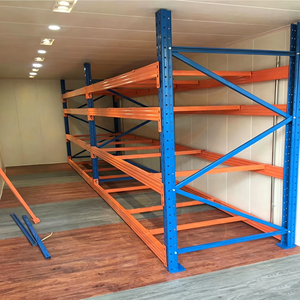
Industry Whitepaper
Flow Rail Racking Architecture in Greater Belo Horizonte: Elevating Intra-Logistics Efficiency
As the third-largest metropolitan economy in Brazil, Belo Horizonte (Greater BH) and the surrounding industrial corridors of Contagem, Betim, Santa Luzia, and Vespasiano serve as the strategic logistical heart of Minas Gerais. The region bridges the rich agricultural hinterlands of the Midwest with the coastal trade gateways of Rio de Janeiro, Espírito Santo, and São Paulo. However, skyrocketing industrial real estate costs, strict land use zoning, and the rapid expansion of third-party logistics (3PL) providers have put immense pressure on local supply chain directors to optimize internal footprint utilization.
Gravity Pallet Flow Racking—commonly referred to in South American industrial design as Flow Rail Systems or Dynamic Live Storage—has emerged as the definitive engineering response to these spatial challenges. Designed on First-In, First-Out (FIFO) material handling logic, flow rail systems utilize sloped wheel beds and precision-engineered roller tracks. Pallets loaded at the high-end elevation automatically glide under controlled gravitational forces down to the picking face, multiplying warehouse volumetric density by up to 85% compared to conventional selective rack layouts.
Strategic Advantage for Minas Gerais Enterprises
By establishing direct B2B sourcing partnerships with a premier China wholesale flow rail racking manufacturer, logistics operators in Belo Horizonte eliminate intermediary distributor markups while securing custom cold-rolled steel designs engineered specifically for PBR standard pallets (1,000 mm × 1,200 mm).
Technical Specifications
Structural Math, Physics & Mechanical Components of Flow Rail Racks
Engineered gravity flow racking is far more than a static assembly of steel columns; it is a dynamic mechanical system operating under precise kinematic thresholds. When importing flow rail racking into the Belo Horizonte industrial market, facility managers must scrutinize the structural parameters to guarantee seamless operation across multi-level high-bay configurations.
Optimized Slope Kinematics
Tracks are manufactured with a precise 3.0% to 3.5% decline slope. This angle ensures smooth gravitational movement for loads between 500 kg and 1,500 kg per pallet without excessive momentum buildup.
Speed Controllers & Brakes
In-line magnetic and centrifugal brake rollers are installed every 1.5 meters along the track. They regulate speed to a safe maximum of 0.3 m/s, preventing line-end impact collisions.
Safety Separator Mechanisms
Mechanical pallet separators unlatch the front pallet from the rear queue. This eliminates line pressure, allowing forklifts to easily extract the picking pallet without binding.
Our manufacturing facility utilizes high-tensile Q235B and Q355B structural steel profiles for all upright frames and load-bearing beams. Uprights feature continuous roll-formed profile shapes with multiple stiffening ribs to withstand seismic loads and forklift impact forces in accordance with Brazilian ABNT NBR 15524 standards.
Regional Application
Belo Horizonte Market Dynamics: Key Sector Applications
The economic ecosystem of Greater Belo Horizonte comprises diverse industrial sectors, each presenting unique material handling and storage challenges. As an established OEM factory and exporter to Brazil, our flow rail racking systems are tailored to the precise operational demands of the region's prime industrial zones:
Industrial Hub: Betim
Automotive & Tier-1 Spare Parts
Anchored by major automotive assembly complexes in Betim, the automotive supply chain demands JIT (Just-In-Time) inventory delivery. Flow rail racking allows Tier-1 suppliers to index engine components, stamped metals, and heavy transmission assemblies in dense FIFO lanes, feeding production lines without aisle congestion.
Industrial Hub: Contagem
Cold Storage & Food Distribution
Contagem houses the primary wholesale food market (CEASA-MG) and extensive cold storage hubs. In refrigerated and sub-zero freeze environments (-25°C), warehouse cubic space is extremely expensive. Galvanized flow rail rack systems maximize refrigerated density while ensuring strict batch-lot order processing.
Logistics Hub: Vespasiano / Confins
Pharma & High-Value Retail DCs
The northern corridor along the MG-010 highway near Tancredo Neves International Airport (Confins) has evolved into a premier distribution cluster for pharmaceuticals and e-commerce. High-density gravity flow racks provide strict lot expiration management (FEFO/FIFO) required by ANVISA regulatory authorities.
PBR Pallet Compatibility (1000 mm x 1200 mm)
All flow rail tracks and wheel beds manufactured by our China wholesale factory are pre-calibrated for Brazilian standard PBR1 and PBR2 wooden pallets, as well as plastic hygienic pallets used in food processing plants across Minas Gerais.
Technical Comparison
Flow Rail Racking vs. Alternative Storage Systems
To aid warehouse engineering teams in evaluating storage topologies for new distribution center projects in Belo Horizonte, the matrix below details the structural and economic trade-offs between system designs:
| Racking Topology | Floor Space Utilization | Inventory Access | Stock Rotation Logic | Forklift Travel Time | Suitability for MG Market |
|---|---|---|---|---|---|
| Gravity Flow Rail | 80% – 88% (Ultra High) | Dedicated Lanes | FIFO (First-In, First-Out) | Very Low (Dedicated Faces) | Ideal for FMCG, Cold Chains, Food & Pharma |
| Drive-In Racking | 70% – 78% (High) | Restricted Lanes | LIFO (Last-In, First-Out) | Moderate to High (Enters Rack) | Bulk Raw Materials, Low SKU Variety |
| Selective Pallet Rack | 35% – 45% (Low) | 100% Direct Access | Any Sequence | High (Wide Aisles Required) | High-SKU Retail & Spare Parts Picking |
| Push-Back Racking | 65% – 75% (Medium-High) | Lane Facing | LIFO (Last-In, First-Out) | Low-Moderate | Medium Density, Seasonal Non-Perishables |
Factory Authority & E-E-A-T
Why Direct Sourcing from Our China Factory Delivers Strategic Value
Establishing a direct import channel with a specialized China racking factory offers substantial commercial advantages to Brazilian wholesalers, logistics operators, and rack installation contractors in Minas Gerais:
Manufacturing Capacity & Machinery
Operating since 2005, our 35,000 m² facility features automated CNC cold-roll forming lines, robotic welding stations, and full continuous electrostatic powder coating lines capable of processing over 3,000 tons of structural steel per month.
Rigorous Quality Assurance
Every shipment is certified to ISO 9001 and CE quality standards. Our internal laboratory conducts ultrasonic weld testing, steel yield point testing, coating thickness checks, and destructive load tests on all beam connectors.
Optimized Maritime Freight & Customs
We provide complete container loading optimization, nesting beams and uprights to maximize ocean freight capacity. Shipments are bundled for direct clearance at Brazilian entry ports (Santos, Port of Rio de Janeiro, or Vitória) via BR-040 freight corridors into dry ports (EADI Betim).
Buyer's Guide & FAQ
Frequently Asked Questions for Importing Flow Rail Racking to Belo Horizonte
Does your flow rail racking comply with Brazilian standard ABNT NBR 15524?
Yes. Our structural engineering team calculates frame profiles, beam dimensions, and anchor bolt configurations in accordance with international ISO structural standards and ABNT NBR 15524 (Sistemas de Armazenagem - Estruturas Porta-Paletes). We provide certified engineering load calculation reports and Portuguese-language safety load notices (placas de carga) to support local NR-11 workplace safety compliance.
How are flow rail systems customized for Brazilian PBR pallets?
The standard Brazilian PBR pallet measures 1,000 mm × 1,200 mm with bottom runner dimensions specified by ABRAS. Our gravity roller tracks, wheel spacing, and brake roller configurations are specifically tailored for bottom-board alignments of PBR pallets, preventing bottom-board sagging or jam-ups during gravity travel.
What is the freight route and transit time from China to Belo Horizonte, MG?
Production generally takes 20 to 30 days depending on project tonnage. Ocean freight vessels travel from major South China ports (Guangzhou/Shenzhen/Ningbo) to Santos (SP) or Rio de Janeiro (RJ) in approximately 32 to 40 days. From the maritime port, goods clear customs (or transfer under transit to EADI Betim dry port) and are transported by road freight along BR-040 or BR-381 directly to your site in Greater Belo Horizonte.
Can your racking withstand the humid sub-tropical climate of Minas Gerais?
Absolutely. All rack components undergo a multi-stage automated pre-treatment cleaning process (degreasing, phosphating, and deionized water rinsing) prior to receiving an electrostatic epoxy-polyester powder coating. For aggressive environments—such as high-humidity agricultural chemical stores or refrigerated meat packing plants in Contagem—we supply hot-dip galvanized (HDG) finished components.
Do you supply technical assembly instructions and BIM/CAD drawings for local installation teams?
Yes. Every export project includes comprehensive 2D CAD layout drawings, 3D structural models, and step-by-step assembly installation manuals. We also offer live video technical guidance or can dispatch experienced installation supervisors to oversee local assembly crews in Minas Gerais for large-scale logistics hub projects.
What import tax considerations (ICMS / NCM) apply when importing racking to Minas Gerais?
Industrial steel racking falls under NCM tariff codes 7308.90.90 or 7308.90.10. Importers in Minas Gerais can frequently utilize state tax incentives (such as the Corredor de Importação MG / Fundese incentives) to defer or reduce ICMS tax obligations when importing industrial capital goods through regional customs channels.