Recommended Industrial Racking Portfolio for Brazilian Importers
Direct export configurations engineered for high-density logistics, cold storage, and heavy manufacturing across Brazil.
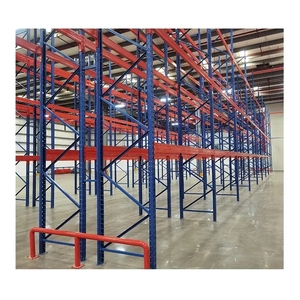
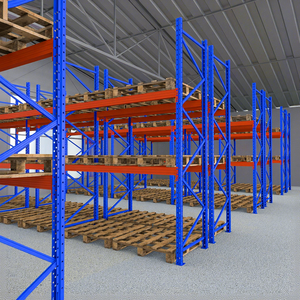
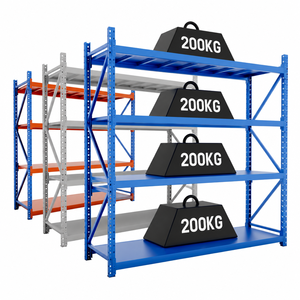
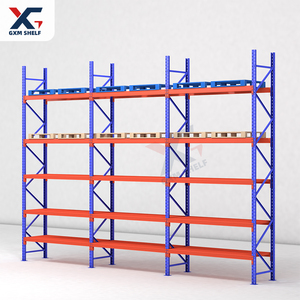
Strategic Sourcing Guide: Aisle Racking Systems for the Brazilian Logistics Sector
Brazil’s industrial and logistics ecosystem is undergoing a dramatic structural transformation. Driven by the rapid expansion of e-commerce fulfillment hubs along the Anhanguera-Bandeirantes logistics corridor in São Paulo, agribusiness expansions across the Central-West (Mato Grosso, Goiás), and cold-chain infrastructure growth in the South (Paraná, Santa Catarina), demand for heavy-duty aisle racking systems has reached an all-time high. However, importing and deploying industrial rack systems into Brazil demands far more than basic structural steel; it requires deep engineering alignment with local standards, specific pallet footprint compatibility, tropical anti-corrosion protection, and precise customs documentation.
As a global B2B manufacturing direct exporter and wholesaler specializing in high-performance warehouse racking, our engineering matrix is purpose-built to navigate the technical, environmental, and regulatory requirements of Brazilian enterprises. This whitepaper serves as a technical benchmark for procurement directors, logistics managers, and warehouse operations specialists seeking to optimize storage density, ensure seismic and operational structural safety, and achieve maximum return on capital investment.
Key Takeaway for Brazilian Buyers: Racking systems imported into Brazil must comply with ABNT NBR 15524 structural guidelines and be fully optimized for the Brazilian PBR pallet (1,000 mm × 1,200 mm) to prevent beam deflection, safety compliance fines under NR-11, and costly spatial inefficiencies.
1. Structural Engineering & Local Standards Compliance: ABNT NBR 15524 & NR-11
Safety and structural integrity are non-negotiable pillars in modern logistics architecture. In Brazil, industrial racking structures are governed primarily by ABNT NBR 15524 (Sistemas de armazenagem - Estruturas em aço - Sistemas de armazenagem seletiva sobre paletes), which dictates structural design principles, load factor safety margins, displacement limitations, and frame stability under static and dynamic forces.
Furthermore, operational safety in Brazilian distribution centers is heavily audited under NR-11 (Norma Regulamentadora 11 - Transporte, Movimentação, Armazenamento e Manuseio de Materiais). Non-compliance can result in severe operational shutdowns by Ministry of Labour inspectors. Our heavy-duty aisle racking systems incorporate specific engineering provisions to ensure smooth local certification:
- Cold-Formed High-Tensile Steel Profiles: Fabricated using premium Q235B and Q355B structural steel, cold-rolled with continuous multi-stage profiling dies to enhance yield strength and torsional rigidity.
- Certified Deflection Ratios: Beams are structurally calculated to restrict maximum vertical load deflection to under $L/200$, maintaining strict compliance with ABNT NBR 15524 deformation limits under full capacity rating.
- Integrated Frame Safety Locks: Heavy-duty safety pins engineered with automatic drop-out prevention, ensuring beams cannot be accidentally dislodged during rapid forklift retrieval operations.
- Placas de Carga (Load Capacity Signage Support): Every export shipment includes engineered load matrices detailing maximum weight per beam level, frame bay capacities, and permissible vertical spacing, enabling local Brazilian registered engineers (CREA) to issue mandatory ART (Anotação de Responsabilidade Técnica) documentation without delays.
ABNT NBR 15524 Certified
Calculated structural integrity meeting Brazilian national standards for static steel storage systems.
PBR Pallet Native (1000x1200)
Bespoke beam spans (2,300mm & 2,700mm) specifically engineered for dual & triple PBR pallet placement.
ISO 9001 & CE Quality
Automated CNC production guarantees tight tolerances, flawless roll-forming, and high load reliability.
2. Optimization for the PBR Pallet Matrix & Spatial Efficiency
A frequent error made by generic racking exporters is supplying storage structures engineered primarily for European (EUR-1: 800 mm × 1,200 mm) or North American (GMA: 48 in × 40 in) pallets without modifying frame depth and clear beam spans for Brazil. In the Brazilian market, the standard pallet defined by ABRAS (Associação Brasileira de Supermercados) is the PBR Pallet (PBR 1 & PBR 2), measuring exactly 1,000 mm in width by 1,200 mm in depth with a maximum nominal dynamic capacity of 1,200 kg.
Deploying standard European frame depths (often 1,100 mm) for PBR pallets leads to improper pallet overhang, unbalanced point-load distribution on beams, and reduced forklift clearance in narrow aisles. Our Brazilian-market customized aisle racking solves this via precision dimensional tailoring:
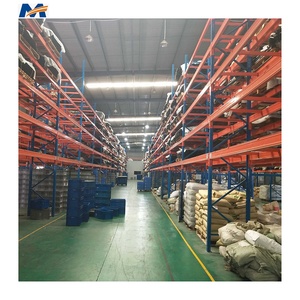
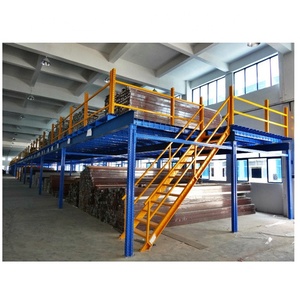
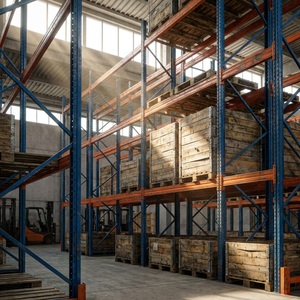
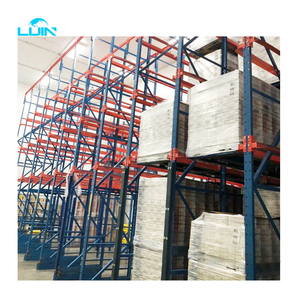
| Racking System Type | Frame Depth (mm) | Beam Clear Span (mm) | PBR Positions / Bay | Target Logistics Application |
|---|---|---|---|---|
| Selective Pallet Racking | 1,000 - 1,100 mm | 2,300 mm / 2,700 mm | 2 or 3 PBR Pallets | High-SKU Retail & Distribution (São Paulo, RJ) |
| Very Narrow Aisle (VNA) | 1,000 mm | 2,700 mm | 3 PBR Pallets | High-Bay Automation & Dense Urban Fulfillment |
| Drive-In / Drive-Through | Custom Rails | 1,050 mm Rail Clear | Multi-Deep LIFO | Beverage, Agro-chemicals, Frozen Food (Paraná) |
| Heavy Duty Longspan | 600 - 1,000 mm | 1,800 - 2,400 mm | Manual / Loose Box | E-Commerce Hand Picking & Auto Spare Parts |
| Multi-Tier Mezzanine | Custom Grid | 3,000 - 5,000 mm Column Grid | Floor Storage / Shelving | Pharma & Industrial Workshop Mezzanines |
3. Tropicalized Surface Treatment & Anti-Corrosion Engineering
Brazil presents diverse climatic challenges that can rapidly compromise untreated structural steel. From high humidity and salt vapor in port hubs like Santos, Paranaguá, and Itajaí, to aggressive chemical exposure in fertilizer storage facility hubs in Mato Grosso, long-term corrosion resistance is vital to prevent structural metal fatigue.
Our manufacturing plant utilizes an advanced, automated surface protection workflow designed specifically for tropical environments:
- 7-Stage Chemical Pre-Treatment: Full immersion degreasing, descaling, zinc phosphate conversion coating, and deionized water rinsing to maximize paint adhesion and prevent under-film oxidation.
- Electrostatic Epoxy-Polyester Powder Coating: Applied in automated cleanroom booths to a uniform thickness of 80 to 120 microns. Epoxy-polyester hybrid chemistry provides superior scratch resistance, UV stability, and chemical tolerance.
- Salt Spray & Corrosion Resistance: Tested up to 500+ hours under ASTM B117 salt spray standards without blistering or red rust formation.
- Hot-Dip Galvanizing (HDG Option): For cold storage facilities (down to -30°C) and highly corrosive coastal/fertilizer operations, we offer structural hot-dip galvanizing according to ISO 1461, yielding zinc coatings over 65 microns for decades of maintenance-free service.
4. Regional Logistics Dynamics & Macro Trends in Brazil
Understanding the macroeconomic trends shaping Brazilian warehousing is essential for direct factory procurement. Key industrial vectors include:
The Rise of Logistics Hubs Beyond São Paulo: While the Greater São Paulo region (Cajamar, Guarulhos, Louveira, Barueri) remains the core logistics epicenter of Latin America, tax incentives (ICMS benefits) have accelerated logistics development in secondary states such as Minas Gerais (Extrema), Santa Catarina (Navegantes, Joinville), and Pernambuco (Suape Hub). Our container loading optimization ensures products arrive undamaged whether destined for Santos or northern regional ports.
Nearshoring & Industrial Modernization: Automotive manufacturing in the ABC Paulista region, metalworking in Rio Grande do Sul, and electronics in the Manaus Free Trade Zone (ZFM) are increasingly upgrading legacy floor storage to automated VNA and heavy-duty adjustable pallet racking to maximize floor-space yield without expanding physical building footprints.
Supply Chain Resilience & Directly Sourcing Exporters: Procurement teams in Brazil face stringent import duties and complex tax structures (PIS/COFINS, II, IPI). By sourcing direct from an established export manufacturer, Brazilian wholesalers eliminate intermediary markups, ensuring that capital expenditure directly yields higher-density steel quality and structural reliability.
5. Enterprise Profile & Direct Manufacturing Quality Control (E-E-A-T)
With an operational legacy dating back to 2005, an engineering team of over 120 skilled technicians, and an annual global trade volume approaching US$16 Million, our factory represents a benchmark of export maturity and technical authority. We don't merely roll steel—we design complete warehouse architectures.
Our manufacturing ecosystem integrates fully automated German-designed roll-forming lines, robotic welding stations, laser cutting systems, and strict inline QA checkpoints. Every batch of raw steel coil undergoes tensile strength, yield stress, and thickness verification prior to forming. Furthermore, our dedicated international engineering team offers complimentary 2D CAD warehouse layouts and 3D structural modeling tailored specifically to your site coordinates, floor slab capacity, and forklift turning radius specifications in Brazil.
Frequently Asked Questions by Brazilian Procurement Teams
Direct answers addressing technical standards, import procedures, PBR pallets, and installation support in Brazil.
Request an Engineered Layout & Custom Direct Export Quote
Connect directly with our senior structural engineering team. Send your floor plan, pallet dimensions, and storage targets to receive a CAD drawing and wholesale price breakdown within 24 hours.
Contact Us