Featured Warehouse Racking & High-Density Storage Solutions
Explore our structural steel pallet racks, drive-in systems, long-span shelving, and cold-warehouse configurations. Engineered to exceed FEM 10.2.02, EN 15512, and ABNT NBR 15524 standards.
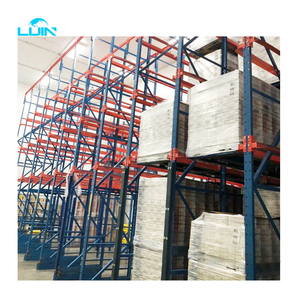
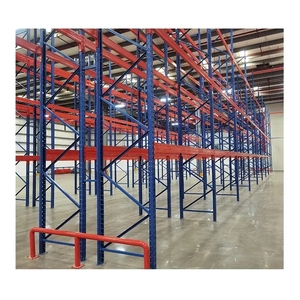
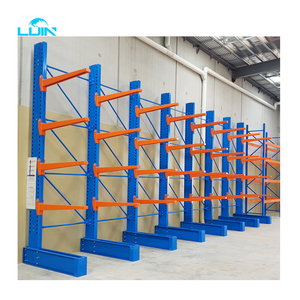
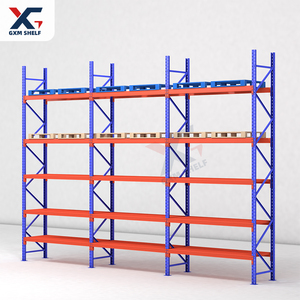
Engineering Principles & Enterprise Capability
Established in 2005, our manufacturing facilities integrate advanced cold-roll forming, robotic continuous welding, and automated surface preparation. We engineer warehouse systems designed to optimize vertical clear space while ensuring absolute structural safety under full load static and dynamic stresses.
High-Yield Structural Steel Selection & Metallurgical Integrity
The foundation of any safety-critical industrial storage system lies in material selection. Our facility exclusively utilizes certified high-tensile cold-rolled steel coils (specifically Q235B and structural-grade Q355B steel, equivalent to SS540 and S355JR under European EN specifications). By applying precise cold-roll forming processes, upright profiles achieve enhanced yield strengths of up to 355 MPa without compromising elasticity. This material integrity protects structural uprights against local buckling, sway instabilities, and impact shocks caused by forklift operations.
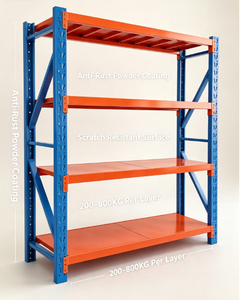
To guarantee long-term performance in humid, coastal, or sub-zero logistics environments, all steel components undergo a rigorous 7-stage pre-treatment cleaning, degreasing, and phosphating sequence before receiving an electrostatic epoxy-polyester powder coating (60–80 microns thick) cured at 200°C. For aggressive chemical environments, fertilizer storage facilities, or cold storage units operating down to -30°C, we provide hot-dip galvanization compliance exceeding 275 g/m² zinc density.
Seismic & Structural Engineering
Calculated using finite element analysis (FEA) to withstand seismic ground acceleration and heavy dynamic floor reactions per RMI and FEM 10.2.02 codes.
Strict Quality Audit Standards
ISO 9001 certified manufacturing, CE marked compliance for European markets, JIS standards adherence, and ABNT NBR 15524 structural load testing reporting.
Custom OEM/ODM Engineering
3D CAD and BIM modeling support tailored to custom pallet formats (PBR, Euro-pallet, US 48x40), specialized bay beam lengths, and height clearances up to 15 meters.
Industrial Warehouse Storage Architecture Comparison
Compare key structural systems based on spatial efficiency, inventory selectivity, handling equipment compatibility, and estimated cost per pallet position.
| Racking System Type | Floor Space Utilization | Pallet Selectivity | Stock Rotation Method | Ideal Handling Equipment | Estimated Cost / Pallet |
|---|---|---|---|---|---|
| Selective Pallet Racking | 40% – 50% | 100% Direct Access | FIFO (First-In, First-Out) | Standard Counterbalance / Reach Truck | Economy ($$) |
| Drive-In / Drive-Thru Racking | 75% – 85% | 20% – 30% (Low) | LIFO / FIFO Option | Counterbalance / Reach Truck (Narrow Frame) | Moderate ($$$) |
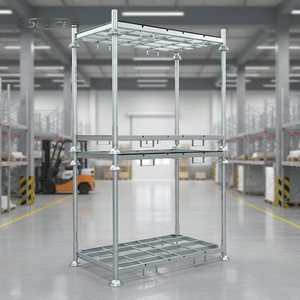
| Heavy-Duty Post Pallet Racks | 65% – 80% (Stackable) | Moderate (Modular Stack) | Flexible Batch / Cold Store LIFO | Forklift / Pallet Jack | Low - Modular ($$) |
| Cantilever Storage Racking | 50% – 60% (Long Goods) | 100% for Pipe/Timber | Manual / Batch Selective | Side Loader / Multi-Directional Reach Truck | Specialized ($$$$) |
| Multi-Tier Long-Span Shelving | 70% – 90% (Vertical) | 100% Manual Picking | FIFO Manual Item Picking | Manual Cart / Vertical Order Picker | Moderate ($$$) |
When designing high-bay distribution centers, combining Selective Pallet Racking for high-velocity SKUs with Drive-In Racks or Post Pallet Racks for bulk seasonal or cold-warehouse inventory reduces floor footprint requirements by up to 35% while keeping capital expenditure balanced.
Future Procurement & Technological Trends in Racking Systems
As global logistics shifts toward automated fulfillment, cold-chain expansion, and carbon footprint reduction, warehouse racking systems are evolving from static iron frames into intelligent, structural infrastructure.
1. Integration with Autonomous Mobile Robots (AMRs) & AS/RS
Modern high-density warehouses are rapidly moving away from purely manual forklift operations. Racking structures are now engineered with micro-tolerance beam deflection limits (L/300 to L/400) to support automated guide rail channels, shuttle vehicles, and AS/RS stacker cranes. Procurement managers must prioritize tight manufacturing tolerances (+/- 0.5mm on vertical pitch) to guarantee smooth robot interaction without sensor fault trips.
2. Cold-Chain & Pharmaceutical Storage Resiliency
Global demand for temperature-controlled logistics (biopharmaceuticals, frozen seafood, and fresh produce) requires storage hardware capable of withstanding constant thermal cycling. Future procurement focuses heavily on cold-rolled steel with low-temperature impact toughness, post-pallet modular stackability, and corrosion-resistant hot-dip galvanization that prevents rust formation under continuous condensation.
3. Green Steel Manufacturing & Decarbonization
Enterprise buyers are increasingly auditing Scope 3 carbon emissions across their supply chains. Factories utilizing Electric Arc Furnace (EAF) steel production, zero-VOC powder coatings, and closed-loop water treatment systems are taking procurement priority. Sustainable steel structures not only aid in BREEAM and LEED green building certifications but also lower long-term environmental compliance liabilities.
4. Modular Expandability & Circular Supply Chain Architecture
Fixed, welded warehouse frames are being replaced by modular, boltless interlocking systems. Buyers demand flexible racking components that can be disassembled, reconfigured, or expanded vertically without requiring structural demolition. Universal teardrop or 50mm/75mm pitch profiles allow facilities to adapt quickly to changing SKU dimensions and seasonal inventory spikes.
5. Smart Structural Health Monitoring (IoT Sensors)
The next generation of heavy-duty pallet racking incorporates embedded load sensors and vibration detectors. These real-time IoT devices alert facility managers to overload stress, seismic shifts, or forklift impact damage before structural failure occurs. Specifying sensor-ready racking systems extends asset life cycles and reduces workplace liability risks under stringent OSHA and EN safety frameworks.
6. Total Cost of Ownership (TCO) Driven Purchasing
Procurement teams are shifting focus from initial purchase price per kilogram to Total Cost of Ownership (TCO). High-durability coatings, heavy-duty column upright guards, structural footplates, and certified load capacities significantly lower maintenance downtime, replacement expenses, and annual rack inspection repair costs.
Frequently Asked Questions (FAQ) for Racking Procurement
Key technical details, structural standards, shipping protocols, and quality assurance processes addressed by our senior engineering team.
How do I determine the correct structural load capacity for my pallet racking?
What international structural standards do your warehouse racking systems conform to?
What is the difference between Q235B and Q355B steel in racking manufacturing?
How do you protect pallet racks against corrosion in cold storage or coastal logistics sites?
Can your selective and drive-in racking systems be customized for non-standard pallet sizes?
What protection accessories should be included to ensure OSHA and workplace safety compliance?
What is the typical lead time for production and sea freight export?
Ready to Optimize Your Warehouse Capacity & Safety?
Contact our senior engineering team today for a complimentary 3D layout design, precise structural load calculations, and direct factory wholesale pricing tailored to your logistics facility.