1. Executive Summary: The Structural Imperative of Modern Storage
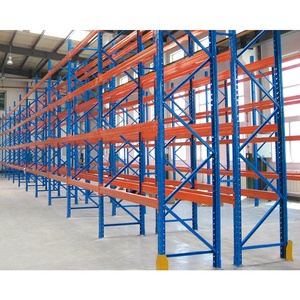
In the contemporary landscape of global supply chain logistics, warehouse cubic utilization efficiency has evolved from a operational preference into a decisive financial dynamic. As enterprise e-commerce expansion, omnichannel fulfillment, and rapid SKU multiplication continue to strain conventional storage infrastructure, industrial facility operators require specialized rack architecture capable of bridging the gap between light-duty shelving and intensive heavy-duty selective pallet systems. This engineering threshold is dominated by Industrial Longspan Racking Systems.
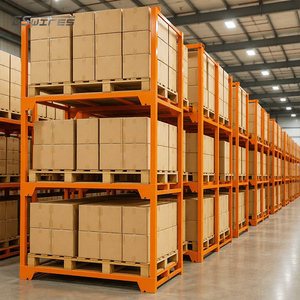
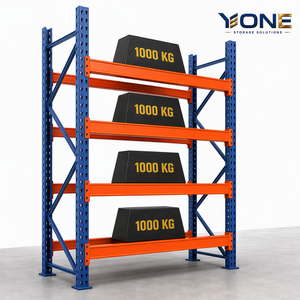
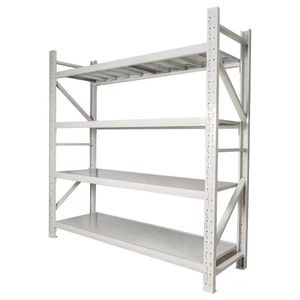
Longspan racking represents a medium-to-heavy-duty, hand-loaded or semi-automated storage medium constructed from cold-formed structural steel profiles. Engineered specifically for high-density, multi-tier manual picking operations, longspan systems deliver clear horizontal spans ranging from 1,200 mm to over 3,000 mm without requiring intermediate vertical column supports. This whitepaper provides a rigorous evaluation of structural load dynamics, cold-roll metallurgical standards, international regulatory compliance (including FEM 10.2.02, ANSI MH16.1, and ABNT NBR 15524), and strategic procurement guidelines for enterprise buyers, logistics engineers, and global supply chain directors.
2. Technical Evolution & Future Procurement Trends in Industrial Storage (2025–2030)
The industrial storage equipment sector is undergoing a profound technological transformation driven by advances in steel metallurgy, surface chemistry, and automated design validation. Procurement professionals must evaluate several converging trends when selecting longspan racking manufacturers and export partners:
Structural Steel Metallurgical Shift
Modern longspan fabrication is transitioning from standard Q235B steel to high-yield strength Q355B and micro-alloyed cold-rolled coils. This yield strength improvement (exceeding 355 MPa) permits profile gauge reduction while increasing structural safety factors under dynamic loading conditions.
Integrated Mezzanine & Multi-Tier Systems
Future-proof longspan systems are designed as modular building blocks for multi-tier catwalk racks and rack-supported mezzanines. By utilizing vertical building height up to 10 meters, facilities achieve a 200% to 300% expansion of usable floor space without external civil expansion.
Advanced Environmental & Anti-Corrosion Coatings
To resist harsh microclimates—ranging from high-humidity coastal ports to temperature-controlled cold rooms—leading exporters employ automated 9-stage pre-treatment degreasing paired with thermosetting resin electrostatic epoxy powder coatings yielding salt-spray resistance exceeding 500 hours (ISO 9227).
3. Mechanical Engineering, Upright Profiling & Safety Dynamics
The structural integrity of a longspan frame hinges upon the geometric profile of its vertical uprights and horizontal step beams. Premier manufacturers utilize continuous multi-stage cold-roll forming lines to shape structural steel into complex multi-flanged Omega (Ω) profile columns.
A. Column Geometry & Punching Precision
Omega profiles featuring minimum 11-fold cross-sectional bending points distribute mechanical stress radially across the section, suppressing torsional buckling under heavy loads. CNC high-precision punch presses stamp teardrop, diamond, or keyhole connection slots on a strict 50 mm or 75 mm vertical pitch. This allows effortless vertical beam adjustment without compromising structural rigidity.
B. Beam-to-Column Interlocking Physics
Longspan load stability relies heavily on the beam connector end-plates. High-spec systems feature 3-claw or 4-claw cold-stamped steel connector brackets welded continuously via robotic metal active gas (MAG) systems to heavy-duty Z-shaped or step-beam profiles. Automatic safety drop-locks prevent accidental beam displacement from forklift contact or manual handling impact.
C. Decking Surface Mechanics
Longspan beams accommodate versatile decking inserts tailored to specific industrial storage requirements:
- Galvanized Steel Decks: Roll-formed steel panels with underside hat-stiffeners for high-density, fire-proof, non-combustible chemical and automotive component storage.
- Heavy-Duty Wire Mesh Decks: Flanged wire grid assemblies that meet strict NFPA and local fire protection standards by allowing overhead fire sprinkler water penetration.
- High-Density Chipboard / MDF Panels: Cost-effective wood composite surfaces designed for general archival and e-commerce picking operations.
4. Global Export Compliance & Engineering Quality Standards
Procuring industrial racking across international borders requires stringent adherence to international engineering norms. Leading tier-1 manufacturers design, calculate, and test their racking products in compliance with three primary engineering codes:
1. FEM 10.2.02 (Federation Europeenne de la Manutention): The international benchmark governing static steel shelving design, beam deflection limits (L/200 to L/300), and safety factor thresholds under uniformly distributed loads (UDL).
2. ANSI MH16.1 (Rack Manufacturers Institute - RMI): The North American engineering code establishing specifications for the design, testing, and utilization of industrial steel storage racks.
3. ABNT NBR 15524 (Brazil Standard): The governing standard across Latin America requiring comprehensive structural calculation reports, load capacity plaques (*placas de carga*), and strict seismic and slab-anchoring compliance.
BR Industrial Racking Ltda.
Operating from our primary manufacturing base in Guangzhou, China (No. 89, Yingzhou North Road, Haizhu District), BR Industrial Racking Ltda. has established itself as an international authority in structural rack engineering and automated manufacturing since 2005.
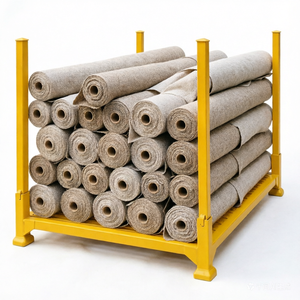
Supported by a dedicated workforce of over 120 senior structural engineers, CAD technicians, and export specialists, our facility generates an annual export turnover exceeding US$16 million. We engineer complete storage ecosystems spanning heavy-duty selective pallet racks, longspan shelving, drive-in systems, cantilever racks, stackable nestainers, and rack-supported mezzanines tailored to custom site dimensions.

Ready to Optimize Your Warehouse Storage Infrastructure?
Contact our structural engineering team today for custom CAD layouts, technical load calculations, and competitive direct-from-factory price quotations.
Get Catalog