Featured Warehouse Racking Systems
Discover premier industrial pallet racking, heavy-duty push back systems, structural platforms, and logistics solutions manufactured for global distribution centers.
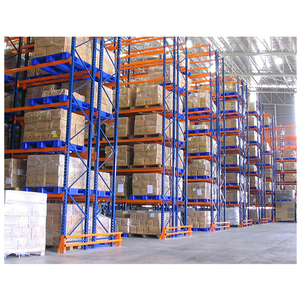
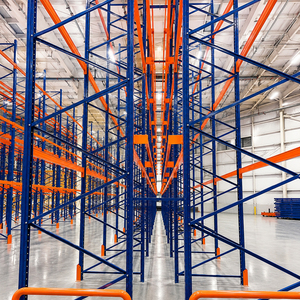
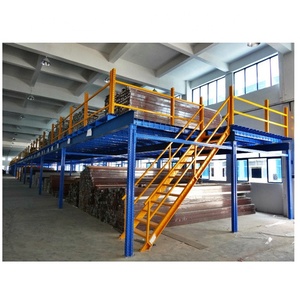
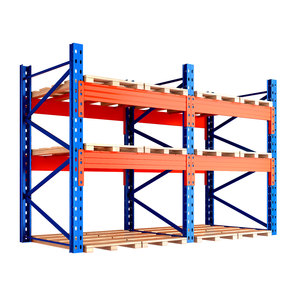
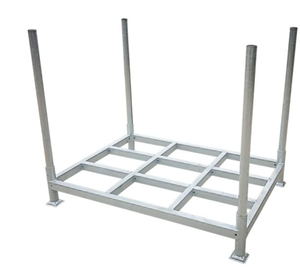
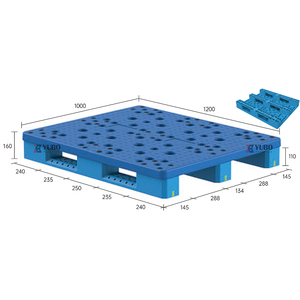
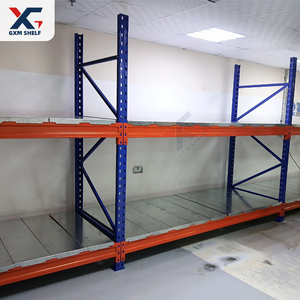
Engineering Architecture of Push Back Racking Systems
As global supply chains demand higher storage density without sacrificing operational throughput, standard selective racking systems often fail to optimize volumetric warehouse capacity. Push Back Racking Systems represent a pinnacle of gravity-assisted, dynamic high-density storage technology. Designed operating on a LIFO (Last-In, First-Out) inventory management model, push back systems utilize a series of nested telescoping carts moving along inclined structural steel rails.
When a standard forklift loads a pallet into a push back lane, it pushes the previously positioned pallet back into the rack structure, exposing the next nested cart beneath. Upon unloading, gravity seamlessly glides the remaining pallets forward to the aisle face. This mechanism permits depths of 2 to 6 pallets deep, dramatically reducing the required aisle-to-storage ratio by up to 75% compared to traditional selective racking arrangements.
| Storage Racking System Type | Storage Density Factor | Selectivity Ratio | Operational Logic | Forklift Entry Requirement | Ideal Application |
|---|---|---|---|---|---|
| Push Back Racking | High (75% Floor Utilization) | Medium (Per SKU / Lane) | LIFO (Last-In, First-Out) | Aisle-Only Access | Cold Storage, FMCG, Batch Goods |
| Selective Pallet Racking | Standard (40-45% Floor Utilization) | 100% Direct Access | FIFO / LIFO Flexible | Standard Aisle Navigation | Multi-SKU E-commerce, 3PL DCs |
| Drive-In Racking | Very High (80% Floor Utilization) | Low (Per Bay / Lane) | LIFO Strict | Forklift Enters Structure | Bulk Homogeneous Goods |
| Radio Shuttle Racking | Ultra High (85%+ Utilization) | Automated Lane Access | FIFO & LIFO Convertible | Aisle-Only / Automated | High-Volume Distribution Centers |
Future Procurement Trends in Industrial Storage Racking
Procurement officers, structural engineers, and supply chain directors sourcing heavy-duty racking systems from leading Chinese exporters are increasingly prioritizing structural resiliency, international building compliance, and automation-readiness. Over the next decade, the following key trends will shape global procurement strategies:
Seismic Resiliency & FEA Optimization
Modern global logistics facilities require structural steel racking tested via Finite Element Analysis (FEA) to withstand high seismic accelerations. Advanced cold-rolled Q235B and Q355B structural steel alloys ensure maximal load-to-weight performance under ANSI MH16.1, FEM 10.2.02, and ABNT NBR 15524 standards.
Cold Chain & High-Humidity Durability
With global cold chain logistics expanding rapidly, push-back telescoping carts are engineered with specialized low-temperature bearings, synthetic synthetic lubes, and corrosion-resistant powder coatings or hot-dip galvanized finishes capable of operating at -30°C environments without mechanical jamming.
Hybrid Automated Integration (AGV / AMR)
While traditional push-back systems rely on standard counterbalanced or reach trucks, future-ready systems incorporate high-precision entry guide rails designed for automated guided vehicles (AGVs) and autonomous mobile robots (AMRs) to achieve automated LIFO handling.
Innovations in Push Back Rack Manufacturing
Top Chinese manufacturers and exporters are introducing advanced structural innovations that redefine operational safety, maintenance longevity, and installation speed in high-bay logistics warehouses.
Anti-Pinch Low-Profile Cart Design
Modern nested carts feature ultra-low profile steel designs that minimize vertical lost space within each bay level, maximizing overall clear stacking height inside low-ceiling or height-restricted distribution facilities.
Integrated Safety End-Stops & Flow Dampers
To prevent heavy pallets from surging too rapidly toward the front aisle face during retrieval, engineered magnetic friction dampeners and heavy-gauge mechanical end-stops are integrated directly into the inclined track structure.
Modular Boltless Beam-Frame Connectors
Precision-stamped teardrop, 50mm pitch, and 75mm pitch connection hooks with automated mechanical safety locks accelerate installation timelines while preventing accidental beam displacement during forklift operations.
Why Source Storage Racking from Premier Chinese Suppliers
With comprehensive steel supply chain integration, state-of-the-art continuous roll-forming lines, and extensive experience exporting across North America, South America, Europe, and Asia-Pacific, leading Chinese rack exporters deliver unparalleled value, structural safety, and customization capabilities.
Stringent Quality Assurance (ISO / CE / NBR)
Production processes conform strictly to ISO 9001 quality management standards. Full material test reports (MTRs), mill test certificates, tensile strength verifications, and compliance load test certifications (including ABNT NBR 15524, ANSI MH16.1, and CE compliance) accompany every export shipment.
Custom 3D CAD & FEA Layout Services
Our experienced engineering team provides free custom 3D warehouse layout optimization, analyzing floor slab load capabilities, column spacing, ceiling clearance, sprinkler clearances, and forklift turning radiuses to build maximum storage capacity.
Optimized Container Loading & Logistics
Components are systematically bundled using protective plastic wrap, steel strapping, and wooden saddles to prevent transit damage during long-distance ocean freight. Customized loading plans maximize 40ft High Cube (HC) container capacity to minimize freight expenditure.
Frequently Asked Questions (Procurement FAQ)
Technical and logistical insights for global procurement managers and warehouse engineers.
What is the max weight capacity per pallet position in a Push Back Rack system?
Standard push back racking systems engineered by leading Chinese manufacturers support pallet capacities ranging from 500 kg (1,100 lbs) up to 1,500 kg (3,300 lbs) per pallet position. Specialized structural steel configurations can be custom-engineered to handle even heavier unit loads upon request.
How many pallets deep can a push back racking system be safely configured?
Push back racking systems are typically configured between 2 to 6 pallets deep. 2 to 4 pallet deep systems are most common due to forklift pushing force considerations, while 5 to 6 deep systems require specialized higher-capacity forklifts with engineered pushing capability.
Can Push Back Racks accommodate non-standard or damaged pallets?
Because pallets rest directly on heavy-duty steel telescoping carts rather than on open beams or individual wheels (like gravity flow rack), push back racking offers much greater tolerance for varying pallet quality, damaged wooden runners, or plastic pallets.
What international quality and structural standards do your racking systems comply with?
Our industrial storage systems are designed and manufactured in full accordance with international standards including ISO 9001, CE marking compliance, American RMI (Rack Manufacturers Institute) / ANSI MH16.1 specifications, European FEM 10.2.02 codes, and Brazilian ABNT NBR 15524 standards.
What is the average lead time for production and shipping from China?
Standard manufacturing lead time is approximately 2 to 4 weeks following 3D CAD drawing approval. Ocean freight shipping transit times depend on the destination port (e.g., 14–20 days to US West Coast, 30–40 days to South American ports like Santos or Paranaguá, and 25–35 days to main European hub ports).
Optimize Your Warehouse Floor Plan Today
Connect directly with China's leading heavy-duty rack engineers. Request full product catalogs, custom CAD layouts, structural FEA load reports, and wholesale FOB/CIF pricing quotes.
Get Catalog