Featured Industrial Pallet Racking Systems
Explore high-density storage solutions engineered to ISO 9001, ANSI/RMI MH16.1, FEM 10.2.02, and EN 15512 international standards for global industrial applications.
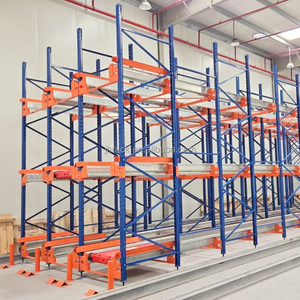
Heavy Duty Industrial Warehouse Storage Radio Shuttle Racking System Automated Pallet Shuttle Rack for High Density Storage
Explore System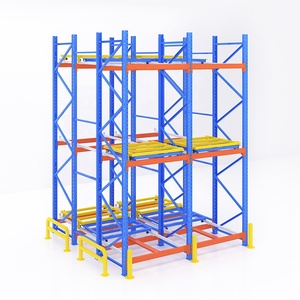
Pallet Live Rack Push Back Pallet Rack
Explore System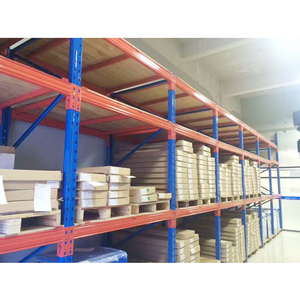
Warehouse Rack Heavy Duty Steel Storage Shelves Industrial Pallet Racking Storage Price Selective Pallet Racking
Explore System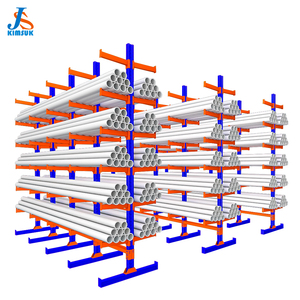
Cantilever Rack Heavy Duty Tyre Rack Racking System Warehouse Heavy Pallet Rack
Explore System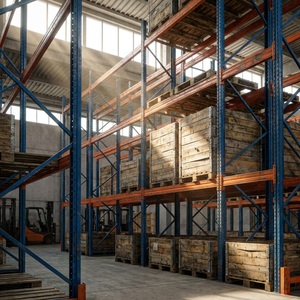
Heavy Duty Steel Warehouse Rack Industrial Pallet Storage Selective Rack System
Explore System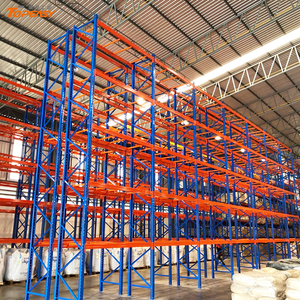
Customized Heavy Duty Powder Coated Adjustable Selective Steel Pallet Rack for Warehouse Storage System
Explore System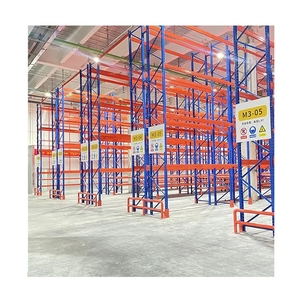
Adjustable Heavy Duty Steel Shelving Warehouse Racking Pallet Industrial Metal Racks for Storage
Explore System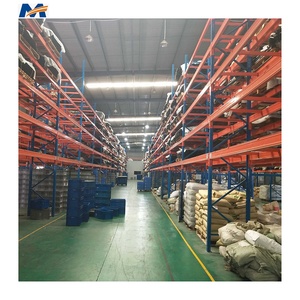
China Estantes Metalicos Heavy Duty Pallet Rack Beams Store Steel Shelving for Warehouse
Explore SystemEnterprise Capabilities & Manufacturing Standards
A rigorous structural analysis of leading Chinese racking manufacturers, cold-rolled steel metallurgical properties, and automated production controls.
In global supply chain management, selecting the appropriate structural racking partner in China is a critical decision impacting operational throughput, warehouse safety compliance, and long-term capital efficiency. Top-tier Chinese pallet racking manufacturers have evolved beyond basic structural steel assembly into advanced logistics automation engineering centers. Achieving compliance across international building codes—such as ANSI/RMI MH16.1 in North America, FEM 10.2.02 / EN 15512 in Europe, AS 4084-2023 in Australia, and ABNT NBR 15524 in South America—requires exact engineering control across the raw material, roll-forming, and surface-finishing stages.
1. Structural Steel Selection & Metallurgical Control
The foundation of structural racking load stability rests on certified prime cold-rolled steel coils. Tier-1 Chinese manufacturers systematically utilize Q235B and Q355B structural steel grades (equivalent to ASTM A36 and ASTM A572 Grade 50, respectively). High yield strength profiles ensure upright frames resist buckling moments under maximum static loading and seismic disturbance acceleration.
- Q235B Cold-Rolled Steel: Yield strength ≥ 235 MPa, Tensile strength 370–500 MPa. Utilized primarily for standard beam profiles, intermediate shelf decking, and light-to-medium upright columns.
- Q355B High-Strength Alloy Steel: Yield strength ≥ 355 MPa, Tensile strength 470–630 MPa. Engineered specifically for heavy-duty high-bay uprights (heights exceeding 8 meters), drive-in racking channels, and automated radio shuttle runner rails.
Every steel batch undergoes Mill Test Certificate (MTC) validation according to EN 10204 3.1 standards, ensuring verification of chemical composition (Carbon, Manganese, Silicon, Phosphorus, and Sulfur limits) and mechanical yield testing prior to roll-forming.
2. Automated Roll-Forming & Welding Precision
Structural integrity depends on profile cross-section consistency. Modern Chinese pallet racking facilities employ continuous automated multi-pass cold roll-forming lines capable of maintaining profile tolerances within ±0.5mm across 12-meter single-piece upright lengths. Upright profiles feature complex multi-stiffener geometric shapes (50mm to 75mm pitch pattern configurations) that dramatically enhance section modulus and Torsional-Flexural Buckling resistance.
Welding procedures for box beams, step beams, and structural baseplates utilize fully automated OTC/Fanuc robotic gas metal arc welding (GMAW) systems. This eliminates manual welding variation, delivering 100% penetration along beam connector hooks and structural flange joints to eliminate micro-fracturing risks under cyclic load placing and retrieval operations.
3. Pre-Treatment & Electrostatic Powder Coating Integrity
To resist corrosion in demanding environments—including tropical humidity, cold storage sub-zero chambers (-30°C), and chemically volatile chemical storage—leading manufacturers utilize automated 9-stage pre-treatment wash lines featuring nano-ceramic phosphatizing degreasing. This process creates an ultra-dense conversion layer on raw steel surfaces prior to coating.
Subsequent thermosetting epoxy-polyester electrostatic powder coating is applied at film thicknesses between 60 to 90 microns, followed by high-temperature curing ovens operating at 200°C. This automated finishing yields superior impact resistance (50 kg/cm), scratch resistance, and salt spray resistance exceeding 500 hours under ASTM B117 testing protocols.
Industrial Storage System Comparison Matrix
Technical selection framework comparing density, selectivity, stock rotation methodology, and optimal operational scenarios.
| Storage System Type | Volumetric Space Utilization | Pallet Selectivity | Inventory Management Flow | Max Load Capacity per Level | Optimal Application Scenario |
|---|---|---|---|---|---|
| Selective Pallet Racking | 40% – 50% | 100% Immediate Access | FIFO (First-In, First-Out) | 1,000 kg – 4,500 kg | High-SKU diversity, 3PL logistics, retail distribution hubs. |
| Automated Radio Shuttle | 80% – 85% | Deep-Lane Selectivity | FIFO or LIFO (Flexible) | 1,500 kg per Shuttle Unit | Cold storage, food & beverage, high-volume batch items. |
| Drive-In / Drive-Thru Rack | 65% – 75% | Lane-Dependent Access | LIFO (Drive-In) / FIFO (Thru) | 1,000 kg – 1,800 kg | Bulk homogeneous goods, seasonal inventory holding. |
| Push-Back Pallet Racking | 60% – 70% | 2 to 6 Pallets Deep | LIFO (Last-In, First-Out) | 1,000 kg – 1,500 kg per cart | Medium-SKU count, cold storage, high-turnover staging. |
| Heavy-Duty Cantilever Rack | N/A (Linear Storage) | 100% Unobstructed Access | Flexible Loading | 500 kg – 3,000 kg per arm | Timber, steel pipes, extrusion profiles, sheet metal. |
| Rack-Supported Mezzanine | 150% – 300% Floor Area | 100% Floor/Level Access | Custom Operational Flow | 300 kg – 1,000 kg/m² floor load | E-commerce order fulfillment, parts sorting, admin space. |
When procuring heavy-duty rack structures exceeding 10 meters in height, baseline static load calculations are insufficient. Top-tier OEMs provide certified Finite Element Analysis (FEA) stress distribution modeling. FEA simulations model elastic-plastic beam deformation, frame sway stiffness, rack-to-floor anchor shear stress under dynamic loading, and seismic acceleration spectrum analysis (P-Delta effect validation).
Technology & Procurement Trends (2025 – 2030)
Emerging shifts in warehouse automation, structural optimization, and sustainable international procurement models.
1. Integration of 4D Shuttle Automation
Traditional 2D radio shuttles are rapidly giving way to intelligent 4D directional shuttle vehicles. China's top racking factories are re-tooling channel profiles to integrate high-precision rack tracks, laser-guided position reflectors, and wireless fleet controller interfaces, enabling seamless horizontal and vertical bay transitions.
2. High-Yield Cold-Formed Steel Profiles
R&D advances in ultra-high-strength steel alloys enable manufacturers to produce thinner-walled profiles (e.g., upgrading from 2.0mm Q235B to 1.8mm Q355B) without compromising section moment of inertia. This reduces deadweight steel mass by 10% – 15%, reducing international ocean container shipping costs.
3. IoT Structural Health Monitoring
Industrial safety regulations increasingly require active impact tracking. Smart rack systems now feature embedded piezoelectric shock sensors on corner upright protectors. These sensors broadcast real-time structural collision warnings and deflection telemetry to cloud management dashboards.
Supply Chain Optimization & Import Risk Mitigation
Essential frameworks for logistics, container stuffing efficiency, customs compliance, and TCO evaluations.
Direct sourcing of warehouse rack systems from Chinese factories offers substantial capital expenditure savings (often 25% to 40% compared to localized Western fabricators). However, maximizing Total Cost of Ownership (TCO) requires active oversight of ocean freight logistics, container cubic optimization, and international customs clearance documentation.
Container Loading & Transit Damage Prevention
Pallet racking components represent heavy, high-density freight. Efficient container stuffing requires precise bundling strategies to maximize weight limits (e.g., 26,000 kg limits per 40ft High Cube container) while protecting powder-coated surfaces from friction damage during sea transit.
- Structural Upright Packaging: Upright frames are packed nested back-to-back with non-woven protective interleaving film, bound by heavy-duty PET strapping onto heavy wooden runner blocks to facilitate forklift unloading.
- Beam Bundle Binding: Box beams and step beams are bound in hex-bundles with corner corrugated edge protectors, keeping connector claw hooks inward to prevent scratching adjoining painted faces.
- Small Parts & Hardware: Baseplates, row spacers, frame bracing, leveling shims, and safety lock pins are packed in heavy-duty reinforced wooden crates or steel-banded pallets to prevent transit loss.
- Corrosion Inhibitor Wrapping: High-humidity oceanic shipping routes require VCI (Vapor Corrosion Inhibitor) plastic stretch film wrapping for high-grade galvanized or zinc-plated components.
Customs Clearance & Quality Documentation Checklist
To avoid port delays, demurrage costs, or customs hold-ups, your logistics team must ensure the Chinese manufacturer supplies a complete documentation bundle prior to container vessel arrival:
- Commercial Invoice & Detailed Packing List: Itemized breakdown specifying steel component descriptions, HS codes (typically 7308.90 for structural steel structures), net/gross weights, and individual volume metrics.
- Certificate of Origin (Form E, Form F, or General CO): Enables tariff preference eligibility under applicable regional trade agreements.
- Mill Test Certificates (MTC): Raw material batch certifications verifying steel chemical and mechanical properties per EN 10204 3.1.
- Load Capacity Placas / Signage: Mandatory structural load signs formatted in English or local language displaying maximum permissible shelf loads, bay loadings, and beam level configurations for local OSHA/workplace safety compliance.
Frequently Asked Questions (Procurement FAQ)
Direct engineering answers to key technical, regulatory, and logistics queries from global industrial buyers.