Navigating China’s Industrial Racking Ecosystem: A Strategic B2B Sourcing Guide
In modern global supply chain logistics, warehouse optimization is no longer simply about racking steel shelves—it is a cross-disciplinary exercise in mechanical engineering, metallurgy, spatial planning, and automation integration. As enterprise supply chains scale up across North America, South America, Europe, and the Asia-Pacific, procurement directors and logistics warehouse developers increasingly look to China for high-volume, custom-engineered industrial racking systems.
However, the Chinese industrial steel fabrication sector spans thousands of factories with vast disparities in engineering design capabilities, raw steel grade consistency, automated welding standards, and international building code certifications. To maximize Return on Investment (ROI) and safeguard warehouse personnel against catastrophic structural failures, enterprise procurement managers must evaluate verified OEM/ODM manufacturers through structural physics, steel quality, quality assurance frameworks, and regional regulatory compliance.
1. Engineering Foundations & Metallurgical Standards of Premium China Racking Factories
The structural durability of heavy-duty industrial pallet racking begins at the hot-rolled coil processing level. Tier-1 Chinese manufacturers collaborate directly with primary state-owned steel mills—such as Baosteel, Shougang Group, and Ansteel—to source certified prime hot-rolled carbon steel coils. Understanding material yield strength is fundamental when specifying rack load capacity:
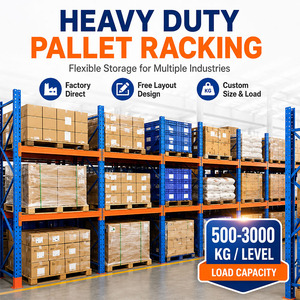
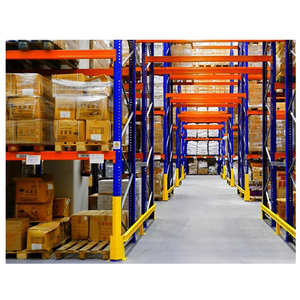
- Q235B Structural Carbon Steel: Yield strength ≥ 235 MPa, Tensile strength 370–500 MPa. Ideal for standard selective pallet rack uprights, step beams, and longspan shelving supporting 1,000 kg to 3,000 kg per level under non-seismic conditions.
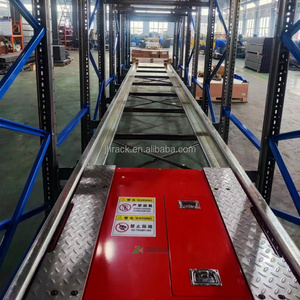
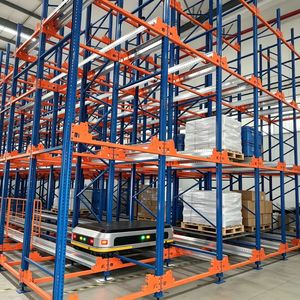
- Q355B Low-Alloy High-Strength Steel: Yield strength ≥ 355 MPa, Tensile strength 470–630 MPa. Engineered specifically for heavy-duty cold storage racking, automated high-bay AS/RS upright columns, deep-lane radio shuttle structures, and heavy cantilever arms requiring high load-to-weight performance without structural deflection.
Leading Chinese factories employ advanced multi-stage automated cold-roll forming machines equipped with continuous punching dies. This guarantees pitch accuracy along the length of upright profiles (typically 50mm, 52mm, 75mm, or 76.2mm matrix pitching). Precision punching prevents stress concentrations, ensuring seamless installation of drop-in beam locking pins, frame diagonal bracing, and column protectors.
2. Surface Finishing & Environmental Durability Standards
Industrial racking systems operate under diverse environmental stressors—from ambient humidity in coastal distribution centers to sub-zero temperatures (-30°C) in cold chain food storage facilities. Substandard surface pre-treatment leads to micro-flaking, sub-layer oxidation, and rapid structural rust.
Automated 9-Stage Pre-Treatment
Including degreasing, acid pickling, zinc phosphating, and deionized water rinsing to eliminate surface contaminants and guarantee 100% paint adhesion.
Thermosetting Epoxy-Polyester Coating
Electrostatic powder coating (60–80 microns thickness) cured at 180°C–200°C. Delivers high impact resistance, scratch resistance, and chemical immunity.
Hot-Dip Galvanizing (HDG)
Components submerged in molten zinc (450°C) establishing an 80–100 micron metallurgical zinc-iron alloy layer for harsh corrosive environments and outdoor storage.