Industrial Storage Systems & Product Portfolio
Engineered for extreme structural integrity, high selectivity, and seamless inventory throughput across manufacturing and logistical environments.
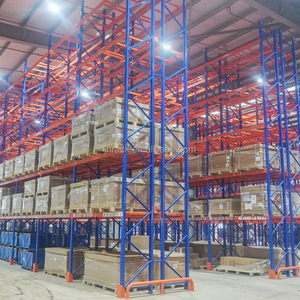
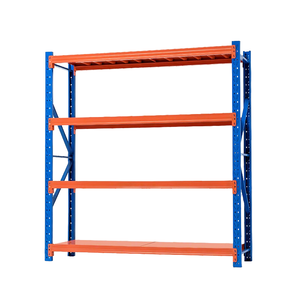
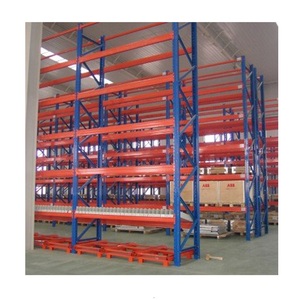
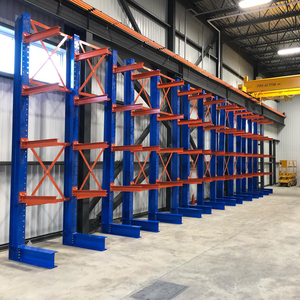
1. Executive Summary: The Physics and ROI of Push Back Racking
Push back racking systems represent a pinnacle of high-density warehouse storage innovation, combining the volumetric space efficiency of drive-in racking with the fast selectivity of single-selective configurations. Designed operating on a Last-In, First-Out (LIFO) inventory control principle, push back racking utilizes a series of nested, inclined carts that ride on structural steel rails mounted at a precise slope (typically 2.5% to 3.0% grade pitch).
When a forklift operator loads a pallet onto the system, the pallet is positioned on the top nested cart. Loading the subsequent pallet physically pushes the first pallet backward, exposing the lower cart beneath it. Upon retrieval, gravity gently propels the remaining pallets forward toward the aisle face, automatically staging the next pallet for immediate picking. This dynamic mechanics completely eliminates the requirement for forklifts to enter the physical rack structure, reducing warehouse frame collision risks by up to 85% compared to traditional drive-in setups.
From an enterprise financial standpoint, push back racking dramatically collapses Total Cost of Ownership (TCO) in cold storage facilities, pharmaceutical distribution hubs, and high-volume consumer packaged goods (CPG) fulfillment centers. By consolidating storage footprints into compact, high-bay structural matrices, industrial enterprises maximize cubic building utilization while minimizing thermal loss area and operating overhead.
2. Comprehensive Industry Evaluation: Top 10 Push Back Racking Manufacturers
Selecting a certified structural rack manufacturer requires rigorous engineering audits spanning steel tensile ratings, structural roll-forming precision, cart wheel bearing friction factors, and international compliance certifications such as RMI (Rack Manufacturers Institute), ANSI MH16.1, FEM 10.2.02, and ABNT NBR 15524.
| Manufacturer / Brand Tier | Engineering Specialization | Primary Steel Grade | Depth Capacity | Quality & Seismic Certifications |
|---|---|---|---|---|
| BR Industrial Racking / Orbit Metal | Custom Heavy-Duty Push Back & Automated Systems | Q235B / Q355B Cold Rolled | 2 to 6 Pallets Deep | ISO 9001, CE, JIS, ABNT NBR 15524 |
| Interlake Mecalux | Standard Logistics & Distribution Racks | ASTM A1011 High Strength | 2 to 5 Pallets Deep | RMI Certified, ISO 14001 |
| SSI SCHAEFER | Automated Warehousing & Flow Racks | European Structural Steel | 2 to 4 Pallets Deep | FEM 10.2.02, CE, DIN EN ISO 9001 |
| Advance Storage Products | Push Back Nesting Cart System Design | Structural C-Channel Steel | 2 to 6 Pallets Deep | RMI, ANSI MH16.1 |
| Frazier Industrial Company | 100% Structural Steel Heavy Duty Racks | Hot-Rolled Structural Channels | 2 to 5 Pallets Deep | RMI Compliant, City of LA Certified |
| Ridg-U-Rak | Seismic-Resistant Heavy Rack Frames | High Tensile Strip Steel | 2 to 6 Pallets Deep | RMI, Seismic Zone 4 Certified |
| Unarco Material Handling | Rhino Cart Push Back Systems | Tubular & Structural Steel | 2 to 5 Pallets Deep | RMI, ISO 9001:2015 |
| AK Material Handling Systems | Turnkey Warehouse Racking Layouts | Cold Formed Carbon Steel | 2 to 4 Pallets Deep | RMI Standards |
| Hannibal Industries | Seismic Frame Systems & Tube Racks | Structural Steel Tubing | 2 to 5 Pallets Deep | RMI Certified, AWS D1.1 Welding |
| Jinhui Warehousing Solutions | Corrosion-Protected Industrial Pallet Racks | Mild Steel Q235 Structural | 2 to 6 Pallets Deep | ISO 9001, CE Certified |
Industry leaders prioritize structural redundancy. For instance, top manufacturing facilities utilize custom heavy-duty cart designs built with steel wheels featuring sealed ball bearings and heavy-gauge structural tubular framing to handle eccentric point loading without cart binding or derailment.
3. Engineering Blueprint: Nested Cart Mechanics & Structural Integrity
The structural efficacy of a push back racking system hinges on mechanical friction control, inclined rail dynamics, and cart nesting alignment. Unlike gravity flow racks which depend on external brake rollers, push back systems rely on the controlled slope of specialized guide channels.
Stacking nested carts require minimal vertical height allowance (typically under 6 inches for a 4-deep configuration), retaining maximum clear bay height for vertical storage optimization.
Integrated mechanical safety stops prevent cart lifting, derailment, or improper dislodgement during rapid or uneven forklift loading cycles.
Precision machine-turned steel wheels outfitted with double-sealed stainless steel bearings ensure consistent glide velocity across temperature extremes ranging from -30°C to +45°C.
Mathematical Rail Incline Formula
The optimum inclination pitch ($\theta$) is computed based on static friction coefficients ($\mu_s$) between cart steel wheels and structural guide rails, balanced against the mass ($m$) of target palletized goods:
$\theta = \arctan(\mu_k) + \Delta\phi$ (where $\mu_k$ represents kinetic friction and $\Delta\phi$ accounts for dynamic velocity control to prevent forceful impact against front column stop bumpers).
4. Future Trends: Smart Warehousing, AGV Integration & Sustainability
The material handling equipment (MHE) industry is undergoing a digital and environmental transformation. Modern enterprise procurement strategies are adapting to key macroeconomic shifts:
- Automated Guided Vehicle (AGV) & AMR Compatibility: Next-generation push back systems feature precision RFID position targets and ultra-flat front beam entry guides to facilitate robotic fork insertion without human driver intervention.
- Eco-Friendly High-Durability Coatings: Eco-conscious factories are replacing conventional solvent painting with zero-VOC, heavy-metal-free electrostatic epoxy-polyester powder coatings that withstand humid, corrosive, and coastal storage environments.
- Sensory IoT Cart Monitoring: Integration of wireless vibration and tilt sensors within nested cart frames to provide real-time predictive maintenance alerts regarding bearing wear or track obstruction.
- Modularity and Reconfigurability: Universal boltless beam attachments allow warehouses to convert standard selective racking bays into 2-deep or 4-deep push back systems as SKU velocity demands evolve.
5. Procurement Frequently Asked Questions (FAQ)
What is the structural difference between Push Back Racking and Drive-In Racking?
Can Push Back Racking systems be operated inside Cold Storage or Freezer Facilities?
What pallet configurations and sizes are compatible with nested cart push back systems?
What is the typical payload capacity per pallet position in heavy-duty push back systems?
How do push back racking systems comply with seismic standards such as RMI or ABNT NBR 15524?
What maintenance procedures are required for push back cart systems?
Manufacturing Excellence & Custom OEM/ODM Capabilities
Supported by two decades of industrial manufacturing heritage since 2005, our partner facilities operate state-of-the-art roll-forming lines, automated continuous laser welding stations, and zero-emission powder coating lines to deliver precision storage solutions globally.
In-house R&D team dedicated to custom CAD drafting, FEA structural stress simulation, and dynamic load testing.
Proven international logistics experience serving distribution centers, logistics hubs, and ports across South America, North America, Europe, and Asia.
Full compliance with ISO 9001, CE, JIS, and ABNT NBR 15524 structural load calculations and safety guidelines.
From single-bay selective upgrades to multi-tier automated push back and mezzanine distribution centers, our engineering team provides complete floor layout optimization, 3D CAD modeling, and factory-direct quotation support.
Request a Custom Racking Layout & Factory Quote
Connect directly with our senior structural storage engineers. Send us your warehouse CAD drawings, clear ceiling height, pallet dimensions, and target weight capacity for a free layout optimization proposal within 24 hours.