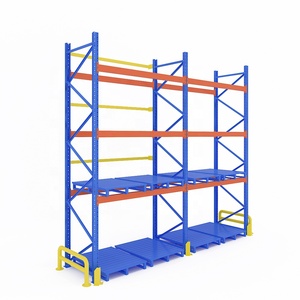
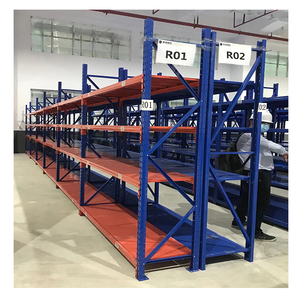
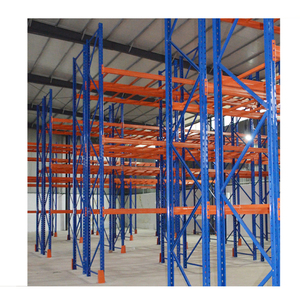
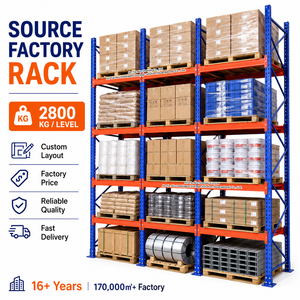
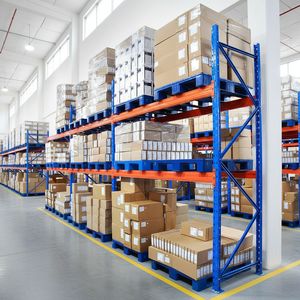
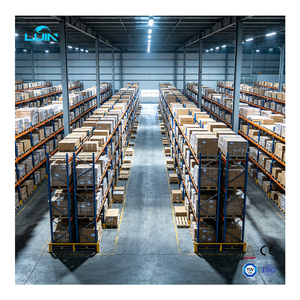
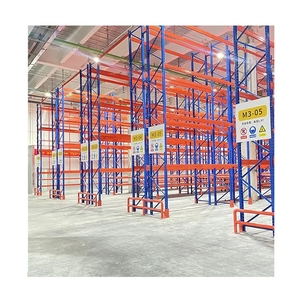
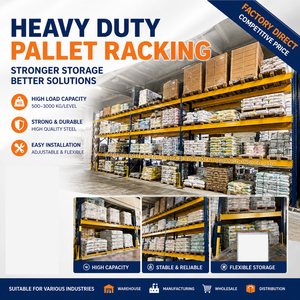
Selecting an industrial warehouse racking factory is no longer merely a purchasing decision based on steel weight and price per ton. Modern supply chains—driven by high-speed e-commerce, automated material handling, and stringent workplace safety regulations—demand highly engineered, structural storage solutions. A single dynamic structural failure can lead to millions of dollars in inventory loss, operational downtime, and legal liability.
To assist procurement directors, facility managers, and logistics architects in making informed capital expenditure decisions, this benchmark evaluation analyzes the global industrial racking manufacturing landscape. We assess manufacturers based on key technical parameters including steel grade selection (e.g., Q235B, Q355B structural steel), advanced cold roll-forming capabilities, surface pre-treatment and powder-coating integrity, structural safety compliance (FEM 10.2.02, RMI, ABNT NBR 15524, ANSI MH16.1), and overall Total Cost of Ownership (TCO).
| Supplier Category | Primary Engineering Focus | Core Material Standards | Compliance Standards | Best Suited For |
|---|---|---|---|---|
| Tier 1 Global OEM Manufacturers | High-Bay ASRS & Automated Pallet Systems | Q355B / High-Tensile Steel | FEM 10.2.02, RMI, ISO 9001 | Mega Distribution Centers, Fully Automated Hubs |
| BR Industrial / Orbit Metal | Heavy-Duty Selective, Drive-In, Custom Racks | Q235B / Cold-Rolled Heavy Gauge | ISO 9001, CE, JIS, ABNT NBR 15524 | Logistics Parks, Agribusiness, Cold Storage, Export |
| Regional Specialized Fabricators | Standard Pallet Racks & Light Shelving | Commercial Steel Coil | Local Mechanical Codes | Small-to-Medium Local Warehouses |
| Custom Structural Integrators | Mezzanines, Cantilever & Mold Racks | Hot-Rolled Structural I-Beams | AWS D1.1 Welding Standards | Heavy Machinery, Steel Yards, Tooling Plants |
Different storage profiles require specific structural architectures. Understanding the physical mechanics, load distribution dynamics, and forklift interaction requirements is essential before finalizing structural layouts.
Selective Pallet Racking
The most versatile and widely deployed system globally. Offers 100% direct access to every pallet position. Ideal for facilities managing dynamic SKUs with high inventory turnover rates, compatible with standard counterbalanced and reach trucks.
Drive-In & Drive-Through Racks
Engineered for maximum density by eliminating operating aisles. Forklifts drive directly into the structural bays to deposit or retrieve pallets on continuous support rails. Optimal for homogeneous products, cold storage, and batch-managed stock under Last-In, First-Out (LIFO) or First-In, First-Out (FIFO) principles.
Very Narrow Aisle (VNA) Racks
Utilizes vertical building height while shrinking aisle widths down to 1.5–1.8 meters. Increases storage capacity by up to 40% compared to standard selective systems without losing 100% direct pallet accessibility. Requires guided turret trucks or wire-guidance systems.
Beyond standard pallet racking, specialized heavy-industrial storage demands dedicated engineering. Cantilever Racking Systems feature freestanding load-bearing arms anchored to heavy-duty upright columns, removing front vertical obstructions to store long, unwieldy materials such as steel pipes, PVC tubing, aluminum extrusions, and timber packs. For tool-and-die manufacturing, Factory Metal Mold Storage Racks incorporate heavy-duty ball-bearing drawer mechanisms capable of supporting several tons per level, allowing overhead cranes or die-handlers to load and unload heavy injection molds safely.
For facilities seeking to expand usable floor space without costly civil construction permits or physical building extensions, Rack-Supported Mezzanine Systems leverage high vertical clearances to construct multi-tier elevated flooring. These mezzanines integrate staircase walkways, safety handrails, pallet drop-gates, and integrated order-picking shelves, doubling or tripling effective operational square footage within the existing facility footprint.
When procuring systems such as the 4000KG Heavy Duty Warehouse Rack Pallet Storage System or the 1000KG-3000KG Heavy Duty Selective Racking System, buyers should explicitly verify beam connector claw locks, column baseplate anchor shear strength, and structural deflection limits (typically constrained to less than L/200 under full static loading).
The industrial storage industry is undergoing a structural paradigm shift. Sourcing directors must anticipate technological, environmental, and regulatory evolutions when specifying capital equipment for projects with 15-to-25-year design lifespans.
1. Automated Guided Vehicle (AGV) & AS/RS Compatibility
Future-proof racking designs feature strict millimetric tolerances (FEM 10.2.09) to seamlessly integrate with Automated Storage and Retrieval Systems (AS/RS), autonomous mobile robots (AMRs), and shuttle cars. Standard manual racking with wide tolerances cannot accommodate robotic end-effectors.
2. Seismic Engineering & Dynamic Safety Margin
Global logistics hubs are increasingly mandated to meet stringent seismic design criteria (such as EN 16681 and US RMI guidelines). Factories must perform finite element analysis (FEA) to ensure structural elasticity and prevent catastrophic collapse during seismic events or accidental forklift impacts.
3. Decarbonization & Green Steel Sourcing
Enterprise sustainability goals demand lower embodied carbon in structural steel components. Leading suppliers are adopting cold-rolled high-tensile steel alloys, reducing raw steel volume while maintaining or exceeding structural load capacities, thereby significantly reducing carbon footprints.
The manufacturing process of industrial storage racks has evolved far beyond traditional angle-iron cutting and manual stick welding. Modern manufacturing relies on advanced metallurgical formulations and automated roll-forming technologies to achieve superior strength-to-weight ratios.
Historically, standard structural steel such as Q235 (yield strength ~235 MPa) was the industry norm. Premium racking factories now deploy advanced cold-formed high-strength steel coils with yield strengths exceeding 350 MPa to 550 MPa. By engineering complex multi-stiffener column profiles (featuring up to 12 distinct bending folds along the upright column cross-section), manufacturers achieve exceptional torsional stiffness and buckling resistance while optimizing physical steel thickness.
For coastal facilities, humid agricultural regions, and sub-zero cold storage warehouses, traditional paint coatings rapidly deteriorate, leading to structural oxidation and frame failure. Modern manufacturing standards dictate fully automated multi-stage pre-treatment wash cycles (degreasing, zinc phosphating, and nano-zirconium passivation) followed by electrostatic epoxy-polyester powder coating cured at 200°C. For extreme environments, hot-dip galvanizing (HDG) in compliance with ISO 1461 provides a bonded zinc coating layer exceeding 65–85 microns, offering maintenance-free corrosion resistance for over 30 years.
Need a Customized Racking Layout & Load Calculation?
Our engineering team delivers full CAD layout designs, structural load compliance reports (referencing ABNT NBR 15524 / FEM standards), and door-to-port export shipping plans.
Partnering directly with a qualified original equipment manufacturer (OEM) provides strategic financial and operational benefits. Relying on our state-of-the-art production base and integrated global engineering support, enterprise clients receive end-to-end supply chain reliability.
Rigorous Quality Control (QC) Profile
Every batch of raw coil steel undergoes ultrasonic flaw testing, mechanical tensile testing, and thickness tolerance checks. Production lines utilize fully automated robotic welding cells to ensure 100% weld penetration consistency across beam connectors and baseplates.
Global Structural Certifications
Our racking systems are fully tested and certified under international safety standards including ISO 9001 quality management systems, European CE certification, Japanese JIS compliance, and South American ABNT NBR 15524 structural testing protocols.
Port-Ready Export Logistics
Components are bundled with protective plastic film, steel strapping, and wooden support dunnage to eliminate transit damage. We coordinate directly with shipping lines to manage FOB, CIF, or DDP shipments to major global ports (e.g., Santos, Paranaguá, Rotterdam, Long Beach).
Technical and procurement answers designed to solve real-world engineering and sourcing challenges.
How do I determine the correct load capacity required for my selective pallet racking?
Are your racking products compliant with regional structural codes such as ABNT NBR 15524 or FEM standards?
What is the difference between standard selective racking and Drive-In racking regarding floor space utilization?
How do you protect pallet racking installed in humid, coastal, or cold storage facilities from rusting?
What design adjustments are needed when designing racking specifically for standard PBR pallets (1000 x 1200 mm)?
What is the standard production lead time and ocean transit duration for export orders?
Do you provide installation manuals, drawings, and remote engineering guidance?
Transform Your Warehouse Density & Safety Compliance
Connect directly with our senior structural engineers today. Receive a free architectural CAD drawing, load calculation report, and competitive factory-direct quote for your facility.