Featured Industrial Racking & Shelving Systems
Engineered for extreme load-bearing capacity, seismic resilience, and full compliance with international standards (ABNT NBR 15524, FEM 10.2.02, ISO 9001, and CE).
1. Executive Summary & Market Landscape
The global industrial shelving and warehouse pallet racking market is undergoing a structural paradigm shift driven by rapid e-commerce expansion, omnichannel fulfillment centers, cold-chain logistics scaling, and automated material handling integration. Modern warehouse managers and procurement directors can no longer view storage racking as static steel furniture. Today, industrial shelving systems represent structural engineering assets directly tied to facility safety, inventory velocity, floor-space yield, and Total Cost of Ownership (TCO).
Selecting the optimal industrial shelving manufacturer requires rigorous evaluation of cold-rolled steel tensile grades (Q235B vs. Q355B), beam deflection dynamics under sustained loads (conforming to $L/200$ limits), seismic anchoring calculations, and advanced surface protection methodologies (powder coating thickness, salt-spray hour ratings, and hot-dip galvanizing for corrosive or humid environments).
This technical whitepaper provides an objective evaluation of the global supply base, detailing the Top 10 Industrial Shelving Factories & Suppliers based on engineering compliance, metallurgical integrity, manufacturing automation, export capability, and cost-to-performance metrics.
Top 10 Global Industrial Shelving Manufacturers Benchmark
Comparative analysis based on structural engineering standards, production capacity, customized design agility, and regional export strength.
| Manufacturer / Supplier | Primary Headquarters | Core Product Strengths | Engineering Standards | Best Fit Application |
|---|---|---|---|---|
| BR Industrial Racking Ltda. | Guangzhou, China / Brazil Ops | Selective Pallet Racks, PBR Pallet Systems, Mezzanines, Drive-In | ABNT NBR 15524, FEM 10.2.02, ISO 9001, CE | High-yield DCs, Latin America, Regional Logistics Hubs |
| SSI Schaefer | Neunkirchen, Germany | Automated High-Bay Racking, ASRS, Shuttle Systems | EN 15512, FEM, ISO 9001 | Fully automated mega-distribution centers |
| Mecalux | Barcelona, Spain | Pallet Racking, Mobile Racking, WMS Integration | FEM, EN Standards, RMI | European & North American retail & logistics hubs |
| Interroll Group | Sant'Antonino, Switzerland | Dynamic Flow Storage, Gravity Roller Racks | ISO 9001, CE, European Norms | High-throughput FIFO pallet picking & beverage hubs |
| Daifuku Co., Ltd. | Osaka, Japan | Automated Material Handling & Stacker Crane Racking | JIS Standards, ISO 9001 | Automotive manufacturing & cleanroom warehouse environments |
| Jungheinrich AG | Hamburg, Germany | VNA Racking, Automated Guided Vehicle (AGV) Racking | FEM, EN 15512 | Very Narrow Aisle (VNA) high-density storage |
| Stow Group | Spiere-Helkijn, Belgium | Heavy-Duty Pallet Racking, Silo Racking, Movable Racks | EN 15512, FEM, ISO 14001 | Industrial heavy manufacturing & cold storage facilities |
| Dexion (Constructor Group) | Ras Al Khaimah / Europe | Longspan Shelving, Slotted Angle, Teardrop Selective Racks | FEM, RMI, SEMA Standards | Commercial spare parts & general warehouse storage |
| Kardex Remstar | Zurich, Switzerland | Vertical Lift Modules (VLM), Automated Small Parts Storage | CE, ISO 9001, DIN | High-value small parts picking & pharmaceutical storage |
| Frazier Industrial Company | New Jersey, USA | Structural Steel Pallet Racking, Heavy Duty Roll-Formed Racks | RMI, ANSI MH16.1 | Heavy industrial structural racking in North America |
2. In-Depth Analysis of Key Industrial Shelving Classifications
Engineers classify industrial shelving based on structural connection profiles, steel thickness tolerances, load distribution mechanics, and accessibility.
Heavy-Duty Selective Pallet Racking
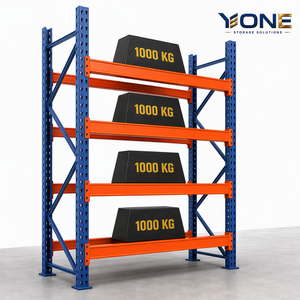
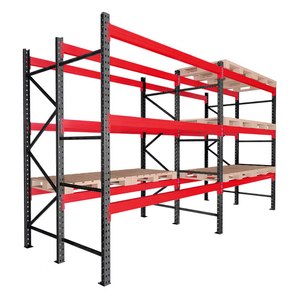
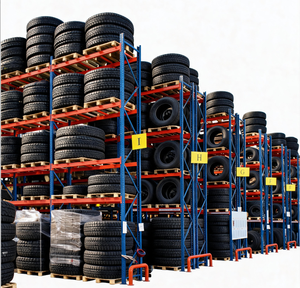
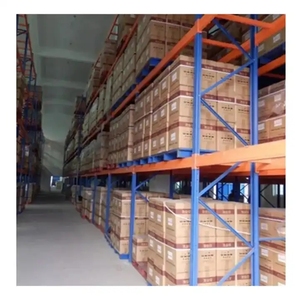
Selective racking remains the workhorse of modern global warehousing, providing 100% direct pallet accessibility. Manufactured from high-tensile Q235B cold-rolled steel, upright frames are roll-formed with omega-section profiles for optimized moment of inertia. Beams feature welded 3-claw or 4-claw connector brackets engineered with automatic safety locks to prevent accidental forklift displacement.
Boltless Adjustable Medium-Duty Longspan Shelving
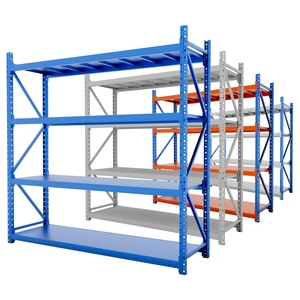
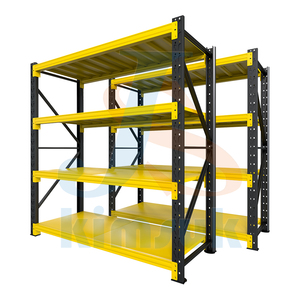
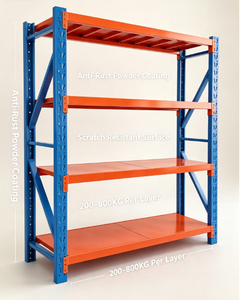
Designed for hand-loaded inventory, e-commerce picking, and industrial spare parts management, longspan shelving utilizes step-beam construction supporting wire mesh decks, steel shelves, or high-density timber boards. Load ratings typically range from 200 kg to 800 kg per level, utilizing interlocking keyhole or teardrop slotting for rapid, tool-free vertical adjustment on 50 mm pitch increments.
Rack-Supported Mezzanines & Multi-Tier Systems
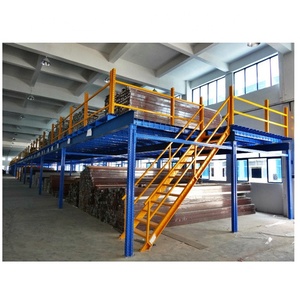
Rack-supported platforms transform vertical cube space into usable multi-level floor area without requiring conventional civil building expansions. By utilizing heavy-duty racking uprights as structural columns, mezzanine platforms support live floor loads from 300 kg/m² up to 1,500 kg/m², complete with modular staircases, safety handrails, and pallet drop gates conforming to OSHA and European safety directives.
Drive-In & High-Density Shuttle Storage
For homogeneous stock with high pallet counts per SKU, Drive-In and Radio Shuttle systems eliminate operating aisles to achieve floor utilization rates exceeding 80%. Supporting Last-In-First-Out (LIFO) or First-In-First-Out (FIFO) stock management, these heavy-duty systems feature continuous cantilever arm rails, heavy floor guide channels, and anti-collision frame protectors engineered to absorb impact dynamics.
3. Future Procurement Trends in Industrial Shelving (2025–2030)
Procurement strategies for industrial shelving are undergoing rapid transformation as global supply chains prioritize risk mitigation, sustainability, and automated operational efficiency. Procurement officers and warehouse project managers must account for several macro trends during supplier selection:
A. Total Cost of Ownership (TCO) vs. Initial CAPEX
Experienced buyers have shifted from selecting suppliers purely on the lowest FOB price per metric ton toward analyzing TCO. Factor components include freight container fill-efficiency (utilizing knock-down structural design), installation velocity, anti-corrosion lifecycle, and structural reconfigurability. High-quality powder coatings and high-precision cold-roll forming reduce maintenance costs and operational downtime across a 15-to-20-year operational horizon.
B. Standardization for PBR, CHEP, and Euro Pallet Frameworks
Globalization demands modular racking architecture capable of accommodating varying regional pallet profiles. In Latin American markets, particularly Brazil, racking systems must be engineered specifically around the PBR pallet (1,000 x 1,200 mm), ensuring precise beam span calculations, frame depth dimensions (typically 1,000 mm or 1,100 mm), and appropriate safety overhang clearances (50–75 mm per side) to comply with local NR-11 safety standards and ABNT NBR 15524 requirements.
C. Nearshoring & Direct Overseas Factory Partnership
To hedge against global shipping volatility and extended lead times, enterprise logistics operators are entering direct OEM/ODM strategic relationships with tier-1 manufacturers who offer full engineering capabilities, CAD custom design, load calculation certification, and localized port logistics support (e.g., direct shipping to Santos, Paranaguá, or Itajaí with ready import documentation).
4. Future Technological & Structural Development Trends
The integration of smart technology and advanced structural metallurgy is reshaping how industrial shelving systems are engineered and monitored.
IoT Sensor Integration & Health Monitoring
Next-generation racking installations incorporate wireless strain-gauge sensors and M2M telemetry along load-bearing beams and critical upright joints. These IoT sensors continuously measure structural deflection, structural sway during forklift loading, ambient temperature shifts in cold storage, and physical impact detection, automatically alerting facility managers to potential structural fatigue before failure occurs.
Advanced Metallurgy & Ultra-High Yield Steels
The transition from standard carbon steel to cold-formed micro-alloyed ultra-high-yield steels (e.g., Q355B and specialized cold-rolled alloys) allows manufacturers to reduce overall structural weight while increasing ultimate load capacities. This results in slimmer profile columns, increased clear span beam distances, reduced shipping deadweight, and a lower carbon footprint during raw steel production.
Robotic AMR & High-Speed Shuttle Topology
As Autonomous Mobile Robots (AMRs) replace standard counterbalanced forklifts, industrial shelving design is evolving. Modern racking integrates floor-level magnetic navigation tracks, precision rack-supported guide rails, and ultra-flat floor anchor baseplates engineered to maintain sub-millimeter tolerances required for robotic picking arms and automated high-speed shuttle retrievals.
5. Enterprise Advantages & Engineering Core Capabilities
Why leading global supply chains and Brazilian logistics operators trust BR Industrial Racking Ltda. for critical warehouse infrastructure projects.
Full Compliance with ABNT NBR 15524 & FEM
Every industrial racking system designed by our engineering team undergoes rigorous finite element analysis (FEA) and structural load calculation in strict compliance with ABNT NBR 15524 (Estruturas de Armazenagem) and FEM 10.2.02 guidelines. Projects include detailed load tables (placas de carga) in Portuguese/English to ensure complete readiness for local NR-11 safety audits and engineer ART issuance.
Automated Precision Roll-Forming Infrastructure
Our manufacturing base operates high-precision, multi-station automated roll-forming lines capable of maintaining structural profile tolerances within ±0.5 mm. Automated robotic welding stations guarantee 100% penetration welds across all beam connector claws, diagonal bracing struts, and heavy-duty base plates, validated under ISO 9001 quality management protocols.
Tropical Corrosion Protection & Pre-Treatment
To resist high ambient humidity and harsh coastal salt environments across tropical port zones, all components undergo a multi-stage chemical degreasing, zinc-phosphate pre-treatment, and electrostatic thermosetting epoxy-polyester powder coating (60–80 microns). Hot-dip galvanizing options are available for cold-storage freezers, agricultural chemical storage, and coastal facilities.
End-to-End Engineering CAD Layouts & 3D Simulation
We provide complimentary warehouse layout optimization, CAD architectural drafting, and 3D simulation analysis. Clients simply provide facility floor dimensions, clear building height under eaves, forklift turning radius, and unit load specs, and our engineering team returns complete spatial layouts optimizing pallet position yields within 24–48 hours.
6. Frequently Asked Questions (FAQ)
Essential technical and procurement guidance for facility managers, logistics directors, and structural engineers.
How do I determine whether selective pallet racking or drive-in racking is best for my facility?
What specific structural parameters are verified during ABNT NBR 15524 load calculations?
Are your racking systems engineered to accommodate PBR pallets (1,000 x 1,200 mm)?
What surface treatment options are recommended for cold storage or coastal facilities?
What safety accessories should always be specified for heavy-duty industrial shelving?
What export documentation is provided to support customs clearance in Latin American ports?
Optimize Your Warehouse Floor Space & Safety Today
Consult with our senior structural racking engineers. Send us your building floor plan, clear height under eaves, and pallet load specs for a free layout optimization and formal quotation.
Send an Inquiry