Featured Industrial Racking Systems
Engineered for extreme weight distribution, long-span structural flexibility, and maximum cubic space utilization across global logistics hubs.
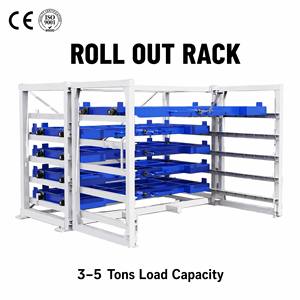
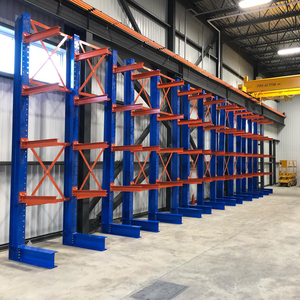
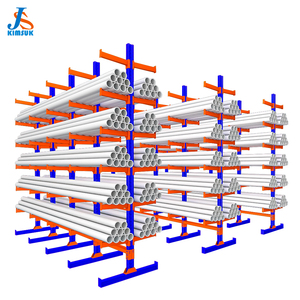
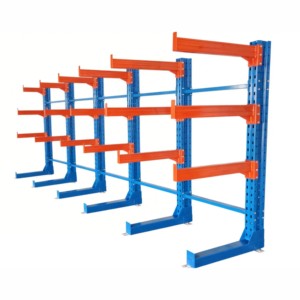
1. Structural Engineering Fundamentals: Cantilever vs. Selective Pallet Racking
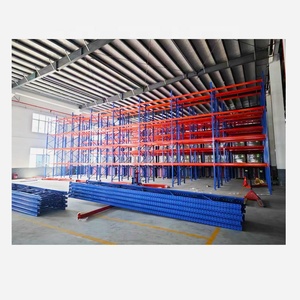
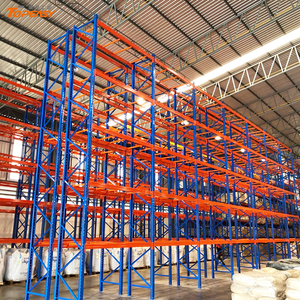
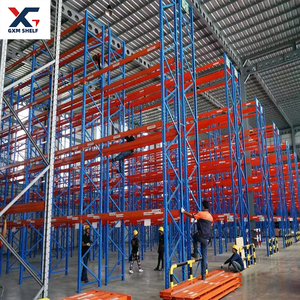
In modern industrial material handling, choosing between cantilever racking and selective pallet racking systems depends fundamentally on structural mechanics and handling parameters. Selective pallet racks utilize vertical upright frames combined with horizontal load beams, transferring loads directly via rectangular bays. This configuration relies on internal frame stability and back-to-back ties, establishing a closed-bay frame ideal for standard unitized loads like PBR (1,000 x 1,200 mm) or Euro-pallets (800 x 1,200 mm).
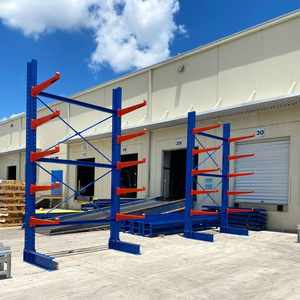
Conversely, cantilever racking systems are engineered specifically to eliminate front vertical posts, removing front obstruction. The structural design transfers eccentric bending moments from cantilevered arms directly into heavy-duty central columns through specialized hook-and-pin connections or high-tensile bolted joints. The primary structural challenge in cantilever racking design is managing the severe bending moments generated at the arm-to-column junction and resisting lateral-torsional buckling across unbraced heights.
When storing long, non-uniform, or continuous inventory—such as steel pipes, extruded aluminum profiles, timber bundles, automotive body panels, and heavy coils—cantilever racking provides clear operational advantages. Selective pallet racks require rigid pallet supports or solid decking for oversized loads, introducing severe forklift collision risks and wasted vertical height. Cantilever systems, however, allow continuous horizontal storage runs without front vertical uprights, accelerating handling speeds by up to 35% during crane or side-loader operations.
2. Technical Benchmark Matrix: Evaluating Top Global Manufacturers
Selecting tier-1 racking suppliers requires a rigorous evaluation beyond unit pricing. Procurement directors must assess structural steel mill certifications, cold-roll forming precision, automated robotic welding capabilities, powder coat adhesion metrics, and compliance with recognized design standards such as ABNT NBR 15524 (Brazil), ANSI/RMI MH16.1 (USA), FEM 10.2.02 (Europe), and JIS S 1040 (Japan).
| Evaluation Parameter | Tier-1 Factories (Top 10) | Tier-2 Local Wholesalers | BR Racking Engineering Standard |
|---|---|---|---|
| Steel Grade & Yield Strength | Certified Q355B / Q235B Cold-Formed & Hot-Rolled Structural I-Beams | Commercial Grade Q235, Uncertified Secondary Coils | High-Tensile Q355B Hot-Rolled Structural Steel with Mill Test Reports (MTR) |
| Welding Integrity & QC | Robotic MIG/MAG Welding, Ultrasonic NDT Inspection | Manual Stick Welding, Visual Inspection Only | Fully Automated Robotic Welding with Penetration Testing & ISO 3834 Compliance |
| Surface Protection & Finish | 8-Stage Pre-treatment + Electrostatic Epoxy Powder (80–120μm) | Single-Stage Solvent Wash, Liquid Paint (<40μm) | Shot-Blasting (Sa 2.5) + Thermosetting Epoxy-Polyester Powder Coating or Hot-Dip Galvanizing |
| Seismic & Wind Calculation | Custom FEA (Finite Element Analysis) Structural Modeling | Standard Static Charts, No Dynamic Seismic Modeling | Site-Specific FEA Reports, ABNT NBR 15524 & Eurocode 3 Seismic Verification |
| Arm Adjustment Pitch | Precision Punched 50mm / 75mm Incremental Pitch | Fixed Welded Arms or Large 100mm+ Pitch | Adjustable 50mm / 76.2mm Hook Locking Pin System with Safety Wedge Locks |
3. Strategic Sourcing & Future Technology Trends (2025–2030)
The industrial storage industry is undergoing a digital and structural evolution. Procurement managers face rising labor costs, land inflation, and stringent safety standards, driving four core technological advancements in cantilever and heavy-duty pallet racking systems:
Automated Cantilever AS/RS
Integrating cantilever racking with stacker cranes and automated guided vehicles (AGVs) for handling heavy long goods without manual forklift intervention, reducing material damage by up to 90%.
IoT Strain & Deflection Sensors
Embedding real-time structural health monitoring sensors into critical cantilever columns to detect dynamic overload, frame inclination, and impact shocks prior to structural fatigue or failure.
Duplex Coating Technology
Combining hot-dip galvanizing with high-durability architectural powder coats for outdoor storage facilities in aggressive coastal or high-humidity environments, extending lifespan to over 25 years.
Enterprise Value Proposition: Engineering Competence & Global Capabilities
Operating as a premier global manufacturing enterprise, BR Industrial Racking Ltda. (in partnership with advanced production bases including Guangdong Orbit Metal Products Co., Ltd.) delivers comprehensive warehouse infrastructure solutions. Operating since 2005 with over 120 senior engineers, structural designers, and international trade specialists, the company achieves an annual sales volume exceeding US$16 Million across South America, North America, Europe, and Asia-Pacific.
Our manufacturing footprint features high-precision automated cold-roll forming lines, 11-axis robotic welding cells, and an automated continuous powder coating line. Every racking component—from heavy-duty teardrop uprights and selective box beams to adjustable cantilever arms—undergoes strict raw material chemical verification and load testing protocols.
- Standards Compliance: Engineered to meet ABNT NBR 15524, RMI specifications, FEM 10.2.02, ISO 9001, CE mark certification, and JIS standards.
- PBR Pallet Optimization: Precision-designed for Brazilian PBR pallets (1,000 x 1,200 mm), Europallets, and non-standard industrial skids.
- Custom FEA Engineering: Free 3D CAD facility layout design, dynamic load calculations, and structural simulation reports tailored to local seismic zones and floor slab capabilities.
- Port-Ready Logistics: Containerized export packaging utilizing anti-corrosion protective film, heavy-duty steel strapping, and specialized wooden saddles for direct delivery to Santos, Paranaguá, Itajaí, and global seaports.
4. Procurement FAQ: Frequently Asked Technical Questions
Request a Custom Engineering Design & Factory Quote
Consult with our structural engineering team today. Send us your warehouse floor plan, floor slab specifications, and load profiles for a complimentary 3D layout and detailed cost estimate.
Send an Inquiry