Featured Industrial Racking & Storage Products
Precision-engineered, heavy-duty OEM/ODM pallet racking systems manufactured to international ISO 9001, CE, and FEM structural compliance standards.
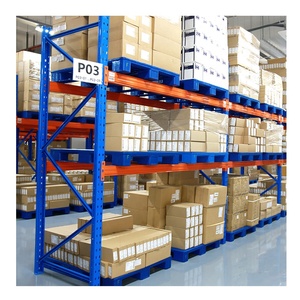
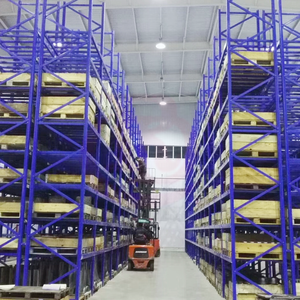
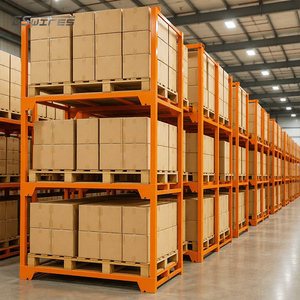
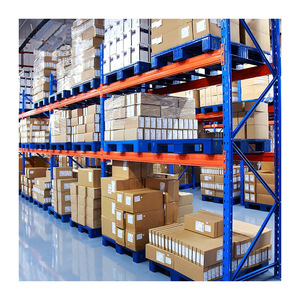
Executive Summary: The Strategic Value of OEM/ODM Manufacturing in Modern Material Handling
In the contemporary era of hyper-globalized supply chains, omnichannel fulfillment, and rapid e-commerce expansion, high-density warehousing has evolved from a simple logistics necessity into a core competitive advantage. Modern distribution hubs, cold storage facilities, and automated fulfillment centers demand warehouse storage shelving and pallet racking systems engineered to deliver extraordinary structural resilience, precise spatial yield, and absolute operational safety.
As a leading OEM (Original Equipment Manufacturer) and ODM (Original Design Manufacturer) warehouse storage shelving manufacturer, our manufacturing framework directly solves the structural, economic, and operational friction encountered by procurement directors, systemic integrators, and industrial engineers worldwide. Sourcing directly from an established factory equipped with continuous cold-roll forming, automated robotic welding, and high-volume electrostatic powder coating lines bridges the gap between customized structural requirements and cost-efficient scalable output.
Information Gain Insight: Structural yield optimization in heavy-duty racking relies on cold-rolled steel profiling (typically Q235B to Q355B structural steel). Utilizing custom punch pitch geometry, optimized beam connectors, and precise gauge thickness reduces dead weight while increasing load capacity by up to 28% compared to standard off-the-shelf racking profiles.
1. The Metallurgy and Structural Engineering Behind Heavy-Duty Racking Manufacturing
At the structural core of industrial warehouse shelving lies cold-rolled high-tensile carbon steel. Selecting raw material with verified yield strength (Fy) and tensile strength (Fu) forms the engineering bedrock for every upright frame, load-bearing beam, and cantilever arm engineered within our facilities.
1.1 High-Grade Steel Selection: Q235B vs. Q355B Structural Steel
Industrial storage shelving systems operating under extreme static and dynamic loads require precise steel chemistry. While standard light-to-medium-duty storage racking utilizes Q235B grade steel (equivalent to SS400 or ASTM A36), high-bay selective pallet racking, drive-in systems, and heavy-duty cantilever racks utilize premium Q355B low-alloy steel. Q355B delivers a minimum yield strength of 355 MPa, granting superior resistance to permanent deflection, floor slab settling torque, and forklift impact forces.
1.2 Advanced Cold-Roll Forming and Structural Profiling
Our OEM factory utilizes automated continuous multi-station cold-roll forming production lines. Upright posts undergo multi-stage roll pass sequences to achieve intricate geometry—such as 8 to 13-fold profile cross-sections—which exponentially enhances column moment of inertia (I-value) and torsional buckling resistance. Precision CNC punch presses achieve consistent pitch alignment (e.g., 50mm, 75mm, or 76.2mm drop-lock and teardrop patterns), allowing precise vertical shelf adjustability.
Upright Profile Engineering
Multi-fold cold-formed profiles engineered to optimize moment of inertia, resisting vertical axial compression and lateral sway in high-bay structures.
Surface Passivation & Powder Coating
Automated 9-stage pre-treatment, degreasing, and electrostatic epoxy-polyester powder coating providing 500+ hours of salt spray corrosion resistance.
Robotic Weld Integrity
Dual-pulse MIG robotic welding stations ensure total weld penetration at beam end-connector joints, eliminating structural fatigue under cyclic loading.
2. Full-Spectrum OEM & ODM Capabilities: From CAD Concept to Global Installation
Selecting an OEM/ODM factory partner allows warehouse operators and international procurement networks to bypass generic distribution limitations. OEM/ODM customization aligns spatial physics directly with specific material handling handling equipment (MHE) and specialized SKU characteristics.
2.1 The OEM Customization Process
Our OEM manufacturing workflow adheres strictly to client engineering drawings, project tenders, and tender bill-of-quantities (BOQ). Sourcing managers can specify exact steel gauges (from 1.5mm to 3.0mm upright steel thickness), custom connector tooth geometries (3-hook vs. 4-hook beam connectors), specialized safety pin mechanisms, and custom powder-coated corporate RAL color matching (e.g., RAL 5005 Signal Blue, RAL 2004 Pure Orange, or RAL 7035 Light Grey).
2.2 ODM Engineering & Turnkey Layout Design
When clients present raw building schematics or performance specifications without structural drawings, our internal engineering team provides full ODM services. Utilizing FEA (Finite Element Analysis) software, finite element simulation models simulate complex structural stresses under dead load, live load, seismic sway (conforming to seismic zone design requirements), and forklift impact scenarios. We calculate building clear heights, aisle widths for Reach Trucks, VNA (Very Narrow Aisle) turrets, or AGVs, and optimize pallet slot layout to yield maximum cubic storage density.
3. Technical Specification Matrix: Industrial Storage Systems Comparison
The comparative engineering parameters below outline standard technical specifications for major industrial storage rack configurations manufactured across our OEM/ODM production lines:
| System Classification | Structural Material Grade | Load Capacity Range | Max Height Potential | Handling Equipment Compatibility | Key Industrial Applications |
|---|---|---|---|---|---|
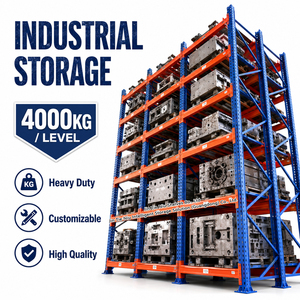
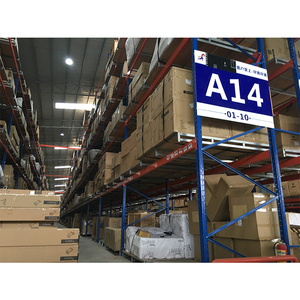
| Heavy-Duty Selective Pallet Racking | Q235B / Q355B Cold-Rolled Steel | 1,000kg – 4,000kg / Level | Up to 15 Meters | Counterbalance, Reach Truck, VNA | 3PL Warehouses, FMCG, Manufacturing, Retail DCs |
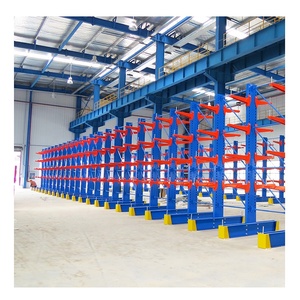
| Cantilever Racking Systems | H-Beam / Heavy C-Profile Steel | 500kg – 3,000kg / Arm | Up to 10 Meters | Side Loader, Heavy Counterbalance | Steel Pipes, Extrusions, Timber, Tubing |
| Drive-In / Drive-Thru Racking | Q235B Structural Steel | 1,000kg – 1,500kg / Pallet Slot | Up to 12 Meters | Standard Reach & Counterbalance | Cold Storage, Beverage Batching, High-Density Stock |
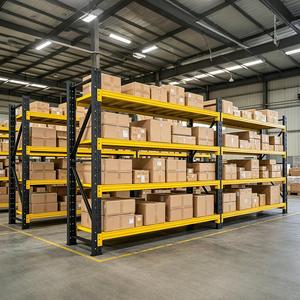
| Medium-Duty Longspan Shelving | Cold-Rolled Sheet & Step Beams | 200kg – 800kg / Level | Up to 5 Meters | Manual Hand Picking / Order Pickers | Automotive Parts, E-commerce Picking, Archives |
| Nested Stacking Frames / Nestainers | Tubular Steel & Channel Base | 1,000kg – 2,000kg / Frame | Stackable 4–5 Units High | Standard Forklift | Seasonal Bulk Storage, Agricultural Bagging, Fabrics |
4. Future Industry Trends: Sourcing & Procurement Outlook (2025–2030)
Procurement directors and warehouse architects must account for upcoming technological shifts when specifying warehouse storage infrastructure. Storage shelving systems are no longer isolated static steel frames; they serve as structural foundations for automated ecosystems.
4.1 Convergence of Racking with Automation (ASRS & Shuttle Systems)
The global industrial storage market is accelerating toward automated high-density systems. ODM manufacturers must maintain ultra-tight manufacturing tolerances (up to ±0.5mm structural variance per bay) to accommodate Radio Shuttle carts, Four-Way Pallet Shuttles, and Autonomous Mobile Robots (AMRs). Structural deflections must be strictly constrained to prevent automated sensor errors or vehicle misalignments during high-speed retrieval sequences.
4.2 Sustainable Manufacturing & Decarbonized Supply Chains
Corporate ESG (Environmental, Social, and Governance) targets are fundamentally transforming steel procurement. Global buyers increasingly favor OEM factories operating energy-efficient manufacturing plant equipment, utilizing closed-loop water recovery systems during chemical washing, and applying VOC-free, heavy-metal-free thermosetting powder coatings. Choosing high-strength steel profiles allows thinner material gauges to carry higher design loads, reducing embodied carbon metrics per pallet position stored.
4.3 Regulatory Compliance & Global Safety Certifications
International logistics operations demand rigid compliance with international structural standards. Premium OEM factories construct and calculate designs following standard specifications including:
- FEM 10.2.02 / EN 15512: European structural code for static steel pallet racking design.
- ANSI MH16.1 (RMI): Specification for the Design, Testing, and Utilization of Industrial Steel Storage Racks in North America.
- ISO 9001:2015: Total quality management governing raw material sourcing, production traceability, and dimensional QA.
- ABNT NBR 15524: South American standard regulating steel storage systems in emerging logistics hubs.
5. Enterprise Advantages & Manufacturing Excellence
When partnering with our manufacturing facility, global importers, distributors, and EPC contractors benefit from direct factory capabilities refined over decades of continuous steel fabrication:
Integrated Scalable Manufacturing
Over 20,000+ square meters of dedicated production space hosting continuous automatic cold-roll mills, precision laser cutters, and multi-axis robotic welding cells.
Engineered Information Gain
In-house CAD/3D technical support team providing rapid structural calculations, spatial optimization layouts, and FEA simulation reports within 24 hours.
Container-Optimized Export Packaging
Components are custom-bundled, steel-strapped, and wrapped in protective moisture-barrier films with corner guards to maximize shipping container space and prevent transit damage.
Industrial Racking Sourcing FAQ
Expert engineering answers addressing critical technical, commercial, and logistical questions encountered during industrial storage racking procurement.
What steel grade specifications and quality standards are used in your production?
How do OEM and ODM customized orders work for new warehouse projects?
What is the typical production lead time and minimum order quantity (MOQ)?
How is corrosion protection handled for cold storage or humid environment deployments?
How do you ensure safe ocean transport packaging and bundle optimization?
Do you supply installation support, structural documentation, and safety accessories?
Ready to Optimize Your Warehouse Storage Infrastructure?
Consult with our OEM/ODM structural engineering team today to receive a complimentary custom layout design, structural load calculation, and factory-direct price quotation.
Get a Quote