Industrial Pallet Storage Racks & Custom Steel Solutions
Engineered for extreme structural load stability, optimized pallet capacity, and long-term operating durability across worldwide logistics hubs.
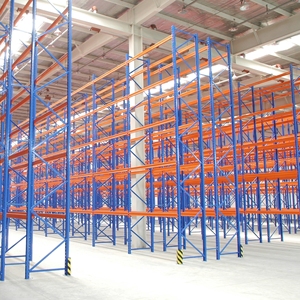
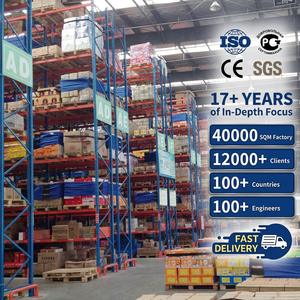
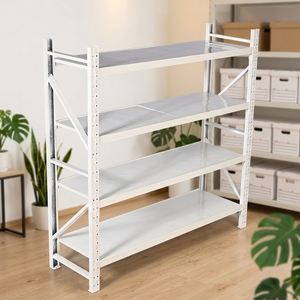
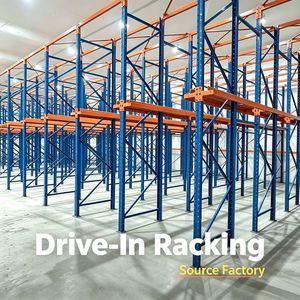
OEM/ODM Manufacturing Authority & Structural Engineering Integrity
Delivering custom structural steel racking tailored to international mechanical codes, high seismic thresholds, and rigorous logistics operational workflows.
Precision OEM/ODM Customization
From bespoke pitch increments (50mm, 75mm, 76.2mm) to specialized upright profiles (80mm to 120mm widths), we engineer custom structural framing aligned with client floor plans, clearance heights, and pallet configurations.
High-Tensile Cold-Rolled Steel
We utilize premium certified Q235B, Q355B structural cold-rolled steel coil (or international SS400 equivalents) to guarantee robust yield strength, preventing plastic deformation under static and dynamic load ratings.
Global Structural Compliance
Engineered in full compliance with ANSI/RMI MH16.1, FEM 10.2.02, AS4084-2012, and Brazilian ABNT NBR 15524 structural guidelines. Includes complete load capacity verification reports and structural FEA simulations.
Advanced Automated Manufacturing
Operating continuous cold roll-forming production lines, robotic CO2 shielded welding stations, and automated electrostatic thermosetting powder coating tunnels to maximize production yield and finish uniformity.
Rigorous QA & Salt-Spray Resistance
Multi-stage surface pre-treatment (degreasing, phosphating, acid washing) followed by 60–80 micron powder coating ensures anti-corrosion survival exceeding 500 hours of continuous salt-spray testing (ASTM B117).
Turnkey Export Logistics & Support
Complete flat-pack modular packing using steel strapping, protective film wrapping, and timber dunnage. Shipped directly from Guangzhou ports with full customs tariff classification (HS Code 7308.90) support.
1. Technical Architecture & Structural Engineering of Heavy-Duty Pallet Racks
Modern warehouse logistics require structural pallet storage systems capable of bearing massive vertical dead loads and live loads, while resisting horizontal shear forces caused by forklift impacts or seismic acceleration. As a premier OEM/ODM Pallet Storage Racks Manufacturer & Exporter established in 2005, our engineering framework integrates Advanced Finite Element Analysis (FEA) to calculate stress distribution across beam-to-column connections, baseplates, and upright framing.
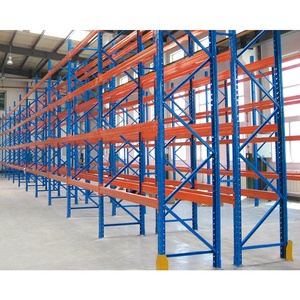
The core structural strength of a selective or heavy-duty racking system lies in its cold-formed steel geometry. Upright frames are roll-formed into complex, multi-flanged profile channels (such as Omega or teardrop profiles) featuring stiffness-enhancing ribbing. This geometric design delivers superior section modulus ($Z_x$) and moment of inertia ($I_x$) while minimizing steel deadweight. Beams are typically engineered as twin-C interlocked box beams or step beams, robotically welded to heavy-gauge multi-prong connectors that lock securely into upright slots, eliminating torsional twisting under capacity load.
| Structural Component | Material Specification | Common Profile Dimensions | Manufacturing Standards |
|---|---|---|---|
| Upright Columns | Q235B / Q355B / SS400 Cold-Rolled Steel | 80x60, 90x70, 100x70, 120x95 mm (1.5 - 3.0mm thickness) | FEM 10.2.02 / ANSI MH16.1 |
| Box Beams | High-Strength C-Channel Interlocked Steel | 80x50, 100x50, 120x50, 140x50, 160x50 mm | EN 1090-2 / ISO 9001:2015 |
| Footplates / Anchors | Heavy-Duty Stamped Steel Plate + Expansion Anchors | 100x150x5mm to 200x200x8mm (Grade 8.8 bolts) | ABNT NBR 15524 / AS4084-2012 |
| Surface Protection | Epoxy-Polyester Thermosetting Powder Coating | 60 to 80 microns dry film thickness (DFT) | ASTM B117 Salt Spray (500hr) |
Safety factors are paramount in our engineering ethos. All load-bearing beam capacities are computed to strictly limit maximum deflection under full allowable load to less than Deflection Limit = L / 200 (where L is the clear span of the beam). Furthermore, safety locking pins with automatic spring locks prevent accidental beam dislodgement during forklift lifting operations.
2. Global Procurement Trends for Industrial Pallet Storage Systems
The global industrial storage and warehousing landscape is undergoing a structural transition driven by e-commerce fulfillment speed, supply chain nearshoring, land scarcity, and environmental ESG commitments. Procurement directors and logistics planners must navigate these evolving dynamics when selecting an OEM/ODM manufacturing partner:
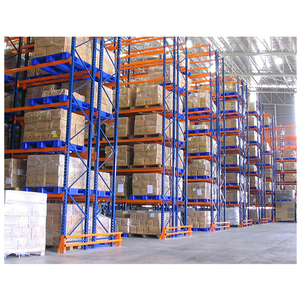
- Shift Toward High-Bay & Space-Dense Formats: Rising industrial real estate costs are forcing warehouse operators to optimize vertical cubic volume. Procurement is rapidly shifting from conventional 6-meter selective racking to 12-to-15-meter high-bay selective, Very Narrow Aisle (VNA), and Double-Deep pallet storage systems.
- Demands for Total Cost of Ownership (TCO) Transparency: Global buyers no longer evaluate rack systems based solely on initial FOB price per steel ton. Procurement criteria prioritize total system lifecycle costs, factoring in anti-corrosion lifespan, rack damage resistance (column guards, reinforced base channels), and structural modularity for easy reconfiguration.
- Nearshoring & Standardized Global Supply Chains: Multinational 3PLs require standardized pallet rack geometries (compatible with PBR 1000x1200mm, Europallet 800x1200mm, and US 48x40-inch pallets) that can be seamlessly deployed across regional distribution centers in North America, South America, Europe, and Asia-Pacific.
- Green Steel & Sustainable Powder Coating: Regulatory frameworks increasingly scrutinize the carbon footprint of structural steel infrastructure. Our production lines leverage low-VOC electrostatic powder coatings, closed-loop phosphate recycling systems, and scrap steel reclamation to help enterprise buyers meet Scope 3 emissions reduction targets.
3. Technological Evolution & Future Trends in Storage Racking
Storage racking systems are evolving from static passive structural frameworks into intelligent, highly integrated physical infrastructures optimized for modern automated material handling equipment (MHE):
- Automated Storage and Retrieval Systems (AS/RS) Integration: High-density pallet shuttle systems, AGV/AMR guided vehicles, and stacker cranes demand ultra-tight manufacturing tolerances (up to ±1.0mm tolerance across upright alignments). Modern OEM/ODM factories utilize continuous inline laser checking to deliver high-precision rack profiles essential for automated robotic picking.
- Smart Structural Health Monitoring (SHM): Future racking installations are adopting embedded IoT strain gauge sensors and wireless deflection monitors. These sensors automatically detect accidental forklift impacts, dynamic overload events, or structural fatigue in real time, alerting facility engineers to potential safety risks before structural failure occurs.
- Seismic Engineering & High-Ductility Framing: With distribution centers increasingly located near active geological faults, dynamic seismic analysis is standard practice. Advanced OEM/ODM designs incorporate ductile baseplate connections, high-energy absorbing bracing patterns, and dynamic load-distribution beam connectors that flex without snapping during seismic events.
- Modular Hybrid Systems: Modern facility designers favor hybrid structures—combining heavy-duty pallet racking foundations with rack-supported mezzanine floors or multi-tier pick towers to support simultaneous palletized storage and manual piece-picking on upper levels.
Frequently Asked Questions (FAQ) for Global Buyers
In-depth technical and commercial answers addressing common engineering, compliance, and import questions from global logistics procurement teams.
Q1: How do I determine the correct beam section and upright thickness for my warehouse load requirement?
The beam and upright selection depends on three main variables: maximum weight per pallet (e.g., 1,000 kg/pallet), number of pallets per beam level (typically 2 or 3), and maximum overall frame height. For a standard 2,000 kg/level load across a 2,700mm clear span, an 100x50x1.5mm box beam is commonly selected. Upright gauge (1.8mm, 2.0mm, or 2.5mm) is calculated based on total bay load, aisle width, and vertical beam level spacings using FEM 10.2.02 load matrices.
Q2: What design standards do your OEM/ODM pallet racks comply with?
Our rack manufacturing processes comply with major global structural standards: ANSI/RMI MH16.1 (USA), FEM 10.2.02 (European Federation of Materials Handling), AS4084-2012 (Australia), and Brazilian ABNT NBR 15524. All manufacturing plants maintain ISO 9001:2015 quality management system certification and CE compliance for structural steel products.
Q3: Can you design racking customized for non-standard pallet sizes or textile roll containers?
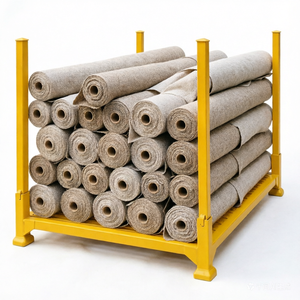
Yes. As a direct OEM/ODM manufacturer, over 60% of our production volume consists of customized storage infrastructure. We design specialized stackable fabric roll racks (like our TER series), drive-in systems for deep bulk storage, cantilever racks for long materials, and custom-depth selective frames engineered for non-standard pallet dimensions.
Q4: What surface treatment options are available for humid, outdoor, or cold storage environments?
For standard indoor distribution centers, we supply electrostatic epoxy-polyester powder coating (60–80 microns DFT). For high-humidity coastal climates, cold storage units (-30°C), or chemical fertilizer storage, we offer Hot-Dip Galvanizing (HDG according to ISO 1461) which provides a protective zinc coating thickness exceeding 65–85 microns for total rust prevention.
Q5: What is the standard lead time for an OEM export order, and how are shipping containers optimized?
Production lead time typically ranges from 3 to 4 weeks following approval of structural drawings. We optimize container loading (20GP / 40HQ) by bundling upright frames, palletizing box beams, and securing small components in steel crates. This ensures maximum weight/volume utilization of shipping containers while protecting powder-coated surfaces against transit abrasion.
Q6: Do you provide installation guidance and structural load certification for site inspections?
Every shipment includes complete CAD installation assembly drawings, component part lists, bolt tightening torque specifications, and official load capacity rating signs (Placas de Carga) in the target market language to ensure seamless workplace safety inspection compliance.
Ready to Optimize Your Warehouse Storage Capacity?
Connect with our structural engineering team today to receive CAD layout planning, custom structural load calculations, and competitive OEM/ODM factory-direct pricing for your next project.
Get a Quote