Industrial Racking & Shelving Systems
High-density structural configurations tailored for global distribution hubs, logistics parks, and industrial facilities.
Executive White-Paper: Next-Generation OEM Racking Structural Engineering
In modern industrial logistics, static storage infrastructure must balance structural elasticity, yield strength optimization, and high spatial efficiency. As a tier-1 OEM manufacturing plant, our specialized manufacturing facilities transform premium certified Q235B and Q355B cold-rolled steel coils into high-performance rack structures. Modern distribution centers demand customized racking systems designed to withstand dynamic floor loadings, seismic forces, and high-frequency forklift traffic without compromised load-bearing safety factors.
Information Gain Insight: Structural safety in pallet racking depends not only on steel gauge thickness, but also on beam connection locking mechanisms, section modulus calculations, and column profile geometry. Our cold roll-forming process produces multi-flange omega uprights engineered for optimal buckling resistance under eccentric loading scenarios.
Every industrial storage system engineered within our plant undergoes computer-simulated Finite Element Analysis (FEA) to model deflection parameters under maximum permissible loads. By balancing section modulus against structural weight, we provide global enterprise clients with optimized structural racking that reduces shipping freight costs while maintaining strict compliance with international structural codes such as ANSI MH16.1, FEM 10.2.02, ISO 9001, and regional regulations including ABNT NBR 15524 and Brazilian NR-11 safety protocols.
Technical Core: Advanced Manufacturing & Engineering Standards
Achieving superior load capabilities requires stringent quality controls at every phase of processing, from raw coil slitting to automated powder coating. Below are the six structural pillars defining our OEM manufacturing process:
High-Tensile Cold-Rolled Steel
Utilizing high-grade Q235B mild steel and high-yield Q355B alloys ensures high structural rigidity, minimal beam deflection, and consistent performance under extreme warehouse temperatures.
Automated Roll-Forming Lines
Computerized continuous cold roll-forming machines produce upright profiles with precise pitch punching (50mm/75mm adjustability), eliminating residual stress concentration along beam axes.
Robotic MIG/MAG Welding
Automated robotic welding arms ensure deep penetration on beam connectors, column baseplates, and cantilever arms, eliminating human welding inconsistencies and structural fatigue points.
Pre-Treatment & Powder Coating
Multi-stage automated chemical cleaning, degreasing, and iron-phosphate bath pre-treatment followed by thermosetting electrostatic epoxy powder coating ensures maximum corrosion resistance.
Seismic & Structural Safety Accessories
Supplied with floor anchor bolts, row spacers, frame protectors, safety locking pins, and heavy-duty back stoppers designed to prevent accidental pallet overrun.
Full Traceability & Compliance
ISO 9001 certified batch tracking ensures every steel bundle, weld line, and coated component includes material test certificates (MTC) matching global safety specifications.
Industrial Racking Architectural Breakdown: OEM Product Matrix
Engineered storage solutions must adapt to specific SKU velocity profiles, load weights, and handling equipment. Below is a structural analysis of our primary OEM manufacturing product lines:
1. Heavy-Duty Selective Pallet Racking Systems
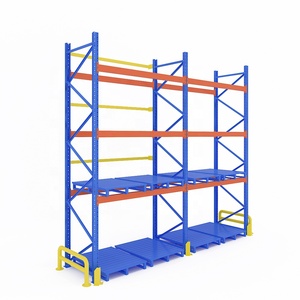
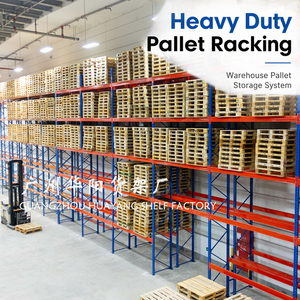
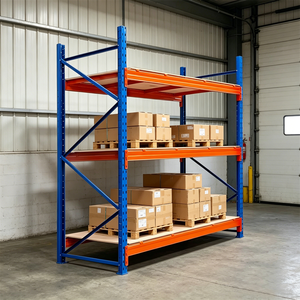
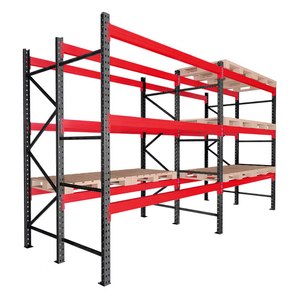
Selective pallet racking represents the industry standard for facilities requiring 100% direct access to every pallet position. Built with adjustable box beams or step beams, selective racks accommodate pallet loads from 1,000 KG to over 3,000 KG per level. Frame depths are customized for international pallet footprints, including Euro pallets (800 x 1200 mm), standard US pallets (40 x 48 inches), and PBR pallets (1000 x 1200 mm) prevalent across Latin American distribution networks.
2. Heavy-Duty Single & Double-Sided Cantilever Racks
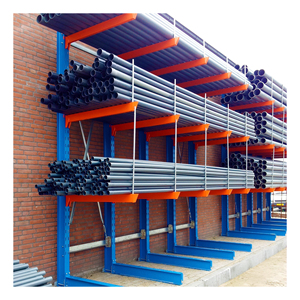
Designed specifically for linear, un-palletized long products—such as steel pipes, aluminum profiles, timber bundles, plastic tubing, and heavy sheet metal—cantilever racks eliminate front vertical columns. Arms are secured to central column uprights using hairpin pins or heavy-duty grade 8.8 bolts, offering load ratings up to 1,500 KG per arm under uniform loading.
3. Drive-In & Drive-Through Bulk Racking
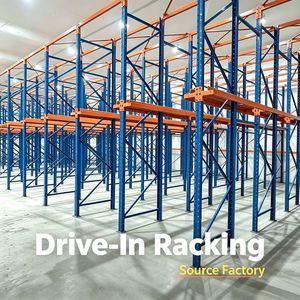
For homogeneous bulk products with low stock rotation requirements, Drive-In racking maximizes floor area utilization up to 85% by eliminating fork truck aisles. Pallets sit on continuous cold-rolled cantilevered side rails. Engineered for LIFO (Last-In, First-Out) or FIFO (First-In, First-Out) inventory control, these systems feature reinforced entry guides and heavy-duty floor-anchored guardrails to safeguard columns against forklift impacts.
4. Long-Span Steel Shelving & Manual Picking Units
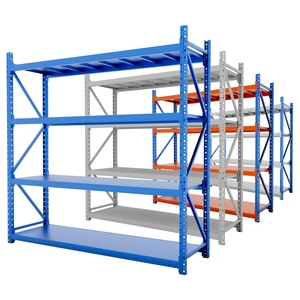
For hand-loaded inventory, spare parts management, e-commerce fulfilment, and archival storage, heavy-duty long-span shelving provides shelf capacities ranging from 200 KG to 800 KG per level. Featuring boltless beam-to-upright assembly, units accept steel wire decking, solid steel plates, or high-density MDF boards.
5. Detachable Stacking Post Pallet Racks
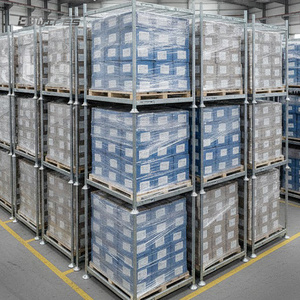
Detachable stacking post racks provide flexible, modular storage for seasonal operations or temporary warehousing. Constructed from mild steel Q235, these stackable units allow multi-tier vertical storage without permanent aisle installation, folding flat when empty to minimize return freight volumes.
| Racking Architecture | Load Capacity / Level | Floor Area Utilization | Pallet Accessibility | Optimal SKU Environment |
|---|---|---|---|---|
| Selective Pallet Racking | 1,000 – 4,000 KG | 40% – 45% | 100% Direct Access | High-velocity multi-SKU retail & 3PLs |
| Drive-In Storage Racks | 1,000 – 2,000 KG | 75% – 85% | LIFO Lane Access | Bulk cold storage, beverage & commodities |
| Heavy Cantilever Racks | 500 – 1,500 KG / Arm | 50% – 60% | 100% Direct Along Arm | Steel tubing, timber, extrusions, pipes |
| Long-Span Shelving | 200 – 800 KG | 55% – 65% | 100% Manual Hand-Pick | E-commerce fulfillment, spare parts, archives |
| Stacking Post Racks | 1,000 – 1,500 KG | 60% – 70% (Flexible) | Block Stack Access | Seasonal overflow, tires, fabric rolls |
Future Procurement Trends in Industrial Racking & Warehouse Infrastructure
As global supply chains transition toward higher automation, green manufacturing standards, and omnichannel logistics, procurement directors must evaluate racking investments against long-term operational adaptability. The following key trends are shaping modern warehouse storage acquisitions:
1. Integration with AS/RS & Autonomous Guided Vehicles (AGVs)
Traditional manually operated racking systems are increasingly upgrading toward Automated Storage and Retrieval Systems (AS/RS) and Shuttle Racking. OEM manufacturing standards now require ultra-tight deflection tolerances (often L/300 or stricter) to ensure robotic grippers, AGVs, and stacker cranes operate without mechanical interference.
2. Eco-Friendly Green Steel & Energy-Efficient Powder Coating
Decarbonization mandate compliance is accelerating demand for eco-friendly industrial racking. Our plant utilizes low-VOC epoxy powder coatings, closed-loop water recirculation in chemical pre-treatment stages, and responsibly sourced recyclable steel coils to assist global corporate clients in achieving Scope 3 carbon reduction targets.
3. Hybrid Modular Racking Systems
Modern distribution centers demand fast scalability. Modular boltless designs allow structural transition from selective pallet storage to multi-tier rack-supported mezzanines or long-span manual picking levels as operational needs evolve.
4. Stringent Regional Safety Compliance & Structural Auditing
Global regulatory bodies are expanding enforcement on structural warehouse safety. From OSHA guidelines in North America to ABNT NBR 15524 standards in Brazil and FEM regulations in Europe, procurement teams require complete structural engineering documentation, certified load rating plates (*placas de carga*), and third-party finite element analysis validation prior to installation.
Enterprise Strengths: Our Manufacturing Plant & Quality Assurance
Operating as a premier racking engineering manufacturer (Guangdong Orbit Metal / BR Industrial Racking heritage), our factory integrates advanced metal fabrication technologies with decades of international export experience. Spanning modern industrial production facilities with over 120 skilled engineers and production personnel, our annual export sales volume exceeds US$16 Million, serving logistics hubs across the Americas, Europe, the Middle East, and Asia-Pacific.
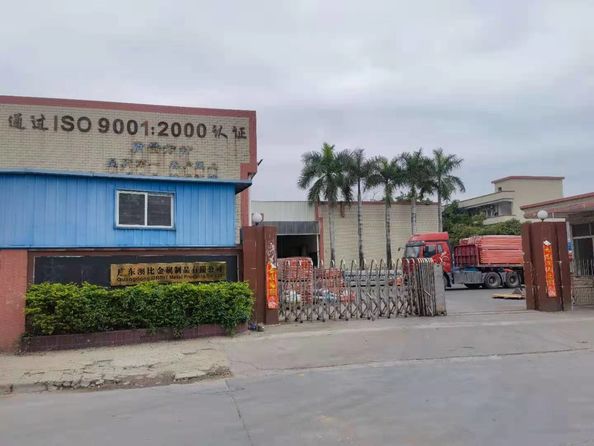
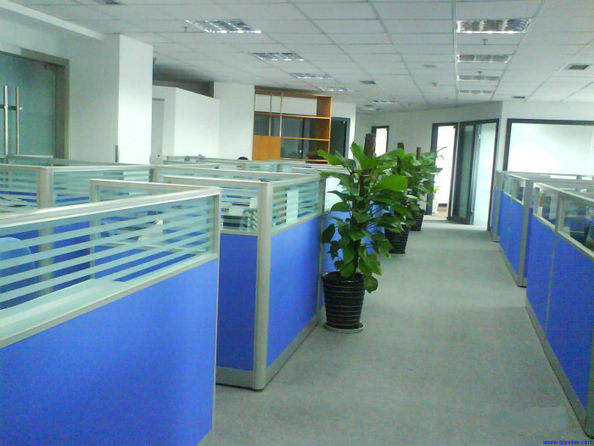
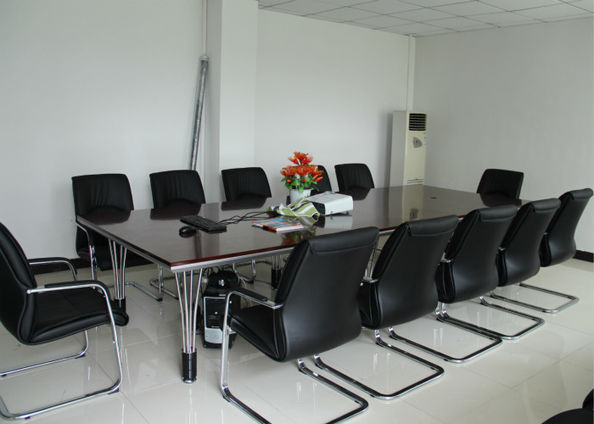
Our engineering services extend beyond steel fabrication. We provide client enterprise partners with full CAD floor-plan engineering, complimentary 3D layout simulations, seismic structural calculations, load testing verification, and container loading optimization. Every shipment is packaged with heavy-duty protective corner guards, steel strapping, and moisture-proof wrapping to guarantee flawless arrival at overseas ports such as Santos, Paranaguá, Houston, Rotterdam, or Dubai.
Industrial Racking Procurement FAQ (Frequently Asked Questions)
Below are detailed answers to key technical and commercial questions submitted by warehouse operations managers, procurement officers, and structural engineers:
How do you verify the load-bearing capacity of custom racking orders?
Load capacities are determined through Finite Element Analysis (FEA) software modeling verified by physical tensile and compression testing of upright and beam samples. Every order includes official engineering load tables, safety calculation reports, and steel mill Material Test Certificates (MTC) proving yield strength compliance.
Can your factory design racking tailored to regional standards like ABNT NBR 15524 or ANSI MH16.1?
Yes. Our engineering team routinely designs structural storage configurations compliant with global standard specifications, including ANSI MH16.1 (US), FEM 10.2.02 (Europe), JIS (Japan), and ABNT NBR 15524 (Brazil). We provide localized load warning labels (*placas de carga*) in English, Spanish, or Portuguese to support local workplace safety inspections (such as NR-11).
What steel grade is used in your heavy-duty pallet racking components?
We primarily utilize high-tensile cold-rolled mild steel Q235B (equivalent to ASTM A36 / SS400) for standard beams and uprights, and high-yield strength Q355B steel for ultra-heavy duty high-bay installations. All incoming steel coils are subjected to chemical composition checks and mechanical tensile tests prior to roll forming.
What custom surface finish options are available for humid or corrosive environments?
For standard indoor warehouses, we apply an electrostatic epoxy powder coating (60-80 microns thickness) offering excellent impact resistance. For cold storage facilities, chemical plants, fertilizer warehouses, or humid coastal locations, we manufacture hot-dip galvanized (HDG) components that provide decades of sacrificial zinc corrosion protection.
What is your standard production lead time and ocean shipping preparation?
Standard manufacturing lead time is 3 to 4 weeks following approval of technical drawings and deposit confirmation. For ocean freight, components are bundled on heavy steel skids, wrapped with protective film, bound with steel strapping, and cushioned with wood block spacers to prevent transit damage inside shipping containers.
Do you offer customized CAD design services for layout planning?
Yes, we provide complimentary 2D CAD layout drawings and 3D spatial models based on your warehouse dimensions, clear ceiling height, column spacing, forklift turning radius, pallet dimensions, and SKU weight specifications.