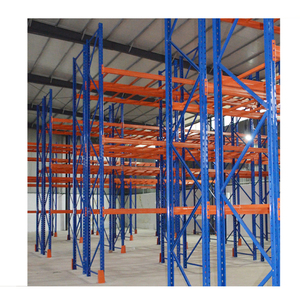
Factory-Direct Catalog
High-Performance Pallet Racking & Push Storage Systems
Explore our flagship industrial racking series manufactured from cold-rolled Q235B/Q355B structural steel, custom-engineered for heavy loads and high-density warehouse environments.
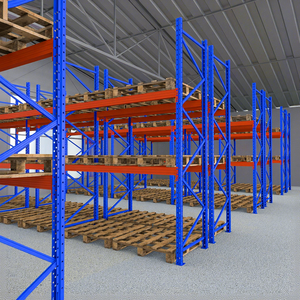
Adjustable Pallet Rack Warehouse Storage Heavy Duty Shelving Pallets Racking for Warehouse Storage
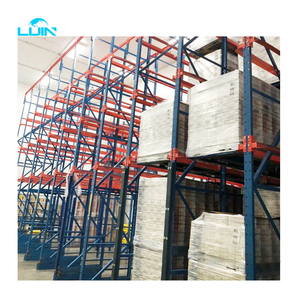
Pallet Racking System Equipment Drive in Metal Shelves Steel Layer Heavy Duty Warehouse Rack
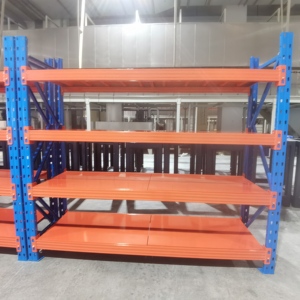
Heavy-Duty 2 Ton Capacity Adjustable Corrosion Protection 5-Layer Storage Rack for E-commerce Premium Cold Rolled Steel Shelf
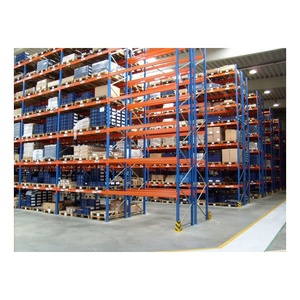
Customized Heavy Duty Pallet Racking System Industrial Warehouse Storage Rack Adjustable Steel Selective Pallet Rack
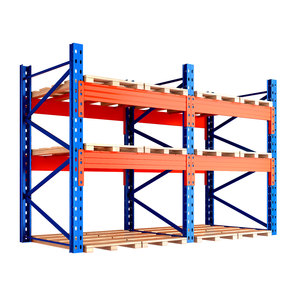
Heavy Duty Industrial Storage Shelves system Metal Rack Stacking Units Warehouse Steel Industrial Pallet Racking
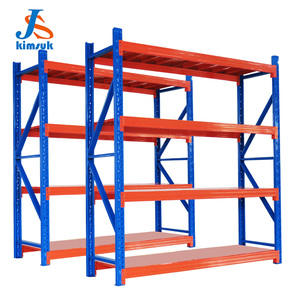
Boltless Rack System Storage Racks Shelving Units Storage Shelves Heavy Duty Shelves for Warehouse
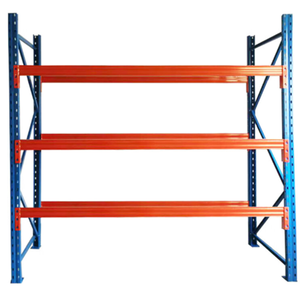
Mracking Industrial Warehouse Pallet Racking Shelving System
Industrial Engineering Insights
Push Back Racking Dynamics: Physics, Engineering & Kinematic Principles
A comprehensive structural overview of nested trolley push back systems, structural load limits, and space optimization math for logistics directors.
Nested Cart Kinematics
Push back rack systems utilize a series of nested, telescoping carts moving along inclined structural steel rails on a 1.5% to 2.5% slope pitch. When the first pallet is loaded by a standard forklift, it sits on the top nested cart. Loading the second pallet gently pushes the first cart backward, exposing the underlying second cart, operating under high-density LIFO (Last-In, First-Out) inventory principles.
Structural Steel Specs & Deflection Limits
Our push back and heavy-duty pallet racks are roll-formed or structurally manufactured using premium grade Q235B and Q355B structural steel. Under maximal load conditions, horizontal beam deflections are strictly monitored not to exceed L/200 (1/200th of the clear beam span) in full accordance with ANSI MH16.1, FEM 10.2.02, and ABNT NBR 15524 structural standard safety ratios.
Integrated Safety Mechanisms
To eliminate pallet hang-up, cart jamming, or runaway hazards during gravity retrieval, each cart assembly features sealed heavy-duty steel bearings, steel flange alignment wheels, and anti-pop-out safety hooks. The mechanical kinetic energy of gravity descent is absorbed smoothly by built-in rubber dampers and controlled incline friction profiles.
Technical Comparison: Push Back Racking vs. Alternative High-Density Systems
| System Type | Storage Density | Pallet Access / Flow | SKU Variety | Forklift Travel Time | CapEx per Pallet Position |
|---|---|---|---|---|---|
| Push Back Racking (2-6 Deep) | High (Up to 75% increase) | LIFO (Per Lane) | Medium to High | Fast (Driver remains in main aisle) | Moderate / High ROI |
| Selective Pallet Racking | Standard (Baseline 100%) | 100% Direct Access (FIFO) | Maximum (1 SKU per bay) | Standard (Aisle dependent) | Lowest Initial CapEx |
| Drive-In Racking System | Very High (Up to 85% increase) | Strict LIFO | Low (1 SKU per entire lane) | Slow (Forklift enters rack matrix) | Low to Moderate |
| Automated Radio Shuttle Racking | Maximum (Up to 90% increase) | Flexible LIFO / FIFO | Medium | Ultra-Fast (Robotic shuttle driven) | High (Includes Battery & Automation) |
Future Procurement Outlook
Strategic Trends Shaping Warehouse Storage & Bulk Purchasing
Logistics decision-makers must evaluate key architectural, environmental, and technological trends when sourcing heavy-duty rack infrastructure from leading Chinese suppliers.
1. Integration with Autonomous Mobile Robots (AMRs) & AGVs
Modern push back racks and high-density selective systems are increasingly integrated with Autonomous Mobile Robots (AMRs) and Automated Guided Vehicles (AGVs). Precise manufacturing tolerances (+/- 0.5mm beam straightness) ensure robotic arms and automatic reach trucks engage pallet positions flawlessly without human intervention.
2. Sustainable Low-Carbon Steel & Eco Electrostatic Coatings
Global supply chains demand lower Scope 3 embedded carbon footprints. Premium Chinese manufacturers now utilize energy-efficient cold-rolling processes combined with heavy metal-free, zero-VOC electrostatic epoxy-polyester powder coatings (60–80 microns thick) that withstand harsh salt spray tests while minimizing environmental degradation.
3. Smart RFID & IoT Beam Stress Monitoring
The future of rack safety moves beyond periodic manual inspection. Smart racking systems now incorporate wireless strain gauge sensors and RFID tags embedded directly into critical upright posts and cart frames. Real-time telemetry alerts logistics managers of unexpected structural impacts or localized over-capacity situations before failure occurs.
4. Specialized Solutions for Cold Chain & Humid Logistics
With global food and pharmaceutical demand surging, push back racking systems engineered specifically for -30°C freezer environments are taking center stage. Hot-dip galvanizing (HDG) treatments and specialized low-temperature synthetic lubricants ensure cart wheels operate smoothly without freeze-locking or structural embrittlement.
Factory Authority & Reliability
Engineered Precision & International Manufacturing Standards
Since our founding in 2005, we have established ourselves as one of China's primary engineering pioneers in industrial storage rack manufacturing. Operating with over 120 skilled structural engineers and production experts, our annual export volume exceeds US $16 Million, delivering custom storage infrastructure across North America, South America, Europe, Australia, and the Middle East.
Our state-of-the-art manufacturing facility houses automated continuous roll-forming lines, robotic laser cutting cells, multi-pass automatic welding stations, and fully enclosed electrostatic powder coating lines.
- Raw Material Certification: High-tensile steel coils sourced directly from top-tier mills with certified mill test reports (MTR).
- Global Engineering Compliance: Systems designed according to RMI, FEM 10.2.02, ISO 9001:2015, CE, JIS, and ABNT NBR 15524 standards.
- Full OEM/ODM Customization: Tailored frame depths, beam heights, cart lane counts, and seismic bracing engineering.
Buyer Knowledge Center
Frequently Asked Questions by Industrial Racking Buyers
Clear, detailed answers regarding technical selection, structural engineering calculations, global shipping logistics, and custom manufacturing capabilities.
What is the core working principle of a Push Back Rack system and how does it compare to Drive-In racking?
A push back rack system stores pallets on nested telescoping carts sitting on inclined rails. When a forklift loads a new pallet, it pushes the existing pallets back. When a pallet is unloaded, gravity gently rolls the remaining pallets forward to the front aisle face. Unlike Drive-In racking—where forklift drivers must physically drive inside the structural rack matrix—push back racking allows the forklift to stay in the main aisle. This results in significantly faster loading/unloading cycles, eliminates rack collision damage, and offers superior SKU management per level.
How many pallets deep can a China-manufactured Push Back system accommodate?
Our standard engineered push back rack designs accommodate 2, 3, 4, 5, and 6 pallet deep configurations per lane. The 2 to 4-deep systems are the most common due to optimal operational speed and standard forklift mast capacities, while 5 and 6-deep systems are custom-engineered with heavier steel structural members and enhanced inclination slope controls for specialized high-density applications.
Can your push back and heavy-duty racks accommodate custom or non-standard pallet sizes?
Yes. While standard setups are designed for standard Euro pallets (800 x 1200 mm), GMA pallets (40 x 48 inches), and PBR pallets (1000 x 1200 mm), our structural design team custom-engineers cart dimensions, frame depths, and beam spans to fit any custom pallet overhang, bottom-runner orientation, or non-standard industrial box dimensions.
What certifications and quality testing standards do your warehouse racks adhere to?
Our manufacturing processes follow strict quality management protocols certified under ISO 9001:2015. Structural load calculations, steel yield points, and frame deflection analyses strictly adhere to the ANSI MH16.1 (Rack Manufacturers Institute), European FEM 10.2.02, Japanese JIS standards, and Brazilian ABNT NBR 15524 standards. Every production batch includes mill certificates for steel chemistry and physical tensile testing reports.
What floor slab structural requirements are needed before installing high-density push back racks?
Push back rack installations create concentrated point loads on concrete floor slabs through column baseplates. Generally, a reinforced concrete slab with a minimum thickness of 150mm to 200mm and a compressive strength of C25 to C30 (or minimum 3,000 to 4,000 PSI) is required. Our engineering team provides precise baseplate point-load calculations so your local civil engineer can verify slab stability.
How are components protected against rust and environmental corrosion during shipping and long-term use?
All steel components undergo a multi-stage pre-treatment process comprising degreasing, rust removal, phosphating, and pure water rinsing, followed by an automated electrostatic epoxy-polyester powder coating cured at 200°C. For extreme environments, cold storage freezers, or outdoor applications, we provide hot-dip galvanizing (HDG) where zinc coating thickness exceeds 65-85 microns for lifetime corrosion protection.
What is the typical lead time for manufacturing and ocean freight delivery from China?
Manufacturing lead time generally ranges between 3 to 4 weeks upon final approval of technical CAD layout drawings. Ocean transit times depend on the destination port: approximately 15 to 22 days to Southeast Asia/Australia, 20 to 30 days to the US West Coast/Europe, and 35 to 45 days to South America (such as Santos, Brazil). We provide optimized container packaging plans to maximize sea container volume utilization.
Do you provide installation manuals, engineering drawings, and structural support?
Every export order includes a full 3D assembly schematic, detailed CAD elevation drawings, component bill of materials (BOM), step-by-step installation manuals, and safety load rating signage (in English, Spanish, or Portuguese). Furthermore, our technical team offers video installation support and can dispatch remote installation engineers for major warehouse projects.
Transform Your Warehouse Density & Throughput Today
Contact our senior storage design engineers for a complimentary CAD layout analysis, load specification assessment, and competitive factory-direct wholesale pricing.
Get a Quote