Featured Warehouse Racking & High-Density Storage Solutions
Explore engineered pallet storage systems manufactured for high throughput, heavy load tolerances, and maximal floor area utilization.
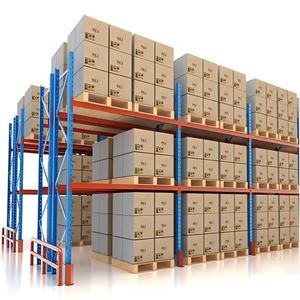
Adjustable Heavy Duty AU Standard Pallet Racking
View Product Details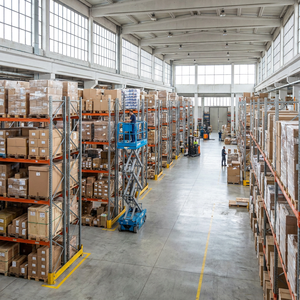
Professional Heavy Duty Pallet Rack System
View Product Details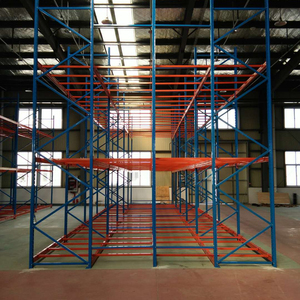
Customized Selective Drive In Pallet Racking
View Product Details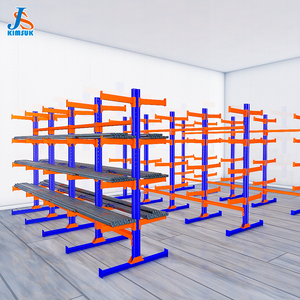
Heavy Duty Warehouse Cantilever Storage Rack
View Product Details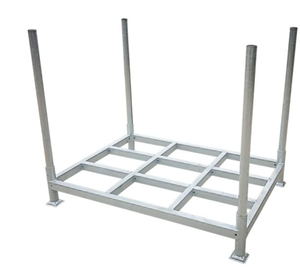
Customized Stackable Steel Post Pallet Rack
View Product Details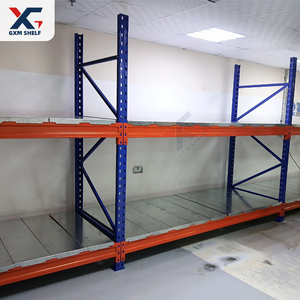
GXM Adjustable Stainless Steel Pallet Rack System
View Product Details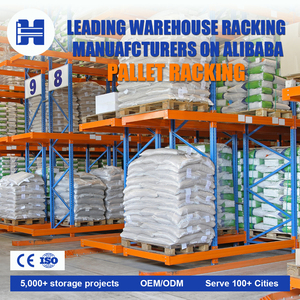
Teardrop Heavy Duty Pallet Racking Storage Shelving
View Product Details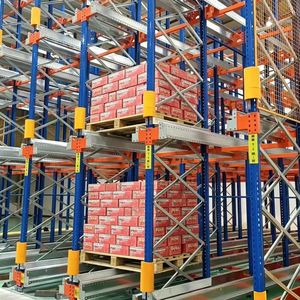
Automated Radio Shuttle High Density Storage System
View Product Details1. Structural Engineering & Operational Dynamics of Push Back Pallet Racking
Push Back Pallet Racking represents one of the most space-efficient Last-In, First-Out (LIFO) high-density warehouse storage architectures available modern supply chain engineering. Engineered primarily to eliminate the excessive aisle requirements of standard selective pallet racking while preventing the honeycombing and slow travel speeds inherent in traditional drive-in racking, Push Back systems utilize nested, telescoping cart assemblies riding on inclined steel rails.
The operational mechanics rely on gravitational energy combined with controlled forklift momentum. As the first pallet is loaded onto the top nested cart by a standard forklift, it occupies position one. When the second pallet is introduced into the lane, the forklift operator pushes back the first pallet, exposing the second nested cart underneath. This process is repeated for configurations ranging from 2-deep to 6-deep pallet positions per lane. Upon retrieval, gravity pulls the remaining carts forward toward the aisle face at a controlled speed, presenting the next pallet for seamless picking.
Technical Comparison: High-Density Storage Architectures
| Storage System Type | Access Strategy | Floor Footprint Utilization | Pallet Selectivity | Forklift Damage Risk | Ideal Inventory Profile |
|---|---|---|---|---|---|
| Push Back Racking | LIFO (Gravity Carts) | 70% - 85% High Density | Medium (1 SKU per Lane) | Very Low (Outside Aisle) | Medium-volume, 2-6 pallets per SKU |
| Selective Pallet Racks | FIFO / Direct Access | 35% - 45% Low Density | 100% High Selectivity | Low to Moderate | High SKU diversity, single-pallet lines |
| Drive-In Racking | LIFO (Deep Lanes) | 65% - 75% High Density | Low (1 SKU per Tunnel) | High (Internal Truck Entry) | Seasonal, homogeneous bulk goods |
| Radio Shuttle Racking | FIFO / LIFO Automated | 80% - 90% Ultra High | Software Controlled | Minimal (Robot In-Track) | Mass cold storage & automated DCs |
2. Future Procurement Trends in Push Back Pallet Racking (2025–2030)
As global enterprise logistics hubs transition toward automated material handling and optimized footprint footprints, procurement decision-makers must evaluate Push Back racking manufacturers based on forward-looking engineering benchmarks rather than static pricing alone. China's premier racking exporters are pioneering multi-faceted technical innovations to align with evolving warehouse demands:
Cold-Chain Optimization
Sub-zero structural steel metallurgy engineered for temperature zones down to -30°C. Anti-freeze lubricants inside heavy-duty sealed bearing wheels prevent cart locking in blast freezers.
Hybrid AMR/AGV Integration
Redesigned pushback cart entry funnels and magnetic guidance tracks engineered to interface seamlessly with Autonomous Mobile Robots (AMRs) and Reach Trucks for un-manned pallet handling.
Smart Sensor Telemetry
Integration of IoT tilt-angle sensors and impact monitoring modules inside telescoping carts, transmitting real-time operational diagnostics to Warehouse Management Systems (WMS).
For international buyers, sourcing directly from top-tier Chinese wholesalers provides access to high-grade Q235B and Q355B cold-rolled structural steel profiles, precision-stamped cart frames, and automated robotic welding channels. Strategic procurement now demands certified compliance with global safety frameworks including RMI (Rack Manufacturers Institute), FEM 10.2.02 (European Handling Federation), ANSI MH16.1, and AS4084-2023.
3. Industrial Innovations: Next-Gen Cart Mechanics & Safety Engineering
The primary point of mechanical evaluation in Push Back pallet racking is the telescoping cart and flow rail mechanism. Historical 1st-generation pushback systems suffered from cart misalignment, wheel binding, and high maintenance overheads due to debris accumulation inside light gauge channels. Leading Chinese exporters have revolutionized this technology through robust structural engineering:
Key Structural Innovations in China Push Back Manufacturing:
- Low-Profile Nested Cart Systems: Modern 6-deep pushback systems utilize heavy-gauge structural steel carts that nest inside one another, losing less than 150mm of vertical bay clearance across the entire nested assembly. This maximizes vertical cubic space.
- Linked Safety Catch Mechanism: To eliminate "pallet push-through" risks where an operator accidentally pushes a pallet past the back of the rack, integrated cart link stoppers physically bind nested carts together, limiting forward and backward over-travel.
- Flanged Stainless Steel Bearings: Heavy-duty sealed ball bearings equipped with outer alignment flanges run along sloped structural steel angles (typically set at a 3% to 4% incline), preventing derailment under off-center loading conditions.
- Electrostatic Epoxy-Polyester Powder Coating: Automated 16-stage pre-treatment wash and electrostatic powder coating lines deliver coating thicknesses ranging from 70 to 110 microns, offering extreme scratch resistance and corrosion protection against harsh industrial environments.
4. Why Sourcing from China's Top Push Back Racking Exporters Delivers Competitive Edge
Navigating global supply chain logistics requires a supplier who combines high-volume structural steel manufacturing capacity with precise mechanical engineering and end-to-end export support. As a premier Chinese manufacturer and global exporter, our operational framework is designed to mitigate risk and optimize capital expenditure for international distributors and warehouse operators:
Custom OEM / ODM Design
Custom beam profiles, upright frames, and cart dimensions engineered specifically for standard PBR pallets, European pallets (800x1200mm), or non-standard industrial skids.
Rigorous Structural Finite Element Analysis (FEA)
Every pushback project undergoes comprehensive FEA computer modeling to simulate dynamic seismic loading, asymmetrical pallet weight distribution, and wind shear for outdoor applications.
Direct Factory Wholesale Pricing
Eliminate middle-man markups. Benefit from raw steel purchasing power located adjacent to China's major steel mills, ensuring optimal cost-per-pallet position performance.
Our production facilities maintain strict quality assurance protocols, performing ultrasonic weld inspections, tensile steel strength tests, and full-scale physical loading trials prior to container packaging. Component bundles are strapped with steel banding, wrapped in protective moisture-barrier film, and wooden-crated for ocean freight protection.
5. Deep-Dive Procurement FAQ: Push Back Pallet Racking Sourcing
Below are critical technical and operational questions compiled by our senior structural engineering team to guide global logistics directors during system selection and quotation analysis.
What is the maximum depth and load capacity per lane for Push Back Pallet Racking?
How does Push Back racking prevent carts from hang-ups or derailment during operation?
Can broken or damaged wooden pallets be used in a Push Back system?
What forklift equipment is required to operate a Push Back pallet rack installation?
How does Push Back compare to Radio Shuttle racking in terms of initial ROI and maintenance?
What export compliance documentation and structural engineering support do you provide?
Optimize Your Warehouse Storage Density & Request a Custom CAD Layout
Partner with China's leading Push Back racking exporter. Receive a complete engineering consultation, 3D structural layout, and direct factory price quote tailored to your warehouse dimensions within 24 hours.
Get Catalog