Featured Industrial Heavy-Duty Storage Systems
Direct factory supply featuring cold-rolled high-yield structural steel, certified load safety factors, and high-durability electrostatic surface coatings for global distribution networks.
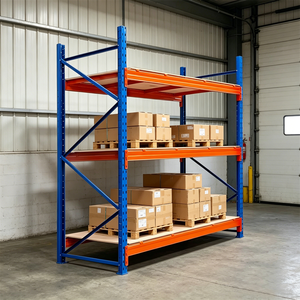
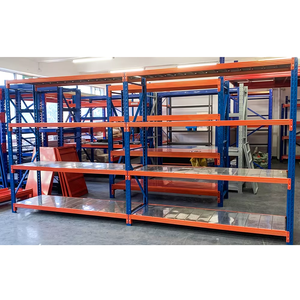
Structural Integrity & Engineering Metallurgy of Chinese Industrial Shelving
In global supply chain management, procuring industrial-style shelving and heavy-duty storage infrastructure requires rigorous scrutiny of material selection, load deflection parameters, and structural dynamics. Leading Chinese OEMs have transitioned from standard structural fabrication to high-precision, cold-rolled steel profiling engineered under internationally recognized frameworks such as RMI (Rack Manufacturers Institute), FEM 10.2.02, and EN 15512 standards.
1. Metallurgy and Steel Grade Selection
The core structural capability of top-tier industrial shelving relies on high-grade cold-rolled structural steel, primarily Q235B and Q355B structural carbon steel (equivalent to ASTM A36 and ASTM A572 Grade 50). The utilization of continuous cold-roll forming processes ensures uniform cross-sectional thickness, residual stress optimization, and enhanced yield strength performance under static and dynamic loading.
- Yield Strength Calibration: Q355B steel provides a minimum yield strength of 355 MPa, yielding a higher strength-to-weight ratio for upright columns and heavy-duty step beams.
- Punching Accuracy: Automated CNC punching systems maintain a pitch precision within ±0.1mm along upright profiles (50mm, 75mm, and 76.2mm pitch configurations), eliminating cumulative tolerance stack-up during vertical frame assembly.
- Deflection Tolerances: Heavy-duty load beams are structural-engineered to maintain horizontal deflection ratios well within the strict L/200 limit (where deflection does not exceed 1/200th of the span length under maximum rated capacity).
2. Surface Pre-treatment and Electrostatic Powder Coating Dynamics
Corrosion resistance and surface hardness define the operational lifespan of industrial steel shelving, especially in high-humidity distribution centers, cold-storage environments, or coastal logistics hubs. Advanced Chinese manufacturers utilize automated multi-stage pre-treatment wash tunnels prior to powder deposition.
The standard surface finishing protocol includes an 8-stage chemical wash: degreasing, water rinsing, rust removal, neutralization, surface conditioning, zinc phosphate conversion coating, secondary rinsing, and deionized water seal. Following pre-treatment, an epoxy-polyester thermosetting powder coating is applied via electrostatic deposition guns at 80–100 kV. The components undergo thermal curing in gas-fired convection ovens at 180°C to 200°C for 20 minutes, yielding a dense, scratch-resistant film layer measuring 60 to 90 microns in thickness.
Why Direct Sourcing from China's OEM Leaders Maximizes ROI
Global procurement directors leverage Chinese OEM partnerships to achieve optimal cost-per-pallet position without compromising structural safety standards.
Custom Load Engineering
Every industrial shelving unit is dynamic-load simulated using Finite Element Analysis (FEA) software. Upright profiles, beam sections, and baseplates are custom-calculated to match exact floor loading capabilities and seismic zone coefficients.
Global Compliance Matrix
Fully compliant with international quality management certifications including ISO 9001, ISO 14001, CE marking for European markets, and JIS standards for Asian supply logistics. Documentation package includes material mill test reports (MTR) with every shipment.
Optimized Export Logistics
Component dimensions and bundle bundling plans are tailored for maximum ocean container cube utilization (20GP, 40GP, 40HQ). Custom steel frame packing prevents transit damage during international maritime transportation.
Industrial Shelving Technical Specification Matrix
Compare standard industrial shelving structural designs to identify the precise system architecture required for your facility's operational workflow.
| Shelving Category | Upright Profile Range | Load Capacity (per tier) | Access Flexibility | Primary Industrial Application |
|---|---|---|---|---|
| Selective Pallet Racking | 80mm × 60mm to 120mm × 95mm | 1,000 kg – 4,000 kg | 100% Direct Access | High-bay distribution centers, 3PL facilities, FMCG storage |
| Heavy-Duty Longspan Shelving | 55mm × 47mm to 60mm × 50mm | 300 kg – 800 kg | Manual Pick Access | E-commerce fulfillment centers, automotive parts hubs, archives |
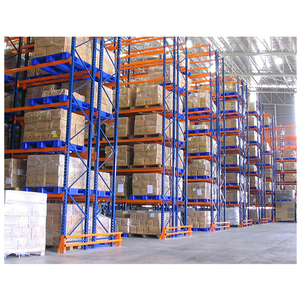
| Drive-In / Drive-Through Racking | 90mm × 70mm to 120mm × 95mm | 1,000 kg – 2,000 kg | LIFO / FIFO Lane Access | Cold storage, beverage distribution, batch-processed commodities |
| Galvanized Sheet Shelving | 40mm × 40mm to 50mm × 50mm | 150 kg – 400 kg | Manual Multi-Tier Access | Chemical processing plants, humid environment storage, cleanrooms |
| Multi-Level Mezzanine Racking | 100mm × 100mm structural tube / I-Beam | 300 kg – 1,000 kg/m² | Integrated Floor Access | Urban micro-fulfillment centers, spare part assembly lines |
Future Procurement Trends in Industrial Storage (2025–2030)
The global industrial storage market is undergoing rapid technological evolution. Sourcing managers must look beyond unit price to evaluate future-proof infrastructure trends that lower Total Cost of Ownership (TCO).
1. Integration with Automated Storage and Retrieval Systems (ASRS)
Traditional static racking is increasingly adapted to interface seamlessly with Autonomous Mobile Robots (AMRs), Automated Guided Vehicles (AGVs), and stacker cranes. Modern Chinese manufacturers build shelving systems with tight geometric tolerances (verticality deflection under 1/1000) to allow laser-guided robotic picking systems to operate without physical jams.
2. Eco-Friendly & Low-Carbon Steel Initiatives
As scope 3 emissions become a mandatory reporting metric for international enterprises, Chinese industrial shelving wholesalers are adopting green steel manufacturing processes. This includes incorporating recycled scrap steel melted in Electric Arc Furnaces (EAF) powered by renewable energy sources, alongside switching to chrome-free and VOC-free powder coatings.
3. Modular "Industrial Style" Commercial Convergence
There is a growing crossover trend where heavy-duty industrial shelving structural designs are adapted for architectural, retail display, and modern loft commercial storage spaces. Known for its raw metal aesthetic, exposed beam connectors, and matte black or dark grey textured powder finishes, industrial-style shelving combines rugged structural stability with modern industrial interior design requirements.
4. Smart Racking and Embedded IoT Weight Sensors
Next-generation warehouse racking systems incorporate IoT strain gauge sensors directly into the beam connectors. These smart sensors transmit real-time data regarding load distribution, structural fatigue, and accidental forklift impact forces to cloud-based warehouse management software (WMS), preventing catastrophic structural failures before they occur.
B2B Industrial Procurement FAQ
Critical answers to standard engineering, quality assurance, and commercial sourcing inquiries.
Q1: How do Chinese shelving manufacturers ensure structural safety under dynamic forklift impacts?
Q2: What is the standard lead time for a customized industrial pallet racking container order?
Q3: How does hot-dip galvanizing compare to powder coating for industrial shelving?
Q4: Can Chinese industrial shelving systems be customized to meet local seismic codes?
Q5: What documentation is provided to support customs clearance and quality auditing?
Q6: How are pallet rack beam load capacities verified during factory production?
Ready to Optimize Your Industrial Storage Infrastructure?
Connect directly with our engineering team to receive customized CAD layouts, structural FEA load calculations, and competitive OEM wholesale pricing within 24 hours.