Featured CE Certified Racking Systems
Explore our factory-direct, structural steel warehouse storage rack systems engineered for heavy-duty industrial logistics, cold-chain operations, and automated fulfillment hubs.
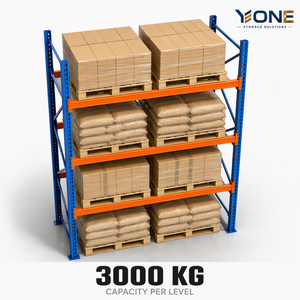
Factory Heavy Duty Steel Pallet Rack 2000kg Capacity Warehouse Storage Rack System Boltless Adjustable
High-load cold-rolled steel pallet rack system engineered with adjustable upright frames and 2000kg payload capacity per level.
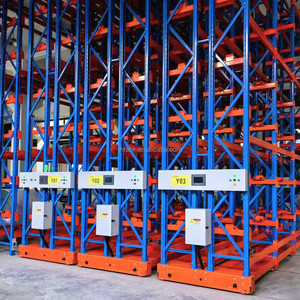
Industrial Heavy Duty High Efficiency Warehouse Electric Mobile Storage Shelf Automatic Mobile Racking System Pallet Rack
Motorized high-density mobile racking operating on embedded floor rails, eliminating fixed aisles to double floor storage capacity.
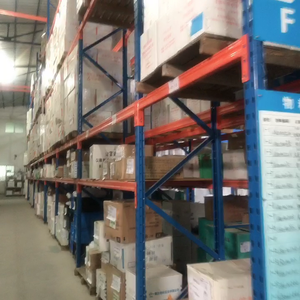
Complete Warehouse Racking System Design Manufacturing Installation for Industrial Storage
Turnkey structural warehouse racking solutions covering finite element layout design, structural steel roll-forming, and site installation.
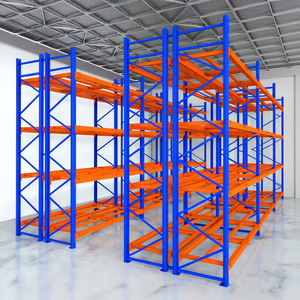
Wholesale Cold Rolled Steel Industrial Pallet Rack Heavy Duty Multi Level Warehouse Stacking Racks and Shelves
Multi-tier heavy-duty pallet racking featuring precision roll-formed teardrop and box beam profiles for high-bay logistics centers.
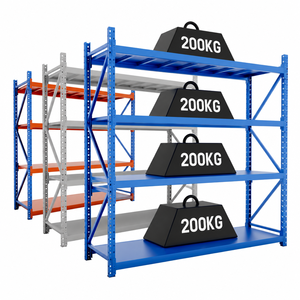
Factory Direct 4-Layer 100/200/300kg Medium Heavy Duty Pallet Racking System Steel Adjustable Long Span Warehouse Storage Racks
Versatile long-span step beam shelving with steel decking panels, optimized for manual order selection and medium-weight SKU inventory.
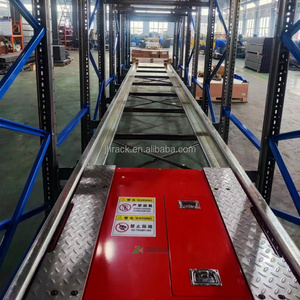
Automated Stackable Metal Shelves Storage Racks & Shelving Units Warehouse Asrs Pallet Shuttle Racking System
Next-generation Radio Pallet Shuttle racking integrated with automated stacker cranes for ultra-dense, low-labor FIFO/LIFO warehousing.
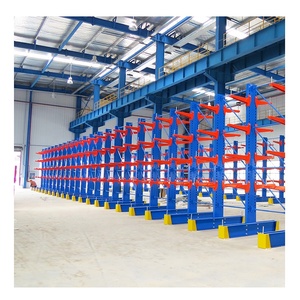
Jracking Industrial Warehouse Shelves Rack CE Certified Heavy-Duty Cantilever Racking System for Metal Profile Storage
Heavy-duty structural cantilever racking engineered for storing steel pipes, aluminum extrusions, timber, and long-dimension materials.
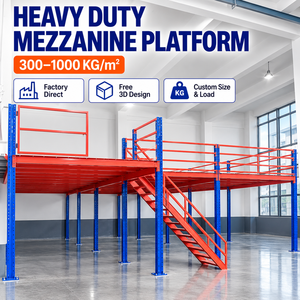
Heavy Duty Steel Mezzanine Floor Rack System for Warehouse Storage
Rack-supported structural steel mezzanine systems multiplying vertical square footage into operational picking tiers and office platforms.
CE Certified Warehouse Racking Systems: Engineering Standards, Safety Compliance, and Information Gain Criteria
In modern global supply chain logistics, the structural integrity of industrial warehouse storage infrastructure is paramount. A structural failure in high-bay pallet racking can trigger catastrophic inventory losses, operational downtime, and severe occupational safety hazards. As leading CE Certified Warehouse Racking System Factories & Suppliers, manufacturing excellence is rooted in rigorous mechanical engineering, adherence to international standards, and advanced material science.
Compliance with the European Conformity (CE) mark—specifically referencing the Machinery Directive 2006/42/EC and structural standard EN 15512:2020—establishes that industrial storage systems meet mandatory structural health, dynamic load resistance, and safety thresholds. Beyond standard manufacturing, certified racking suppliers implement Finite Element Analysis (FEA) to simulate buckling modes, dynamic seismic reactions, and sway deflections under maximum payload conditions.
Structural Yield Strength
Fabricated from prime cold-rolled steel coils (Q235B, Q355B, and SS400 equivalents), providing elevated yield thresholds exceeding 355 MPa for superior flexural rigidity.
EN 15512 Safety Factors
Designed with a minimum structural safety factor multiplier of 1.55 on material yield stress, ensuring stable operation under accidental localized overload impact.
Seismic Resilience
Engineered using FEM 10.2.08 seismic guidelines, featuring high-ductility baseplates and anchor bolt arrays designed to dissipate kinetic ground forces.
The mechanical interaction between cold-formed upright profiles and beam connectors represents the core point of stress concentration. Verified racking manufacturers utilize continuous multi-claw connector locks forged from high-tensile steel, equipped with safety locks (safety pins) to prevent accidental beam dislodgement caused by forklift mast errors.
Technical Comparison Matrix: Industrial Storage Norms
A structural reference guide highlighting regulatory metrics, structural design codes, and testing requirements across major global markets.
| Specification Standard | Target Region | Primary Load Calculation Standard | Deflection Limit (Beam Span L) | Safety Factor Benchmark |
|---|---|---|---|---|
| EN 15512:2020 (CE) | European Union / International | Limit State Design (LSD) / FEA Modeling | L / 200 (Max span bending deflection) | 1.55 (Material) / 1.40 (Live Load) |
| ANSI MH16.1 (RMI) | North America (USA / Canada) | Allowable Stress Design (ASD) / LRFD | L / 180 (Vertical beam deflection) | 1.67 (Allowable stress safety margin) |
| ABNT NBR 15524 | South America (Brazil / LATAM) | Cold-Formed Structural Steel Code | L / 200 (Standard PBR pallet clearance) | 1.50 (Structural frame coefficient) |
| FEM 10.2.02 | Global Warehousing | Racks on Industrial Pallet Mechanics | L / 200 (High-bay warehouse tolerance) | 1.50 (Beam-connector stiffness factor) |
Global Warehouse Racking Procurement Trends (2025–2030)
The industrial storage sector is undergoing a rapid paradigm shift driven by e-commerce fulfillment demands, automated material handling integration, and stringent ESG (Environmental, Social, and Governance) directives. Strategic procurement directors are transitioning away from price-per-kilogram purchasing toward lifetime total cost of ownership (TCO) models.
1. Transition to High-Density Automated Systems (AS/RS & Radio Shuttles)
Traditional selective pallet racking requires extensive aisle space, dedicating up to 60% of warehouse floor area to forklift travel paths. Future-focused procurement strategies heavily prioritize Automated Storage and Retrieval Systems (AS/RS) and four-way pallet shuttle systems. These configurations compress storage footprint, increase volume utilization by up to 80%, and eliminate human error in high-bay cold storage environments operating at -30°C.
2. Modular Integration & Boltless Adaptability
Dynamic inventory movement requires storage infrastructure that can be reconfigured without major structural overhauls. Modern CE certified racking factories engineer standardized upright pitch spacings (e.g., 50mm, 75mm, 76.2mm pitch) allowing rapid beam adjustment, integration of wire mesh decking, structural drop-in dividers, and conversion into multi-tier rack-supported mezzanines.
3. Green Steel & Sustainable Powder Coatings
Sustainability initiatives are reshaping raw material sourcing. Leading manufacturing facilities utilize low-carbon steel produced in energy-efficient electric arc furnaces (EAF). Furthermore, traditional solvent-based painting has been completely replaced by thermo-cured epoxy-polyester electrostatic powder coating processes, delivering zero VOC (Volatile Organic Compounds) emissions, high salt-spray corrosion resistance (salt spray test > 500 hours), and superior scratch durability.
Manufacturing Rigor: From Raw Steel Coils to Precision Roll-Forming
Superior structural performance depends on strict factory quality control measures. Reputable manufacturing partners operate full-process quality control protocols (IPQC, OQC) across all stages of production:
Phase A: Coil Inspection & Micro-Structural Integrity
Every batch of hot-rolled and cold-rolled steel coil undergoes ultrasonic thickness gauging, chemical composition spectro-analysis (carbon, manganese, silicon content verification), and tensile yield testing prior to slitting.
Phase B: Continuous Automatic Roll-Forming
Precision multi-station cold roll-forming lines shape upright posts with continuous multi-bevel profiles (up to 18-stage deformation), optimizing structural section modulus and moment of inertia.
Phase C: Robotic MIG Welding Systems
Automatic robotic welding arms execute seam welds on beam connector brackets and baseplates, guaranteeing consistent weld penetration, eliminating slag inclusion, and preventing fatigue cracking under dynamic loads.
Phase D: Automated Pre-Treatment & Powder Curing
Prior to coating, steel components pass through a 5-stage automated surface washing, degreasing, zinc-phosphating, and deionized water rinsing line before receiving electrostatically applied epoxy powder cured at 200°C.
Frequently Asked Questions (FAQ) for Technical Buyers
Comprehensive expert guidance on racking system selection, load calculation certificates, international logistics, and factory engineering support.
1. What specific parameters are required to generate an accurate racking layout and quote?
To produce an engineering-compliant floor layout and quotation, our structural engineering team requires: (a) Warehouse CAD floor plan detailing clear height beneath roof trusses, building column grid locations, and fire sprinkler clearance requirements; (b) Pallet dimensions (Length × Width × Height including cargo); (c) Maximum and average gross weight per loaded pallet; (d) Forklift operating parameters including maximum lift height, turning radius, and minimum aisle width requirement; (e) Storage operating ambient temperature range (e.g., standard dry store vs. cold store -30°C).
2. How do CE Certified racking systems differ from uncertified low-cost alternatives?
CE Certified racking systems undergo rigorous independent structural validation under European standards EN 15512, EN 15620, and EN 15635. Certified systems specify exact prime steel grades (with trace mill test certificates), verified weld integrity, guaranteed column section profiles, and calculated safety margins (1.55 multiplier). Uncertified alternatives often utilize scrap-recycled steel with inconsistent yield strength, thinner wall tolerances, inadequate beam-connector locking safety pins, and unverified load capacities that fail under dynamic impact or seismic movement.
3. Can your factory engineer pallet racking customized for regional pallet standards like PBR or Euro Pallets?
Yes. Our manufacturing lines produce specialized rack frame depths and beam length configurations customized for all international pallet standards: Brazilian PBR pallets (1000mm × 1200mm), European Euro Pallets EUR 1 (800mm × 1200mm) and EUR 2 (1200mm × 1000mm), North American GMA pallets (48" × 40"), and Australian standard pallets (1165mm × 1165mm). Frame depths and beam clearance dimensions are precision-calculated to prevent pallet overhang hazards.
4. What surface protection options are recommended for coastal, humid, or cold-storage environments?
For standard indoor distribution centers, high-durability electrostatic epoxy-polyester powder coating (80–100 micron thickness) provides robust protection. For high-humidity coastal warehouses, fertilizer storage, or food processing environments requiring frequent chemical washdowns, we supply Hot-Dip Galvanized (HDG) steel components treated according to ISO 1461 standards. HDG coating creates a metallurgical zinc-iron alloy layer providing over 30 years of cathodic corrosion protection.
5. How are pallet racks packed and secured for ocean container shipping to prevent transit damage?
Export components are bundled using automated steel strapping and protective corrugated corner guards, then wrapped in heavy-duty moisture-proof stretch film. Heavy upright frames and beams are mounted on wooden skids with customized timber dunnage separators to prevent surface abrasion during maritime transportation. Small hardware, baseplates, beam safety pins, and anchor bolts are packed in reinforced, wooden crates or steel containers labeled with itemized packing list manifests.
6. What documentation is supplied to support customs clearance and local structural engineering sign-off?
Every shipment is accompanied by a complete technical documentation package including: Commercial Invoice, Detailed Packing List, Bill of Lading, Certificate of Origin (Form E, CO, or FTA where applicable), Factory ISO 9001 and CE Certificates, Raw Material Mill Test Certificates (MTC), Structural Load Tables (Placas de Carga), and General Assembly CAD Drawings with installation step-by-step manuals.
7. What is the typical production lead time and shipment cycle for enterprise racking orders?
Standard factory production lead time is typically 15 to 25 calendar days following final CAD layout sign-off and deposit confirmation, depending on total project volume (e.g., 2 to 10 Forty-Foot High Cube containers). Ocean transit times vary by destination port (e.g., North American ports: 18–25 days; Main European ports: 28–35 days; South American ports like Santos or Paranaguá: 30–40 days).
8. How do you assist international clients with racking installation and safety inspection compliance?
We provide comprehensive installation support options: (a) 3D detailed structural assembly drawings, video guides, and step-by-step technical manuals for local installation crews; (b) Remote real-time engineering support via video conference; (c) On-site deployment of experienced factory installation supervisors to manage local assembly, column plumbness alignment, baseplate leveling, anchor torque verification, and final safety load sign-off.
Optimize Your Warehouse Storage Capacity Today
Connect directly with our structural engineering team for a customized 3D floor plan layout, load calculation analysis, and direct factory pricing.