Featured Industrial Pallet Racking & Flow Systems
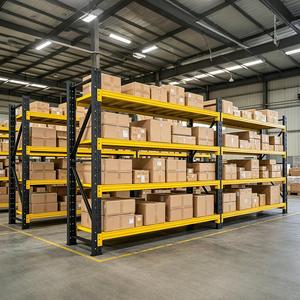
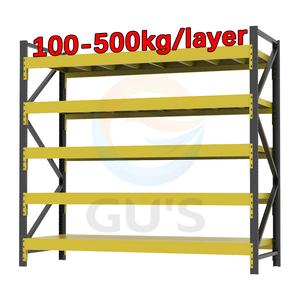
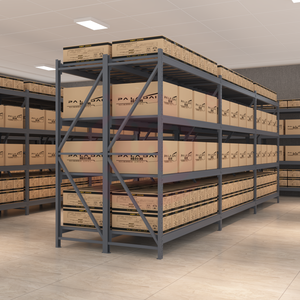
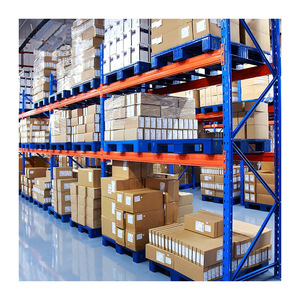
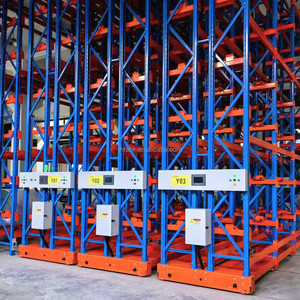
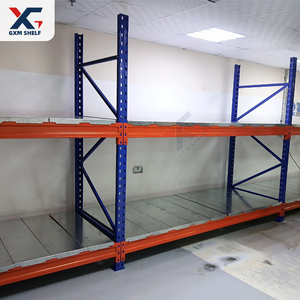
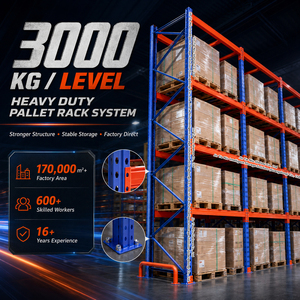
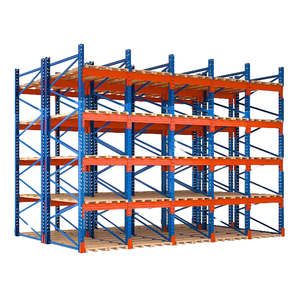
Explore our certified inventory of medium to heavy-duty industrial storage racks. Built using cold-rolled high-tensile steel, engineered to maximize cubic storage utilization while strictly adhering to CE and international safety standards.
Technical Whitepaper: Engineering High-Performance CE Certified Pallet Flow Racking
Modern enterprise logistics operations face a dual constraint: escalating real estate footprint costs per square meter and demanding fulfillment velocity requirements. As global distribution hubs transition toward automated and semi-automated workflows, Pallet Flow Racking Systems (Gravity Flow Racking) have emerged as the paramount high-density First-In, First-Out (FIFO) material handling solution. As a premier CE Certified Pallet Flow Rack Exporter, our engineering framework integrates structural physics, dynamic braking kinetics, and European conformity standards to guarantee operational safety and maximum spatial efficiency.
1. Gravity Flow Physics & Slope Inclination Precision
The core operational mechanics of a gravity flow rack rely on precise pitch geometry. Storage lanes are engineered at an incline—typically between 3.5% to 4.5% pitch angle depending on pallet weight distribution, runner configuration, and dynamic friction coefficients. Pallets introduced at the loading elevation slide seamlessly down heavy-duty roller tracks toward the discharge face via controlled gravitational kinetic force.
| Pallet Weight Class | Recommended Pitch Angle | Roller Diameter & Pitch | Speed Controller Spacing |
|---|---|---|---|
| Light Dynamic (300kg - 600kg) | 3.2% - 3.5% | Ø50mm Steel / 75mm Pitch | Every 3.0 Meters |
| Standard Heavy (600kg - 1200kg) | 3.8% - 4.0% | Ø60mm Heavy Steel / 100mm Pitch | Every 2.0 to 2.5 Meters |
| Ultra-Heavy Duty (1200kg - 1800kg+) | 4.2% - 4.5% | Ø76mm Reinforced / 100mm Pitch | Every 1.5 to 1.8 Meters |
2. Kinetic Braking & Centrifugal Speed Controllers
Uncontrolled acceleration along long flow lanes poses catastrophic risks to structural integrity and product safety. Certified flow systems incorporate indirect or direct-contact centrifugal brake rollers. These speed controllers regulate travel velocity to a safe maximum of 0.3 m/s. As the pallet velocity increases, internal centrifugal friction shoes extend against the brake drum casing, absorbing kinetic energy and preventing runaway momentum regardless of lane depth (even in 20+ pallet deep configurations).
3. Automatic Pallet Separator Technology at Discharge Face
Line pressure is a critical factor in gravity flow design. Accumulating pallets exert immense combined force on the first pallet resting at the picking face. For instance, a 10-pallet deep lane carrying 1,000kg per pallet generates tons of forward hydrostatic-like pressure. Our CE certified systems feature automatic mechanical pallet separators. This mechanism holds back the remaining upstream pallets by 150mm until the front pallet is completely lifted by the forklift, reducing extraction torque, preserving forklift mast hydraulics, and preventing operator accidents.
Enterprise Manufacturing Advantages & Quality Assurance
Referencing our advanced manufacturing footprint, BR Industrial Racking Ltda. delivers certified structural solutions tested to withstand rigorous seismic, thermal, and dynamic stress profiles across global supply chains.
CE & EN 15512 Compliance
All structural members undergo Finite Element Analysis (FEA) and physical stress testing. Fully compliant with European EN 15512 safety codes, FEM 10.2.02 standards, and ISO 9001 factory quality management audits.
High-Yield Structural Steel
Utilizing premium certified Q235B and high-yield strength Q355B cold-rolled steel from premier steel mills. Frame uprights and beam profiles feature optimized ribbing for unmatched torsional rigidity.
Thermosetting Coating Finish
Advanced 180-meter continuous automatic electrostatic powder-coating line ensures anti-corrosive, scratch-resistant epoxy finishes. Standardized for high-humidity and cold-storage environments down to -30°C.
Precision OEM/ODM Export Packaging
Export-optimized container loading techniques featuring steel strapping, protective film wraps, and custom timber cribbing to eliminate ocean-transit damage across transatlantic and transpacific shipping routes.
Future Procurement Trends: Modernizing Industrial Warehouse Storage
The industrial warehousing sector is undergoing a monumental transformation driven by automated fulfillment demand, labor shortages, and ESG sustainability directives. Procuring pallet flow rack systems over the next decade requires alignment with the following market developments:
1. AMR & AGV Guided Flow Integration
Traditional pallet racking relied solely on human-operated counterbalanced forklifts. Modern procurement specifications prioritize Autonomous Mobile Robot (AMR) loading interface precision. Flow rack entry guides and discharge stops are now customized with optical sensors, reflector targets, and zero-clearance mechanical funnels to facilitate seamless robotic pallet deposition and retrieval.
2. Cold-Chain & Deep-Freeze Optimization
With global food and biopharmaceutical distribution expanding, racking systems must operate flawlessly at extreme sub-zero temperatures. Future-proof flow systems utilize synthetic non-freezing roller lubricants, specialized cold-annealed alloy axles, and polyurethanes that retain dynamic elasticity without cracking under -30°C thermal stress.
3. IoT Sensorized Smart Flow Lanes
Integrating IoT smart sensors into dynamic roller tracks provides real-time visibility into warehouse inventory occupancy, lane dwell times, and pallet speed anomalies. Enterprise procurement strategies increasingly request pre-wired sensor channels to integrate directly into WMS (Warehouse Management Systems).
Next-Generation Engineering & Product Development Trends
As a specialized CE Certified Pallet Flow Rack Exporter, our R&D team continuously refines system components to lower total cost of ownership (TCO) and boost operational uptime:
- Magnetic Non-Contact Speed Regulators: Transitioning from traditional mechanical brake drums to eddy-current magnetic brakes. This eliminates mechanical friction wear, extending speed controller lifespan by up to 300% without maintenance intervention.
- Modular Plug-and-Play Track Assemblies: Modular steel roller tracks designed to snap directly into standard heavy-duty teardrop or structural rack beams, allowing rapid conversion of standard selective racks into high-density FIFO flow lanes without structural replacement.
- Dual-Core Polyurethane/Steel Composite Rollers: Engineering hybrid rollers featuring high-tensile steel core jackets encased in dampening polyurethane to significantly suppress operational acoustics in indoor fulfillment centers.
Pallet Flow Racking Procurement FAQ
Detailed answers to common technical, compliance, and import logistics questions asked by enterprise procurement teams and structural engineers.
Why is CE Certification essential for pallet flow rack exporters?
What pallet types are compatible with gravity flow rack systems?
How do you determine the required speed controller frequency in a lane?
How does a pallet flow system compare to Drive-In Racking in terms of ROI?
What export documentation and shipping support do you provide?
Optimize Your Warehouse Density with Certified Flow Racking
Contact our senior structural engineering team today to receive custom CAD layout designs, FEA load calculations, and competitive direct factory export pricing for your facility.