0%

A Pallet Storage Racking System is a steel framework that stores palletized goods in organized, elevated positions. Beams support the pallets, while upright frames transfer their loads to the floor. In a busy warehouse, the system shapes more than storage: it affects forklift routes, picking speed, stock visibility, and how safely workers handle each load. A rack may look simple. Its design is not.

The right layout depends on pallet dimensions, product weight, inventory turnover, available floor space, and the equipment used to move goods. Selective racks provide direct access to each pallet; denser systems can store more goods but may limit access. The trade-off matters. A tightly packed aisle can save space and still slow daily work. Warehouse-design scholar Dr. John Bartholdi’s published work on warehouse operations supports a practical principle: storage density must be balanced with access and operating efficiency. This is a paraphrase, not a direct quotation.

Industry investment shows why these choices matter. MHI’s 2024 Annual Industry Report, produced with Deloitte and based on a survey of supply-chain professionals, found that 55% planned to increase investment in supply-chain technology and innovation. The report also found that 88% expected digital supply chains to become a key competitive advantage within five years. These figures are not rack-specific, but they underline the pressure to make storage systems work with evolving warehouse operations. A rack plan should be checked against real pallet loads, clearances, and traffic patterns—not only a floor-space drawing. Even a well-designed system needs regular inspection; assumptions can age quickly.
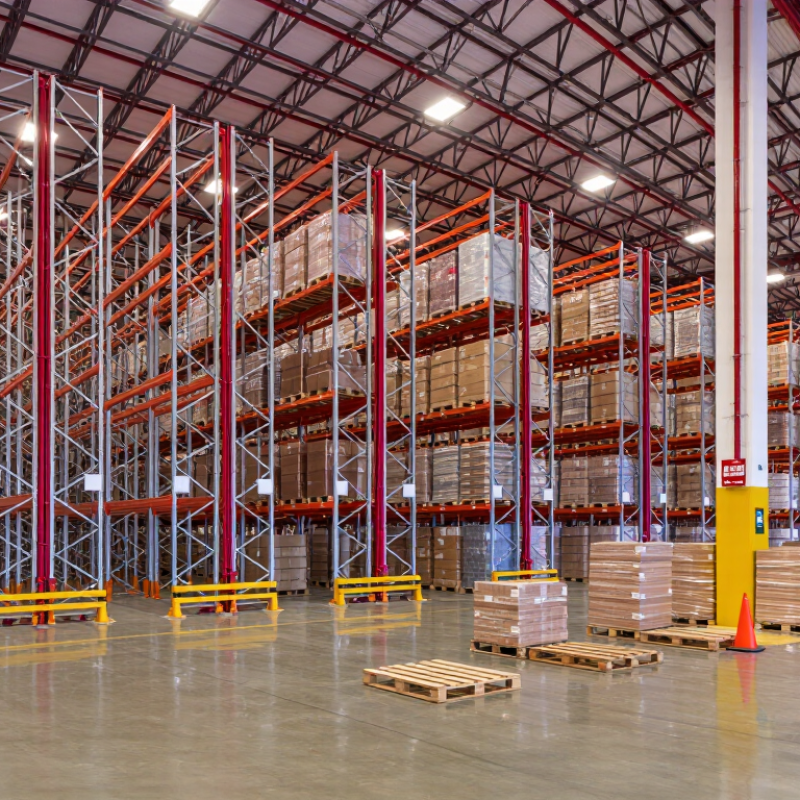
What Is a Pallet Storage Racking System?

How a Pallet Storage Racking System Is Defined

A pallet storage racking system is a fixed or configurable steel structure designed to hold palletized loads in organized, accessible positions. In a typical warehouse, upright frames support horizontal beams, creating bays where forklifts place pallets at selected heights. The word “system” matters: it includes more than the visible rack. It also covers the load layout, aisle clearances, pallet dimensions, floor conditions, and equipment used to retrieve goods. Small details matter.

Unlike shelves intended for cartons, pallet racking is engineered around concentrated loads carried by beams and transferred through frames to the floor. Each bay has limits, shaped by beam span, connection design, frame bracing, and how evenly loads sit on pallets. A practical definition should include rated capacity and the conditions behind it, not merely the rack’s height. Keep loads square. A rack may look sturdy yet be unsuitable if pallets overhang, damaged uprights go unnoticed, or forklift turning space is too tight. Definitions can vary between facilities, so documenting the actual configuration helps clarify what the structure is meant to support. This may seem fussy, but clear records also help operators recognize when an inspection is needed.

Core Components and How They Work Together

A pallet storage rack is a connected structure, not just steel. Upright frames carry the vertical load, while horizontal beams support pallet edges. Diagonal bracing helps keep each frame square. Anchors connect the uprights to the floor, and wire decking can support loads when pallets leave gaps. Small parts matter. A loose beam connector or damaged upright can affect the whole bay.

Loads travel through the system: pallet to beam, beam to frame, then frame to floor. The rated load plaque should match the actual configuration, including beam levels and spacing. Forklift clearance matters, too. A pallet set down unevenly can shift weight toward one beam. Protective guards may help limit impact damage, but they do not make a damaged frame safe. A tidy layout on paper can look different once busy aisles fill up.

The U.S. Bureau of Labor Statistics reported a 4.8 total recordable injury and illness rate per 100 full-time workers in warehousing and storage in 2022. That figure does not identify rack-related incidents, but it underscores why safe handling and regular checks matter. Inspect for bent uprights, loose connectors, and missing load signs; record what needs repair. One practical weakness is that inspections can become rushed. Clear checklists help, but they cannot replace careful attention to the rack’s actual condition.

How Pallets Are Stored and Retrieved

What Is a Pallet Storage Racking System?
How Pallets Are Stored and Retrieved

A pallet storage racking system holds goods on sturdy horizontal beams, leaving floor space open for movement. In daily use, a forklift carries each pallet to an assigned rack position. The operator checks that the load is stable, raises it carefully, and sets it squarely on the beams. Small differences matter. A crooked pallet can make later retrieval harder.

When a load arrives, staff identify its contents and choose a suitable location. In selective racks, each pallet is usually accessible from the aisle, which can simplify picking. Deeper storage lanes fit more pallets, but access may depend on moving other loads first. That trade-off should match how quickly goods need to move. A neat layout on paper may not suit a busy shift; watching real forklift paths can reveal needed changes.

Retrieval follows the location record: the driver travels to the assigned bay, lifts the pallet, and moves it to a staging area or dispatch point. Clear sightlines help. Before placing or removing a load, workers should check for damaged pallets, blocked aisles, and visible rack damage. A bent upright should never be ignored. Accurate records also reduce unnecessary searching, though they need regular updates when stock moves. The process is simple, but consistency takes attention.

What Is a Pallet Storage Racking System? - How Pallets Are Stored and Retrieved
Racking System How Pallets Are Stored How Pallets Are Retrieved Access and Selectivity Typical Equipment Common Applications
Selective pallet racking Pallets rest on horizontal beams in individual rack locations, with aisles between rack rows. A forklift enters an aisle and removes the required pallet directly from its location. Each pallet location is directly accessible; offers high selectivity but uses more aisle space than many dense-storage systems. Counterbalance forklift or reach truck, depending on aisle width and rack height. Warehouses holding many product types with frequent access to individual pallets.
Double-deep racking Two pallet positions are placed one behind the other on each side of an aisle. The front pallet is removed first; the rear pallet is reached with equipment designed for deeper placement. Greater storage density than single-deep selective racking, with reduced direct access to rear pallets. Double-deep reach truck or another compatible handling solution. Operations with several pallets per product and relatively consistent stock rotation.
Drive-in racking A forklift enters a supported lane to place pallets on rails, commonly storing multiple pallets deep. The forklift enters the lane to retrieve pallets; the last pallet placed is generally the first one available for removal (LIFO). High storage density, but access to individual pallets is limited within each lane. Forklift suitable for operating within the rack lanes. Large quantities of the same product where last-in, first-out stock rotation is acceptable.
Drive-through racking A forklift can enter the lane from either end, with pallets stored on rails inside the structure. When loading and retrieval are managed from opposite ends, the system can support first-in, first-out rotation (FIFO). High storage density; access is organized by lane rather than by individual pallet position. Forklift suitable for entering the rack lanes. Products stored in larger batches where FIFO rotation is needed and lane access can be planned.
Push-back racking Pallets sit on nested carts or inclined rails; placing a new pallet pushes the previous pallet farther back. When the front pallet is removed, the next pallet moves forward under gravity. Multiple pallets are stored deep per lane; each lane typically works on a last-in, first-out (LIFO) basis. Forklift for loading and unloading from the aisle face. Operations seeking dense storage with access from the aisle and several pallets of the same product per lane.
Pallet flow racking Pallets are loaded at the higher end of inclined roller tracks and move toward the picking face. The leading pallet is removed from the lower end, and the next pallet advances along the track. Supports first-in, first-out (FIFO) rotation; provides dense, lane-based storage. Forklift for replenishment; picking equipment for retrieval at the front face. High-throughput goods requiring FIFO, such as dated or time-sensitive inventory.
Mobile pallet racking Rack rows are mounted on powered or manually operated mobile bases that move along floor rails. Rows move to open an access aisle, allowing a forklift to reach the selected rack face. Reduces the number of permanent aisles while preserving access to rack rows one aisle at a time. Forklift and a compatible mobile-rack control system. Storage areas where floor space is limited and access can be scheduled rather than kept open in every aisle.

Common Types of Pallet Storage Racking Systems

Selective pallet racking gives each pallet a direct aisle-facing position, making it practical when stock changes often or pickers need quick access. It uses more aisle space than dense systems, though. Double-deep racks store pallets two positions deep, trading some accessibility for greater capacity. Check that handling equipment can reach the rear pallet safely.

Drive-in racks place pallets on rails inside deep lanes, reducing aisles but limiting access to individual loads. They usually suit products stored in larger batches and work on a last-in, first-out basis. Push-back racks also use deep storage, with pallets moving backward along inclined carts. Pallet-flow racks use rollers to move loads toward the picking face, supporting first-in, first-out rotation. Space is not everything.

Material Handling Industry’s 2024 Annual Industry Report found that 55% of respondents were already using robotics and automation. That figure points to growing interest in automated handling, but automation does not make every dense rack suitable. Rack layout still needs to match pallet dimensions, load weights, rotation, and equipment clearances. The U.S. Occupational Safety and Health Administration estimates powered industrial trucks cause about 85 fatalities and 34,900 serious injuries each year. Those figures are not rack-specific, but they make aisle visibility and safe equipment movement hard to ignore. A tidy storage plan can still fail when daily picking patterns differ from the assumptions used to design it.

Common Types of Pallet Storage Racking Systems

This chart shows representative example layouts, not fixed system limits. Selective racks typically provide direct access to each pallet, while deeper lane configurations can increase storage density. Actual depth depends on the rack design, pallet dimensions, equipment, and operating requirements.

Key Factors in Selecting and Using a Racking System

What Is a Pallet Storage Racking System?
Key Factors in Selecting and Using a Racking System

A pallet storage racking system holds palletized goods in organized levels, allowing forklifts to access stock. Choosing one starts with the load: record each pallet’s weight, dimensions, and overhang. Then consider ceiling height, aisle width, floor condition, and the forklifts already in use. These details affect both rack capacity and safe movement. Think about inventory turnover, too. Fast-moving products may need positions close to dispatch areas, while slower stock can sit farther away.

Using the system safely depends on clear operating rules and regular checks. Keep loads within posted capacity limits, and place pallets evenly on the beams. Train operators to avoid striking uprights, especially in narrow aisles. Inspect frames, braces, beam connections, and anchors for visible damage; isolate affected bays until a qualified person assesses them. Small details matter. A rack can look sturdy while a bent upright or missing connector weakens its performance. Some warehouses also overlook future growth, then find their layout difficult to adjust.

Tips: Measure loaded pallets, not just empty ones. Keep aisles clear, display load limits, and report impacts promptly. Review the layout as stock changes. It may need adjustment.

FAQS

When is selective pallet racking useful?

It gives every pallet direct aisle access. That helps when stock changes often or pickers need quick access. The tradeoff is wider aisle use.

What should I check before choosing double-deep racks?

They store pallets two positions deep and add capacity. Check that your handling equipment can reach rear pallets safely.

How do drive-in, push-back, and pallet-flow racks differ?

Drive-in racks suit larger batches and usually follow last-in, first-out rotation. Push-back racks move pallets backward on inclined carts. Pallet-flow rollers move loads toward the picking face, supporting first-in, first-out rotation.

What measurements should I collect before planning a rack layout?

Measure loaded pallets, including weight, dimensions, and overhang. Check ceiling height, aisle width, floor condition, and forklift clearances.

Where should fast-moving products be stored?

Place them near dispatch areas to support quicker picking. Slower stock can sit farther away. Actual picking habits may differ from the plan.

What parts of a rack should be inspected?

Check frames, braces, beam connections, and anchors for visible damage. Isolate affected bays until a qualified person assesses them. Small details matter.

Does automation make dense racking suitable for every warehouse?

No. Automation does not replace checks on pallet size, weight, stock rotation, and equipment clearance. A crowded layout can still slow daily work.

How can operators help protect racks and keep aisles safe?

Keep aisles clear, respect posted load limits, and place pallets evenly on beams. Train operators to avoid striking uprights, especially in narrow aisles. Report impacts promptly.

Should future growth affect the rack choice?

Yes. Review the layout as stock changes, since a fixed plan can become difficult to adjust. I might be overvaluing flexibility; real picking patterns should guide the decision.

Conclusion

A Pallet Storage Racking System is a warehouse structure designed to store palletized goods in an organized, accessible way. It typically consists of upright frames, horizontal beams, and safety components that work together to support loads and create storage levels. Pallets are placed on the beams using material-handling equipment, then retrieved when needed according to the layout and storage method. The system helps make better use of vertical space while keeping inventory arranged for efficient handling.

Common options include selective, drive-in, push-back, and pallet-flow racking, each offering a different balance of accessibility, storage density, and inventory rotation. Choosing the right system depends on factors such as available floor space, ceiling height, pallet dimensions and weight, stock volume, and how frequently items must be accessed. Safe and effective use also requires suitable equipment, clear operating procedures, and regular inspection of the rack structure and its components.

Clara

Clara

Clara is a professional marketing specialist who brings a deep understanding of the company’s products and the needs of the people who use them. Through regular contributions to the company blog, Clara turns product knowledge into clear, practical articles that help readers explore features,......